Per-user AI credit budgets available for cost centers
Enterprise admins can now set a cost center user-level budget: one per-user AI credit budget on a cost center that applies to every individual in it. As membership changes, the…
Claude Opus 4.8 (fast mode) is now rolling out in preview on GitHub Copilot. Fast mode delivers significantly faster output token speeds while maintaining the same intelligence as Claude Opus…
The GitHub Advisory Database is processing more vulnerability reports than ever before. Here’s what’s driving the surge, how we’re responding, and how the community can help.
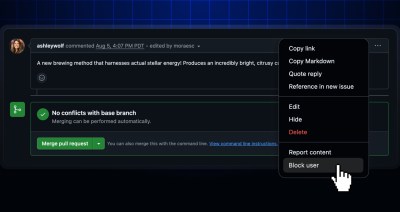
Repository admins can now restrict issue creation to collaborators with write access. This gives you more control over who can open issues and helps reduce unwanted issue creation, while keeping…
GitHub Actions now issues read-only cache tokens to the default branch for workflow events that can be triggered without write permissions to the repository. This applies least privilege to the…
GitHub joined the United Nations Development Programme in Ghana to explore how open source governance can support one of West Africa’s most ambitious digital reform efforts.
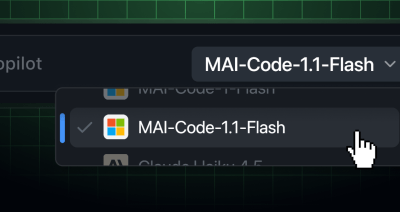
MAI-Code-1-Flash, Microsoft AI’s in-house coding model, is now generally available for GitHub Copilot Business and Copilot Enterprise, building on its recent expansion across Copilot surfaces. Purpose-built for coding and optimized…
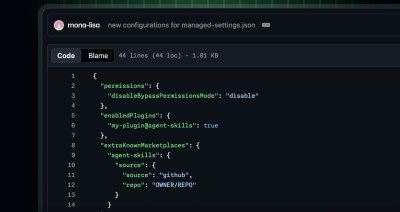
Enterprises can now control which plugins their users can install in GitHub Copilot CLI and VS Code. This setting is now available in public preview. Add strictKnownMarketplaces to your enterprise-managed…
Saved views for repository issues Repository Issues pages now support saved views, making it easier for teams to create and share filtered views of their issues. With saved views, anyone…
Cost attribution across your enterprise can now follow your team structure. You can add enterprise teams as resources in a cost center, and all usage incurred by team members is…
For a timely response to security incidents involving compromised accounts or stolen credentials, GitHub Enterprise owners can now use new “break-glass” capabilities to instantly revoke all credentials for a given…
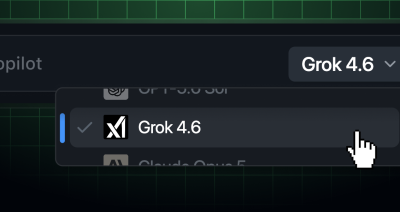
Copilot Free and Student plans will now use Copilot auto model selection as the default and only model selection experience. Auto dynamically selects the best model for each task, removing…
Secret scanning now includes extended metadata for Replicate secrets, providing richer context for leaked credentials. Extended metadata support This pattern now includes extended metadata when detected, providing richer context about…
We’re calling for targeted amendments to resolve conflicts with open source licensing and align with international transparency frameworks while preserving regulatory intent.
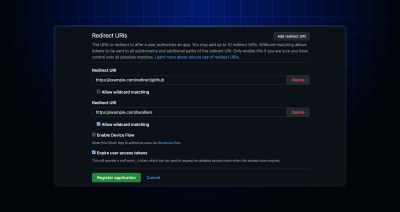
The GitHub Copilot app now supports bring your own key (BYOK), so you can run agent sessions against your own model providers, including OpenAI, Azure OpenAI, Microsoft Foundry, Anthropic, LM…
Learn about the progress we’ve made toward our accessibility goals and how you can help make open source more inclusive.
This update adds support for organization and enterprise agents from GitHub, lets you queue and steer messages in Copilot CLI sessions, introduces a new agent debug logs summary view, and…
The Copilot usage metrics API now reports how many AI credits each user consumed per day, derived from the same AI credits consumption data used in the usage-based billing API.…
We will deprecate Opus 4.6 (fast) across all GitHub Copilot experiences (including Copilot Chat, inline edits, ask and agent modes, and code completions), on June 29th, 2026: Model Deprecation date…
Duplicate issues are one of the biggest time sinks for maintainers: triaging the same bug filed multiple ways, closing duplicates, and linking back to the original. For large repositories, this…
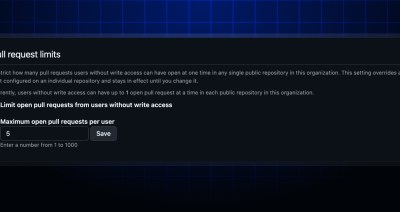
Learn how pull request limits can help manage contribution volume in your repositories, and see what’s next on the roadmap.
Build what’s next on GitHub, the place for anyone from anywhere to build anything.
Join us October 28-29 in San Francisco or online for GitHub Universe, our flagship developer event uniting people, agents, and the world’s code.