Deprecation Notice: Recover Accounts Elsewhere
Recover Accounts Elsewhere allows a user to store a recovery token with a third-party recovery partner to use as a recovery method when their account is protected by two-factor authentication.…
Recover Accounts Elsewhere allows a user to store a recovery token with a third-party recovery partner to use as a recovery method when their account is protected by two-factor authentication.…

The benefits of multifactor authentication are widely documented, and there are a number of options for using 2FA on GitHub.
Organizations can now join GitHub Sponsors using a personal bank account, in addition to using a business bank account or a fiscal host. Learn more about setting up GitHub Sponsors…
We’ve expanded our REST and GraphQL APIs for interaction limits to include two recently released features: set and query interaction limits for user accounts set longer interaction limits on repositories,…
We’ve added temporary interaction limits to user accounts. Users can set temporary limits on who can interact with their public repositories for up to six months. You can use them…
Until now, organization admins couldn’t view Actions and Packages billing history if the organization was part of an enterprise account. Now, organization admins can view that information so they can…

Protect your team’s code with secure software development best practices like setting up SAML/SCIM integrations, enforcing policies to avoid code leakage, and more.
Now available for GitHub Enterprise Cloud, SAML SSO and SCIM membership provisioning can be configured at the enterprise account level with an app template from the Okta Integration Network. This…
You can invite a trusted user to manage your user-owned repositories in the event you are unable to. For more information on appointing an account successor, see the maintaining ownership…
We’ve made some updates to our plans for developers and teams. Free plans: GitHub Team For Open Source is now GitHub Free Organizations and individuals on GitHub Free can now…
Enterprise accounts now have a public schema preview available for GitHub Enterprise Cloud. As part of this preview, enterprise owners have the ability to manage enterprise accounts via the GraphQL…
We’ve introducing the enterprise account to help GitHub Enterprise customers manage multiple GitHub organizations. The enterprise account can centrally manage policy and billing subscription from a seamless interface. Learn more…

Finding compromised passwords and two-factor recovery checkups
In February, we shipped the “Recover Accounts Elsewhere” feature to help people regain access to their accounts if they lose access to their two-factor device or token. It is an…
The Copilot usage metrics API now reports model usage from more of the tools your developers use with Copilot, including tools like OpenCode that weren’t previously captured in your reports.…
The new GitHub app in Teams brings notifications and Copilot together, helping teams turn issues into fixes and ship code faster without leaving the conversation. Get notified in channels, group…
Between June 1 and June 13, 2026, some Enterprise Managed User accounts that were deprovisioned through SCIM were incorrectly deleted instead of being suspended and obfuscated as expected. As a…
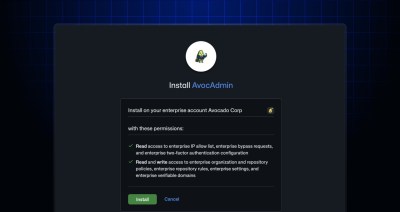
Installing GitHub Apps on your enterprise is now generally available. You can replace classic PATs with GitHub Apps in more of your enterprise and organization automation with the expanded API…
Copilot usage metrics now show the names of the skills, custom agents, Model Context Protocol (MCP) servers, slash commands, and plugins that your organization creates, instead of grouping them under…
We’re adding blob storage endpoints for GitHub Actions on github.com as part of our ongoing work to improve capacity and reliability. The meta API now includes these new endpoints. If…

Three Java Champions share how they use GitHub Copilot to solve problems, accelerate development, and keep humans responsible for the results.

Build what’s next on GitHub, the place for anyone from anywhere to build anything.

Join us October 28-29 in San Francisco or online for GitHub Universe, our flagship developer event uniting people, agents, and the world’s code.

