
Easily filter review requests by team
Review requests are a great way to ask for review on software, and with the addition of team requests you can get the feedback you need faster. To make it…
Review requests are a great way to ask for review on software, and with the addition of team requests you can get the feedback you need faster. To make it…

Review requests are a great way to get the people you need to look at your work. Now with team requests, you can find the right group of people and…
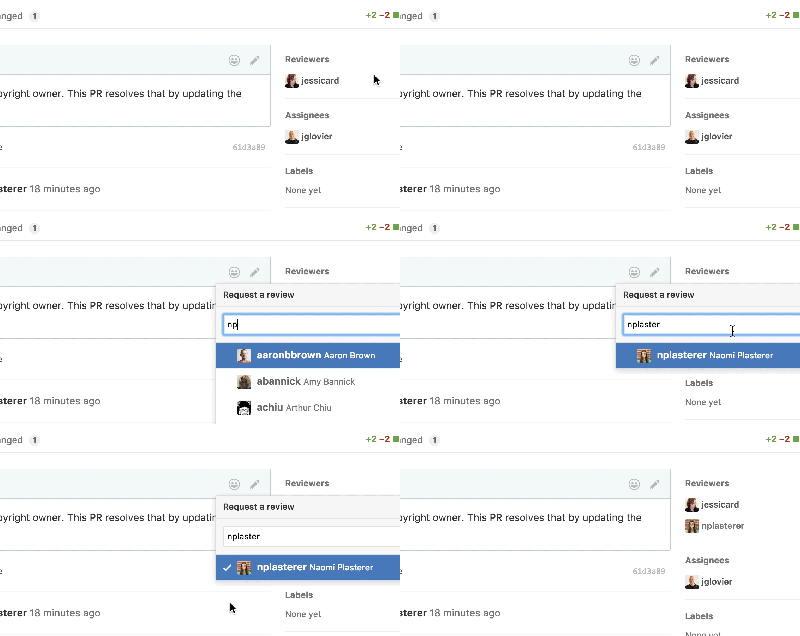
You can now request a review explicitly from collaborators, making it easier to specify who you’d like to review your pull request. You can also see a list of people…
GitHub Flavored Markdown is getting a little Task List flavoring. Today, we’re shipping an enhancement to our Markdown pipeline to support task lists. Task lists are lists with items marked…

We’re launching ReviewBench, a benchmark for code review agents built on representative GitHub pull requests, multi-source ground truth, calibrated evaluation, and production-aligned metrics.

Dependabot keeps your dependencies current, but its defaults can flood your repository with pull requests. Here’s how grouping updates, slowing the cadence, and keeping security fixes fast cut the noise on a Microsoft open source project.
A new default three-day cooldown delays version update pull requests so maintainers and security researchers can address findings in a release before it gets into your code.
New to GitHub? This beginner’s guide explains version control, repositories, and pull requests—plus everything else you need to start working confidently on GitHub.

How migrating Copilot code review to shared Unix-style code exploration tools reduced review cost by reshaping agent workflows around pull request evidence.

Explore how the Aspire team turns merged product changes into SME-reviewed docs pull requests, closing the gap between release and documentation.

A new repository-level dataset, published on GitHub under CC0-1.0, helps researchers and developers discover multilingual developer content across READMEs, issues, and pull requests.
Agentic workflows that run on every pull request can quietly accumulate large API bills. Here’s how we instrumented our own production workflows, found the inefficiencies, and built agents to fix them.
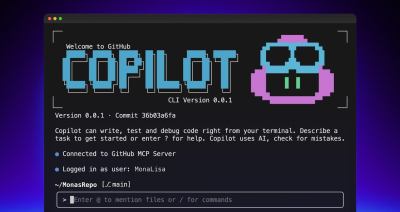
Discover how to use GitHub Copilot directly in the terminal. From cloning a repository to opening a pull request, here’s how to streamline your workflow with Copilot CLI.

Delegate coding tasks to Copilot and track progress wherever you are on GitHub. Copilot works in the background, creates a pull request, and tags you for review when finished.

Upgrade from a local MCP Docker image to GitHub’s hosted server and automate pull requests, continuous integration, and security triage in minutes — no tokens required.
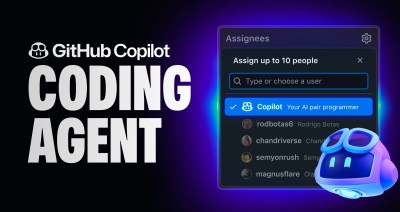
Implementing features has never been easier: Just assign a task or issue to Copilot. It runs in the background with GitHub Actions and submits its work as a pull request.
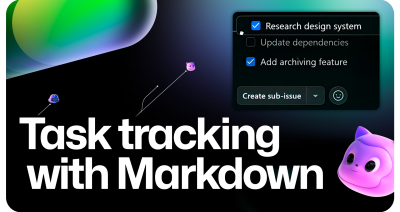
Ever wondered how to create checklists in your GitHub repositories, Issues, and PRs? Make task lists more manageable in your GitHub repositories, issues, and pull requests.

GitHub Copilot can streamline your debugging process by troubleshooting in your IDE, analyzing pull requests, and more, helping you tackle issues faster and more robustly.

A deep dive on the work that went into making the component that powers repository and pull request file trees.
Take the next step in our GitHub for Beginners series and add code to your repository. Learn how to create branches and upload changes into a pull request.

We’ve made improvements to the way users of assistive technology can interact with and navigate lists of issues and pull requests and tables across GitHub.com.

Build what’s next on GitHub, the place for anyone from anywhere to build anything.

Catch up on the key announcements shaping the future of software development.

