
Release Radar · Hacktoberfest 2023 Edition
As Hacktoberfest comes to a close, you still have a day or so left to complete and submit your pull requests. If you’re struggling to think of projects to contribute…
As Hacktoberfest comes to a close, you still have a day or so left to complete and submit your pull requests. If you’re struggling to think of projects to contribute…

Auto-triage rules are a powerful tool to help you reduce alert and pull request fatigue substantially, while better managing your alerts at scale. What’s changing? Starting today, you can define…
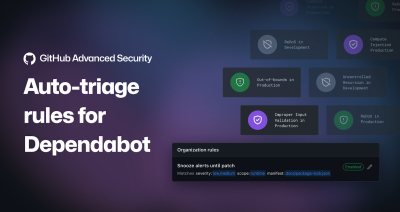
Make quick work of alerts with preset and custom rules.
Auto-triage rules are a powerful tool to help you reduce false positives and alert fatigue substantially, while better managing your alerts at scale. Starting today, you can now create your…
GitHub Enterprise Server 3.9 is now generally available. Organizations can now take advantage of more features that enable deeper collaboration, greater observability and faster workflows.
We are introducing a number of enhancements, bug fixes and a breaking API change to repository rules. 1. UI Updates * Added a repository picker to target select repositories for…
Today’s Changelog brings you copy and paste improvements, updates to the API in projects and a flurry of tasklist updates. 📋 Copy and paste improvements Copying table cells has been…

With GitHub Enterprise Importer, you can seamlessly move to GitHub Enterprise Cloud, bringing your code and collaboration history with you so your team doesn’t miss a beat.
GitHub secret scanning protects users by searching repositories for known types of secrets. By identifying and flagging these secrets, our scans help prevent data leaks and fraud. We have partnered…
Starting today, Dependabot will be able to auto-dismiss npm alerts that have limited impact (e.g. long-running tests) or are unlikely to be exploitable. With this ship, Dependabot will cut false…
A new alert rules engine for Dependabot leverages alert metadata to identify and auto-dismiss up to 15% of alerts as false positives.
As we work towards general availability of pull request merge queue, we want to thank everyone that has provided feedback ❤ (keep it coming!) and let you know about some…

Meet the projects that make up the first GitHub Accelerator cohort and learn about how GitHub is helping bring their visions to reality.
Commenting on files (including deleted, binary, and renamed files) in a pull request is now generally available on the web and GitHub Mobile! A special thank you to everyone that…

A high-quality audit log is an essential tool for enterprises to ensure compliance, maintain security, investigate issues, and promote accountability.

The GitHub Security Lab audited DataHub, an open source metadata platform, and discovered several vulnerabilities in the platform’s authentication and authorization modules. These vulnerabilities could have enabled an attacker to bypass authentication and gain access to sensitive data stored on the platform.
Today’s Changelog brings you updates to workflows, roadmaps, our API and makes cross organization projects a breeze! ➕ Automatically add items from multiple repositories Last month, we shared the latest…
Today’s changelog brings you the addition of colors and descriptions for single-select fields, as well as improvements to both roadmaps and tasklists! 🎨 Single-select field colors and descriptions Make it…
GitHub Enterprise owners can now leverage the removeEnterpriseMember API, in addition to the built-in functionality on the Enterprise’s “People” pages, to remove enterprise members from their GitHub Enterprise. To learn…
A GraphQL mutation is now available for reverting a merged pull request: revertPullRequest. Like the revert action on the pull request page in the web, calling this API creates a…

Support for GitHub CLI extensions has been expanded with new authorship tools and more ways to discover and install custom commands. Learn how to write powerful extensions in Go and find new commands to install.

Build what’s next on GitHub, the place for anyone from anywhere to build anything.

Join us October 28-29 in San Francisco or online for GitHub Universe, our flagship developer event uniting people, agents, and the world’s code.

