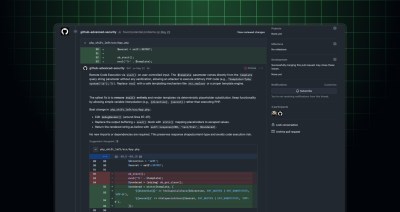
AI Scan for pull requests generally available
Code scanning AI Scan for pull requests is now generally available. It complements CodeQL by finding vulnerabilities in pull request changes for languages and frameworks that CodeQL does not currently…
Code scanning AI Scan for pull requests is now generally available. It complements CodeQL by finding vulnerabilities in pull request changes for languages and frameworks that CodeQL does not currently…
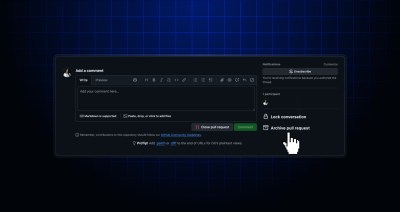
Users with the triage role or higher in a repository can now archive and unarchive pull requests. Previously, archiving was limited to repository administrators, requiring trusted triagers to hand routine…
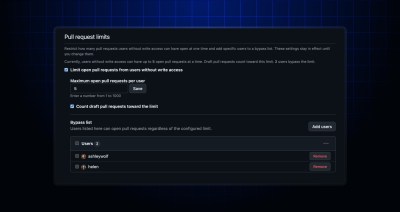
Maintainers are seeing more low-quality contributions in their repositories and need better ways to manage them. You can now configure pull request limits to also include draft pull requests. Previously,…
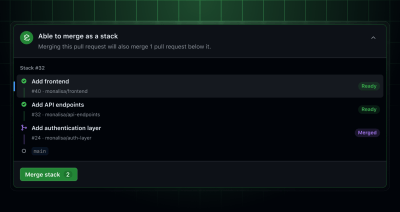
GitHub stacked pull requests are now generally available. Break large changes into smaller, focused pull requests that you can review independently and merge together. Since the feature went into public…
The enterprise and organization repository-level Copilot usage metrics reports now break down how long pull requests spend in each stage of review. A new pull_request_review_times array on each repos-1-day row…

How we rebuilt the diff surface in the GitHub Copilot app to open a million-line pull request with hundreds of inline review comments.
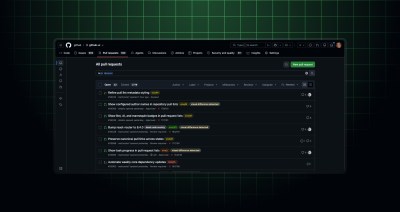
The new repository pull requests page is now generally available to all GitHub users. Highlights The new page makes it easier to find and act on pull requests in a…

A refreshed repository-level pull request listing page is now in public preview for all GitHub users. It brings powerful filtering, compact presentation mode, and more. Highlights The new page makes…
You can now manage GitHub code scanning’s AI Scan for pull request enablement with REST API endpoints at the organization and repository levels. This public preview gives teams a programmatic…
Repository rulesets allow you to easily add scalable protections across your repositories. Starting today, you can use repository rulesets to block pull requests from merging when the pull request introduces…
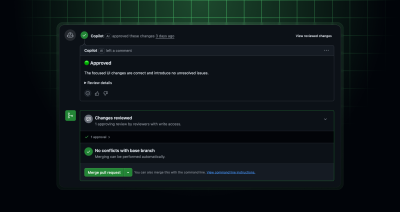
Copilot now tells you when a pull request is ready to approve, and admins can authorize it to sign off on approval. The ability for Copilot to approve is off…
GitHub CLI now has a repeatable –attach flag that uploads a local image or video and references it inline in an issue, pull request, or comment body. This is now…

Managing library updates can be tedious at times. Learn how the GitHub Copilot app can handle this type of repetitive task.
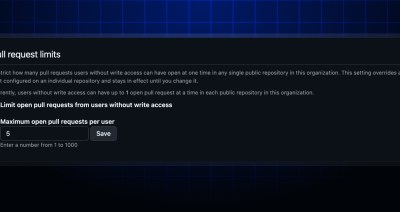
You can now set pull request limits at the organization level. Pull request limits let you define how many open pull requests a user without write access can have at…
Instead of one huge, un-reviewable pull request, teach coding agents to decompose work into a clean, ordered stack with GitHub stacked pull requests.
You can now customize the branch names Dependabot creates for pull requests. New pull-request-branch-name options in .github/dependabot.yml let you set a prefix and maximum length, choose segment and word separators,…

Learn how I modernized an old codebase of mine using stacked sessions and pull requests in the GitHub Copilot app.
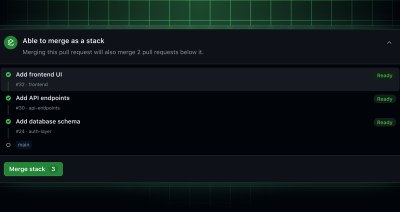
Stacked pull requests break large changes into small, reviewable pull requests. They’re an ordered series of pull requests that each represent focused layers of your change. With stacks, you can…
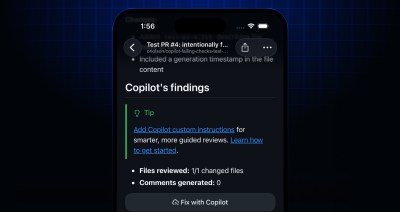
You can now select Fix with Copilot directly from Copilot code review pull request comments in GitHub Mobile. The button is available both on the pull request’s main view and…
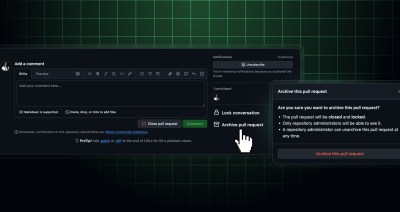
Repository admins can now archive pull requests to remove them from public view without permanently deleting them. When a pull request is archived, it is closed and locked. Pull requests…
GitHub code scanning now surfaces AI-powered security detections directly on pull requests, expanding vulnerability coverage to languages and frameworks not currently supported by CodeQL. These detections help teams identify and…

Build what’s next on GitHub, the place for anyone from anywhere to build anything.

Join us October 28-29 in San Francisco or online for GitHub Universe, our flagship developer event uniting people, agents, and the world’s code.

