Welcome to Maintainer Month: Celebrating the people behind the code
What maintainers are telling us, what we’ve shipped, and how to celebrate the people behind open source.
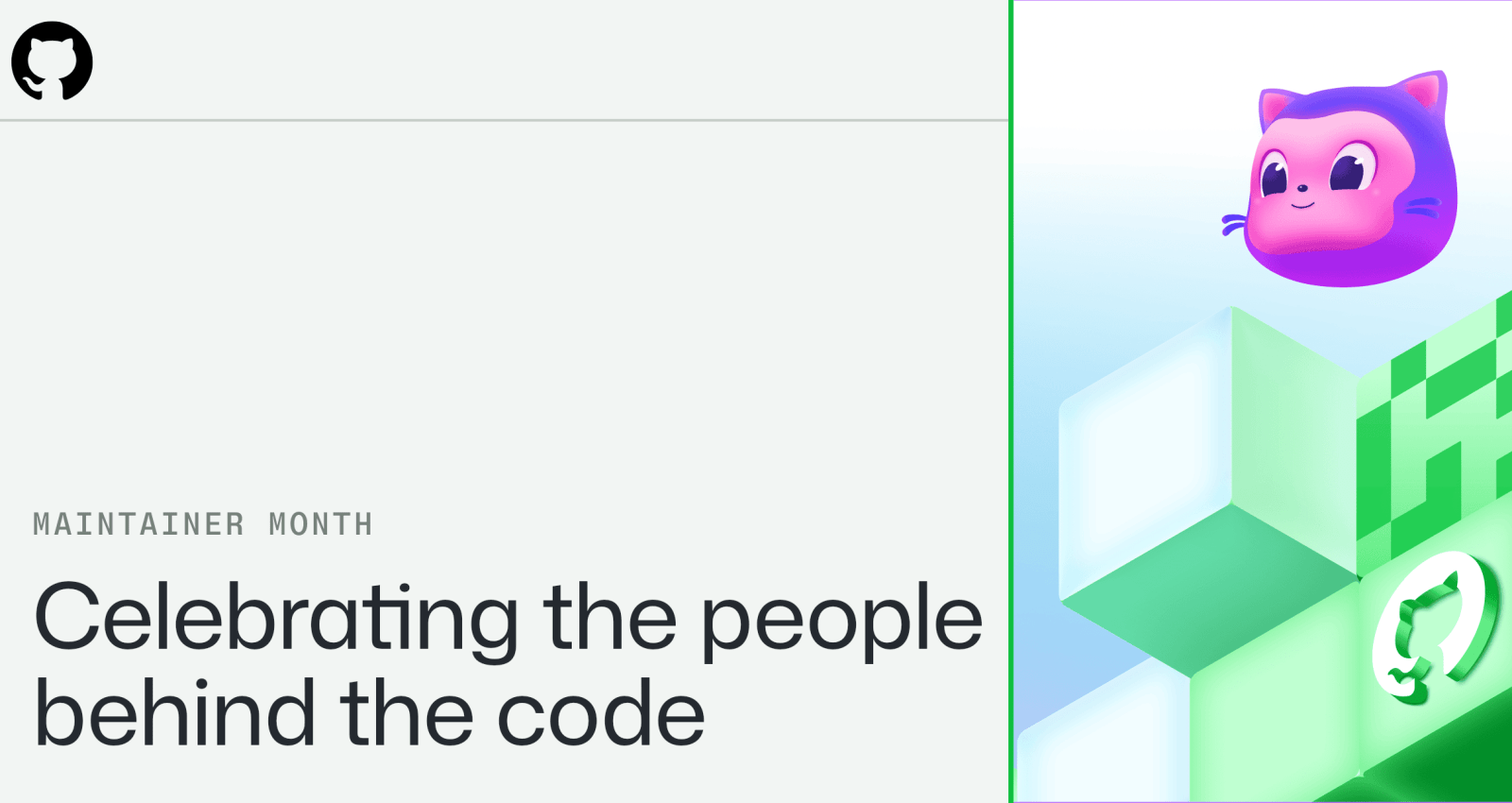
At a Maintainer Unconference in Brussels this year, a breakout session had maintainers jotting down thoughts on the future of open source. One sticky note stood out:
As AI gets better at writing code, human work around code becomes more important and more invisible.
Mentoring new contributors, building trust across a community, making the judgement calls that shape a project’s direction: that’s the work that turns a repository into a living collaboration. And with the speed of AI, the people doing the work are carrying more than ever. Pull requests merged on GitHub have nearly doubled year over year, and agentic workflows are accelerating the pace even further. As one maintainer put it:
How much time should I spend on something that you didn’t spend any time on?
I’ve been part of Maintainer Month for five years now. The conversations I’m having with maintainers this year feel different—there’s a weariness, but there’s also innovation. Maintainers are converging on standards like agents.md, building trust systems, and designing workflows that put them back in control. In February, Ashley Wolf named the influx of low-quality contributions open source’s Eternal September. Maintainers told us exactly what they needed. We took notes.
Six years ago we started Maintainer Month because the people behind open source deserve better tools, real resources, and community. This year, we’re going bigger on all three.
Tools: Big releases for maintainers this month
Maintainers need better ways to manage who contributes, how, and at what volume. In the Eternal September post, we shared some of the directions we were exploring. Here’s where things stand.
Granular contribution limits: This one’s for every maintainer who’s watched their pull request queue turn into a firehose. This gives maintainers the ability to introduce limits on how many pull requests a new or unknown user can make in your project. No more choosing between closing the doors and opening the floodgates. You control how much you let in.
Pull request archiving pairs with it. Sweep spam pull requests out of public view. No more emailing support to clean up your repo.
And there’s a brand new accessibility best practices guide on opensource.guide. Practical steps to make your project usable by everyone.
And we haven’t been waiting around. Since February, we’ve also shipped:
- Pull request creation controls: restrict pull request creation to collaborators only, or disable pull requests entirely. (Also useful for mirrors, roadmaps, or other repositories where pull requests aren’t appropriate.)
- Pinned comments on issues: pin the most important comment to the top of any issue thread.
- Sort notifications oldest-first: work through your backlog in order instead of always chasing the latest ping.
- File upload in issue forms: structured issue templates now support file uploads.
We’re building these because maintainers asked for them. Specifically, repeatedly…and often loudly! We hear you, and we’re going to keep shipping. Please keep flagging.
Resources: Who else is showing up
We asked companies and foundations across the ecosystem to show up for Maintainer Month. And they did! Sentry, OpenJS Foundation, Daytona, and more partners are putting real resources behind maintainers: free tools, compute credits, threat intelligence, conference tickets, and more.
Open source runs on maintainers, and we’re proud to partner with GitHub to celebrate and support them. As the ecosystem scales, maintainers are doing more than ever to keep projects secure and reliable. Maintainer Month is a chance to connect, share knowledge, and remind them they’re not doing this alone.
Robin Ginn, OpenJS Foundation
Partners across the ecosystem are offering real resources for maintainers. Here’s what’s available:
- Sentry: Sentry for Open Source
- Daytona: $100 in compute credits for maintainers (and up to $10,000 for projects via Startup Grid)
- Mockoon: Free Mockoon Cloud accounts for OSS projects
- Ref.tools: Free project planning tools for your team
- Arachne Digital: Free cyber threat intelligence reporting for OSS projects
- Radix / .Tech: Free 1-year .tech domain for maintainers
- OpenJS Foundation: 15% discount on RenderATL tickets (code: OPENJSGITHUB)
- Open Source Initiative: The maintaine.rs book, free for all maintainers
- Web Summit: Conference tickets (details coming soon)
Last year, Sentry celebrated companies that fund open source on a Times Square billboard for Maintainer Month. That’s the energy we’re looking for.
Want to join them? Whether you’re a company that depends on open source, a startup, or an educator—reach out about the Partner Pack or explore the GitHub Partner Program for more ways to get involved.
Maintainers, here’s where you can claim your Partner Pack benefits.
And if you maintain open source tools for science: the new Open Source for Science Fund just launched with $20 million in funding. Grants up to $1 million for projects supporting data-intensive research. Letters of intent open May 11.
Community: You shouldn’t have to do this alone
There are 20+ events and streams (and counting!) scheduled throughout Maintainer Month. Here are a few we’re excited about:
- FOSS United Foundation: Maintainers Meetup Delhi (May 9, India). Unconference-style gatherings for maintainers across India.
- PyCon US 2026 (May 13–19, Long Beach). Come find us there!
- Discussion: How should corporations support OSS maintainers? (May 14, virtual). An open discussion on corporate OSS support.
- Open Source Assistive Technology Hackathon (May 21-22, San Francisco). A two-day hackathon focused on making open source assistive technology more accessible.
- What Maintainers Need to Know about Open Source Licensing, SBOMs and Security (May 27, virtual). The EU’s Cyber Resilience Act is here and it affects open source. Come get the practical rundown.
We’d love to see you there, whether you maintain a project with millions of users or you’re just getting started.
Part of something bigger
One thing we heard over and over from maintainers this year: they want to be ”part of something bigger and not just being a solo maintainer.” If you maintain an open source project and want to connect with others who get it, request to join the Maintainer Community, a vetted space to share experiences, get support, and have honest conversations. It’s where the “how are you handling this?” sharing of best practices is happening.
Community members also get access to an exclusive tier of the Partner Pack, with deeper discounts, higher credit limits, and offers you won’t find in the public pack.
Get involved
- Sponsor a maintainer. Financial support is one of the most direct ways to say “your work matters.”
- Host or attend an event. Browse the schedule or submit your own event.
- Share your story. Tag #MaintainerMonth on social media. Tell people about the project you maintain and what it means to you. The best way to celebrate maintainers is to make their work visible.
- Say thank you. Find a project you depend on and tell the maintainers you appreciate them. It matters more than you think.
Open source is changing fast. What hasn’t changed is that real people wake up every day and choose to maintain the software the world runs on. They do it because they believe in it, and millions of us depend on that choice.
This month is for them. Show up, pitch in, say thank you. Let’s make it count.
See everything happening this Maintainer Month >
Tags:
Written by

Related posts
Highlights from Git 2.56
The open source Git project just released Git 2.56. Here is GitHub’s look at some of the most interesting features and changes introduced since last time.

OpenClaw went viral. Meet the maintainers building and securing it.
OpenClaw is the fastest-growing project in GitHub history. Peter Steinberger and several maintainers share what they learned in the project’s first six months.
What 50 open source projects taught us about security in the AI era
See how the open source projects in Session 4 of the GitHub Secure Open Source Fund combined AI-assisted workflows, maintainer expertise, GitHub security tools, expert guidance, and funding to improve project security.