Dungeons & Desktops: 10 roguelikes that never die (because their communities won’t let them)
Roguelikes don’t die. They fork, mutate, get argued over, rewritten, abandoned, and revived again. Sometimes all at once.
The first version of NetHack was released in 1987 as a heavily modified descendant of Hack, itself based on Rogue, a Unix-era experiment built for character-based terminals around 1980. The term “roguelike” later emerged in the early 1990s. This is also when Usenet communities, like rec.games.roguelike, were founded. Players and developers gathered there to trade ideas, variants, and philosophies inspired by Rogue’s design.
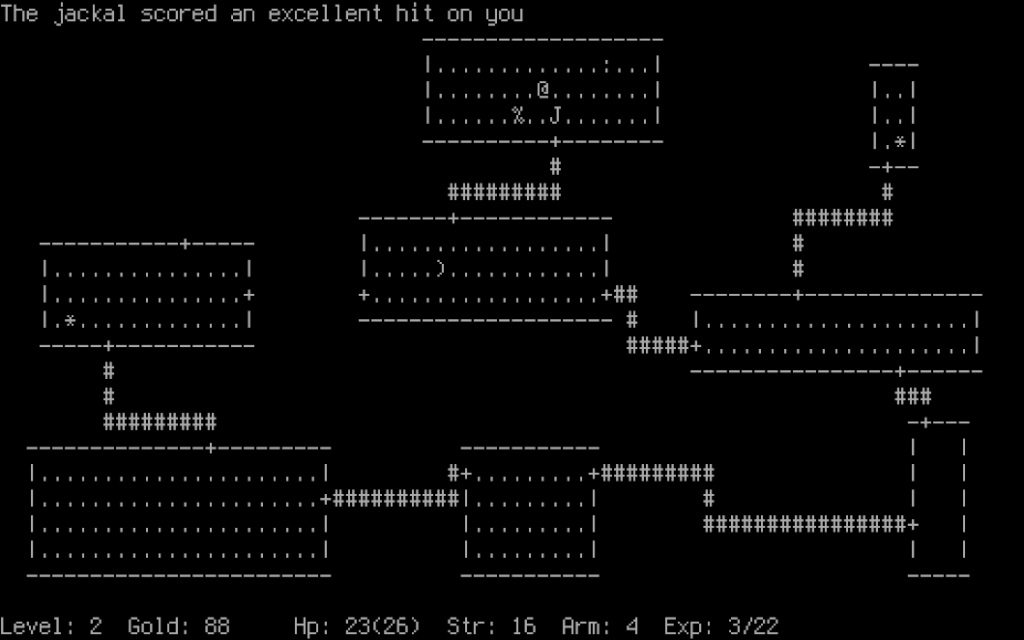
That lineage helps explain something unusual about the genre. NetHack was developed collaboratively over networked systems before most people even had internet access. Angband required a coordinated relicensing effort decades later just to become fully open source. And Pixel Dungeon was declared “complete”… and then immediately forked by the community into dozens of new games.
Recently, I built a small experiment that turns a GitHub repository into a roguelike dungeon. That idea came from the gaming genre that has been evolving in the open for decades, shaped as much by players as by developers. Many of the games that defined roguelikes are still actively maintained today, with contributors refining systems, debating mechanics, and layering in new ideas over time.
That same spirit shows up in events like the 7DRL challenge, where developers build a complete roguelike in seven days, and in the annual Roguelike Celebration, which brings the community together to share ideas, research, and experiments. The genre thrives in these spaces, where iteration is fast, ideas are tested in public, and even small projects can leave a lasting mark.
Here are 10 open source roguelikes you can study, contribute to, and play for hours, until you’ve totally lost yourself. Most of them started small. None of them stayed that way…
1 Cataclysm: Dark Days Ahead
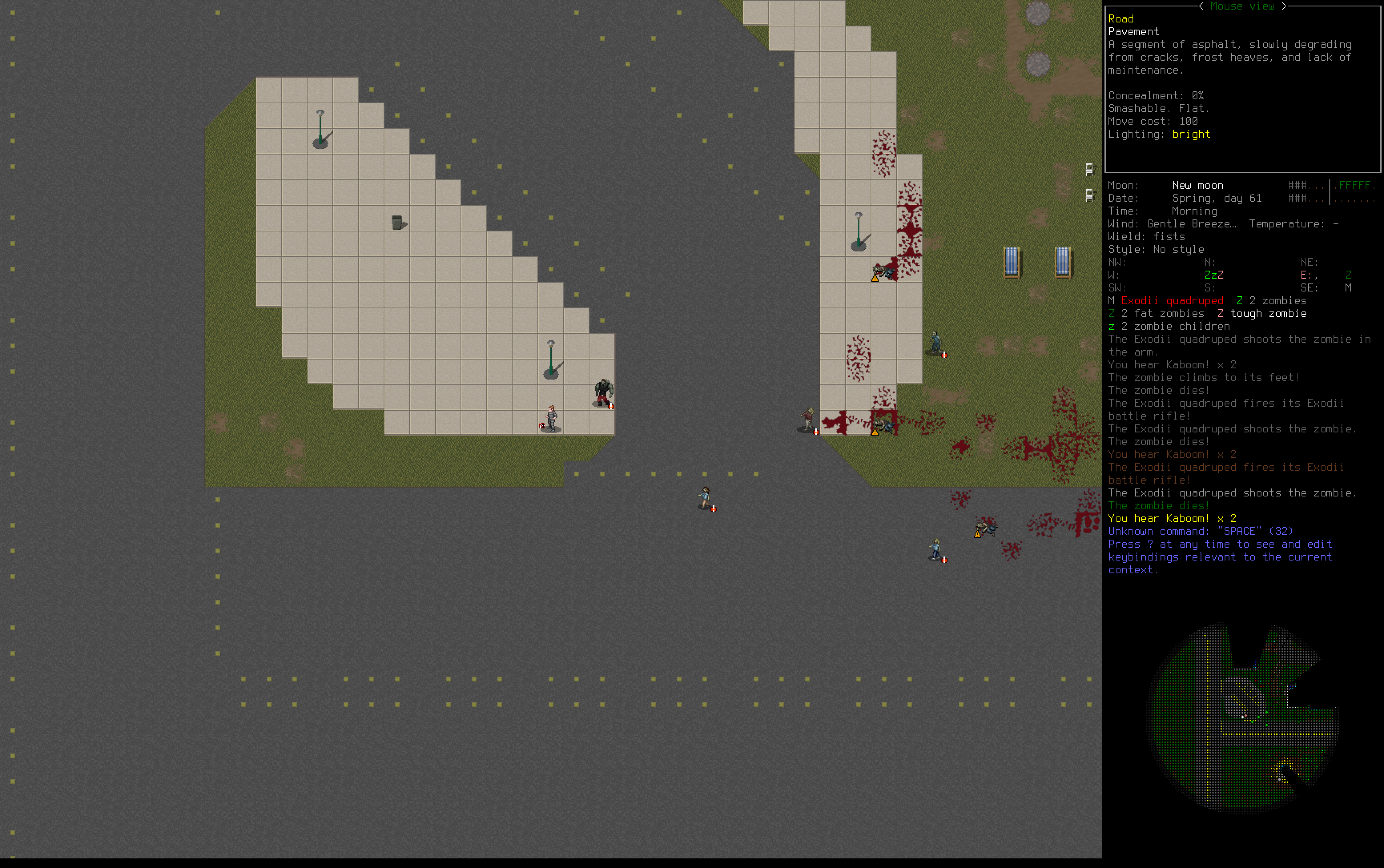

Cataclysm: Dark Days Ahead drops you into a world where everything has already collapsed. Cities sit abandoned, labs hum with leftover experiments, forests reclaim the edges, and the roads lead nowhere good. You scavenge through the wreckage while hunger, injury, weather, and time keep pressing in. The world runs continuously, shaped by a huge contributor base that keeps adding systems and interactions. Every building has a story baked into it. Most of them end with you running.
It started as a fork of Cataclysm and never really stopped growing. Over time, contributors kept layering in new systems, interactions, and edge cases until the simulation reached a kind of sprawling completeness. You can wire in cybernetics, mutate into something barely recognizable, or assemble an armored vehicle from whatever you can salvage. None of it is scripted. It all emerges from the rules underneath. The level of detail even spills into the community, where players argue about nutrition, crafting logic, and what should realistically exist.
🛡️ Fun fact: Its simulation is so deep that contributors regularly debate real-world topics like nutrition, physics, and crafting logic in pull requests.
2 Nethack
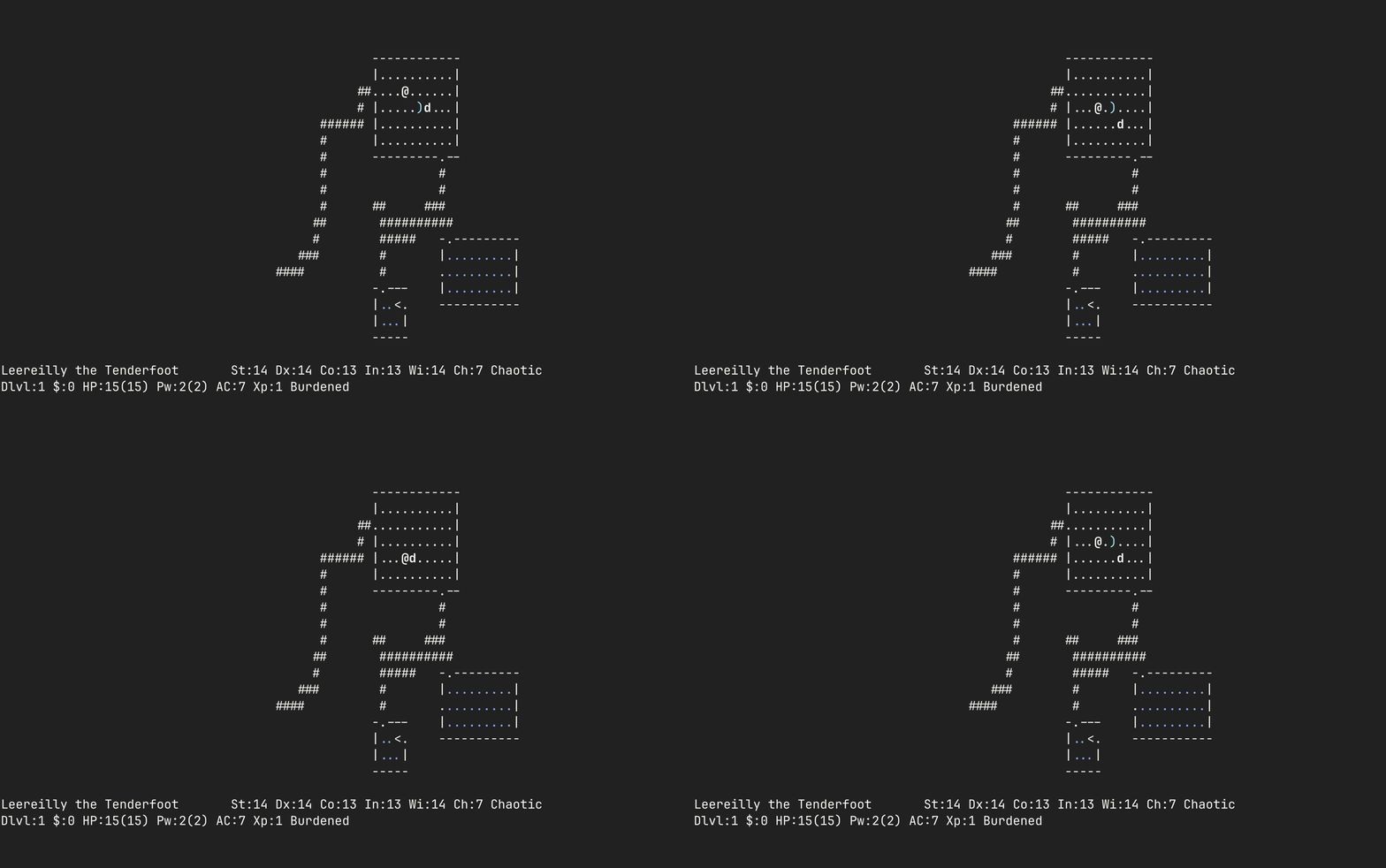

NetHack was first released in 1987 as a fork of Hack, the 1984 game that grew out of Rogue’s dungeon-crawling experiments. It drops you into a dungeon packed with shrines, traps, cursed gear, and monsters that seem personally invested in your downfall. Every object follows its own rules, and those rules collide in ways that feel almost vindictive. After decades of contributions, the game is dense with edge cases, hidden mechanics, and bizarre outcomes, so curiosity rarely goes unpunished. The deeper you go, the more the dungeon seems to anticipate whatever terrible idea you are about to try next.
NetHack 5.0.0 was just announced, proving that even after nearly four decades, the dungeon is still finding new ways to surprise people. Reading the release notes is always entertaining because they capture the game’s strange, systemic humor better than almost anything else: illiterate heroes who receive a spellbook from their deity get the spell shoved directly into their mind, fleeing leprechauns bury their gold after teleporting, and monsters can blind you with a camera.
If ASCII / 2D tilesets don’t do it for you, be sure to check out @JamesIV4’s 3D version(!) available on web, Windows, macOS, Linux, and Android. It uses neth4ck/neth4ck to run NetHack compiled to WebAssembly, with a React hooks/Zustand frontend handling input and UI, plus a Three.js renderer. NBD.
⚔️ Fun fact: The “Net” in NetHack comes from how it was built. It’s one of the earliest games developed collaboratively over the internet, with contributors coordinating across networks long before modern open source workflows.
3 Dungeon Crawl Stone Soup
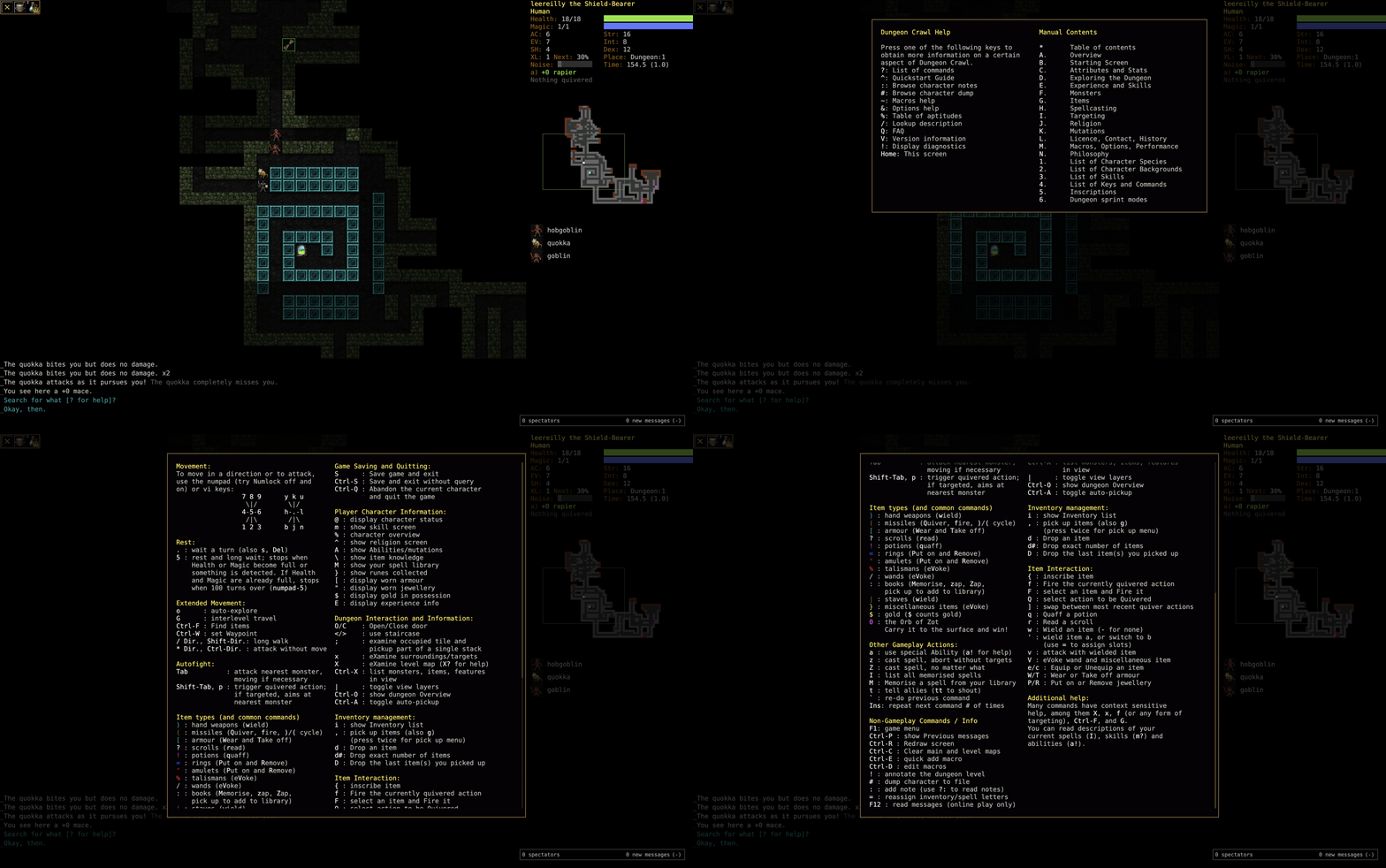

Dungeon Crawl Stone Soup unfolds across a network of dungeon branches, each tuned to test a different kind of mistake. Lairs full of beasts, vaults packed with threats, deeper levels that stop pretending to be fair. You choose a species, a background, maybe a god to follow, and your choices carry through everything that comes after. Magic, religion, and skills all pull in different directions, so builds don’t settle—they evolve under pressure.
You can play offline or on public servers, where other players’ ghosts appear and people watch games unfold in real time. It’s a shared space as much as a dungeon. Resources stay tight, every decision stacks, and you deal with the outcome.
🛡️ Fun fact: Dungeon Crawl Stone Soup is what happens when a community refuses to let a project stall. Forked in 2006 to revive a slowing codebase, it’s still evolving today—sometimes by adding features, sometimes by deleting them.
4 Angband
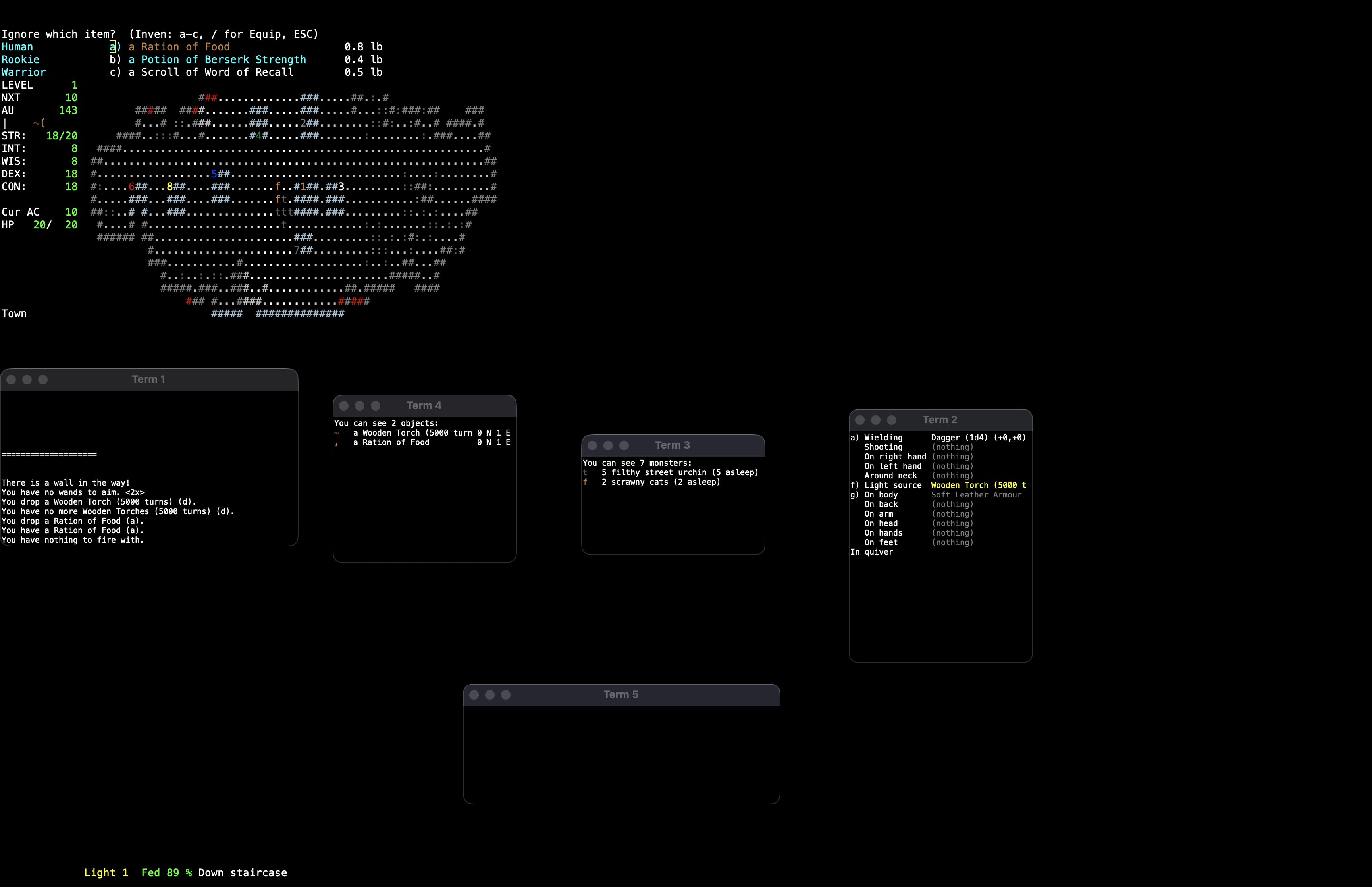

Angband stretches downward from a quiet town into a massive dungeon tied to decades of development. Each level pushes deeper toward a final confrontation that has defined runs for generations. A steady contributor base keeps refining mechanics while variants and forks branch off in different directions. The structure stays familiar, but the scale and history give it weight.
It traces its lineage back to Moria in the 1980s, and it didn’t stay contained for long. Forks spun out into dozens of variants—some tweaking balance, others rebuilding systems or shifting the setting entirely. Some stay close to the original, others turn it into something barely recognizable. Ideas move between them, get reworked, and show up somewhere else a few years later.
Despite its age, it’s still being updated. Around it sits a community that keeps things moving—ladders, forums, live servers where people watch runs unfold in real time.
⚔️ Fun fact: Angband didn’t start fully open source—it took a coordinated relicensing effort in 2009 to get there. Decades of contributors had to align to make it happen, turning one of the oldest roguelikes into something the community could truly take forward.
With the transition to GitHub, Angband’s development split into distinct branches: a stable mainline and experimental offshoots. This shift led to what David L. Craddock describes as an “explosion of productivity,” with new versions appearing almost nightly. These development branches functioned like a “secret lab,” where the dev team’s “mad scientists” could freely experiment—building and discarding features without risking the integrity of the official release.
This branching model not only accelerated development but also made experimentation sustainable. (Craddock, Dungeon Hacks)
5 Brogue Community Edition
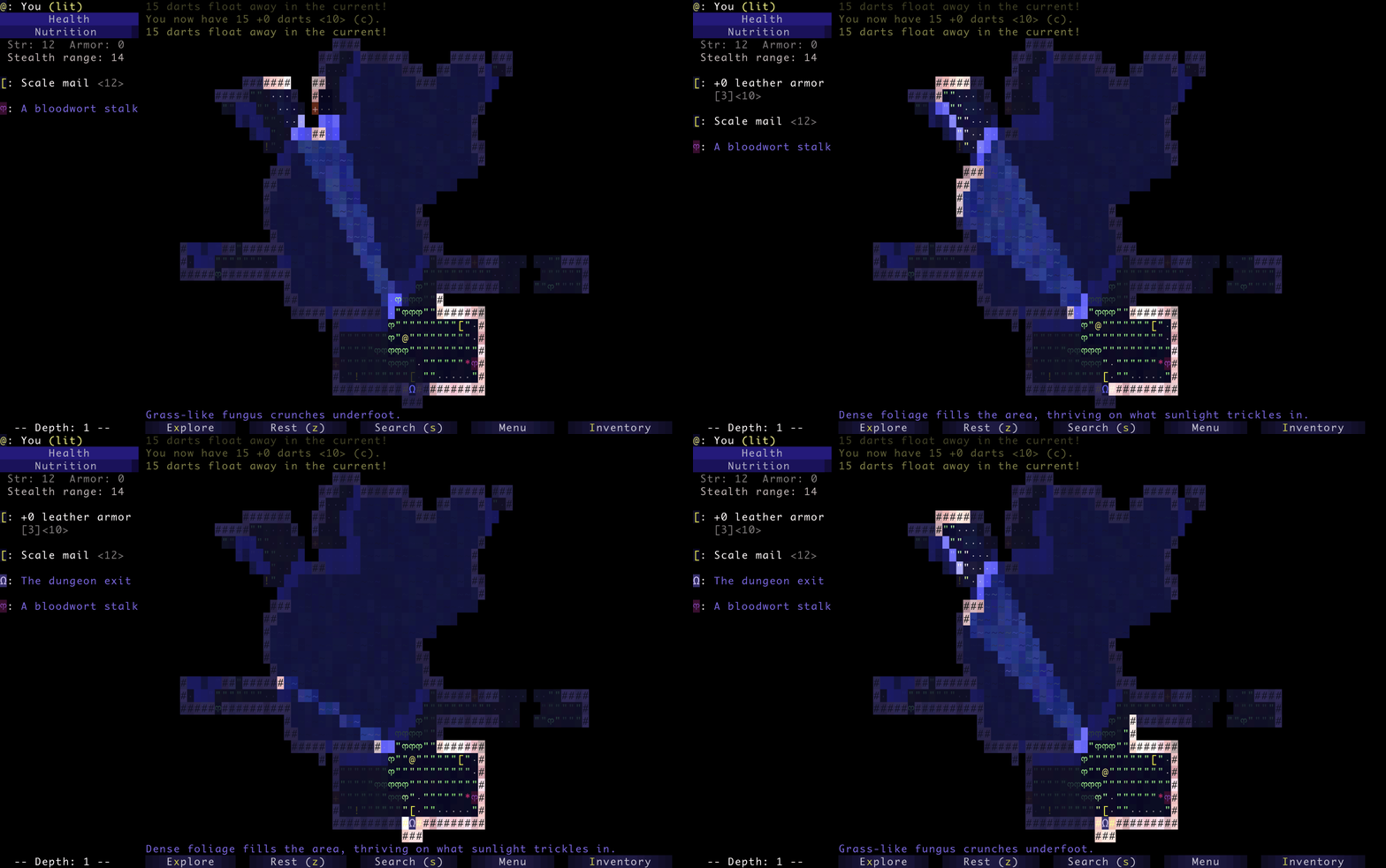

Brogue presents a dungeon built with clarity and intent. Rooms connect in ways that funnel you into decisions you cannot ignore. Light drops off into darkness, fire spreads through terrain, gas drifts, and the environment joins every fight. Each floor feels deliberate, with just enough unpredictability to keep you alert. When things go wrong, you can trace the moment it started.
That clarity has also led to a surprisingly active mod scene, with dozens of community variants experimenting on top of the same foundation—some adding new monsters and items, others reworking pacing, visuals, or the feel of a run entirely (see the full list).
🛡️ Fun fact: The original Brogue stopped receiving official updates years ago, but the community didn’t leave it there. Development continued as Brogue Community Edition, with contributors picking up the codebase and still shipping new releases today.
6 Pixel Dungeon
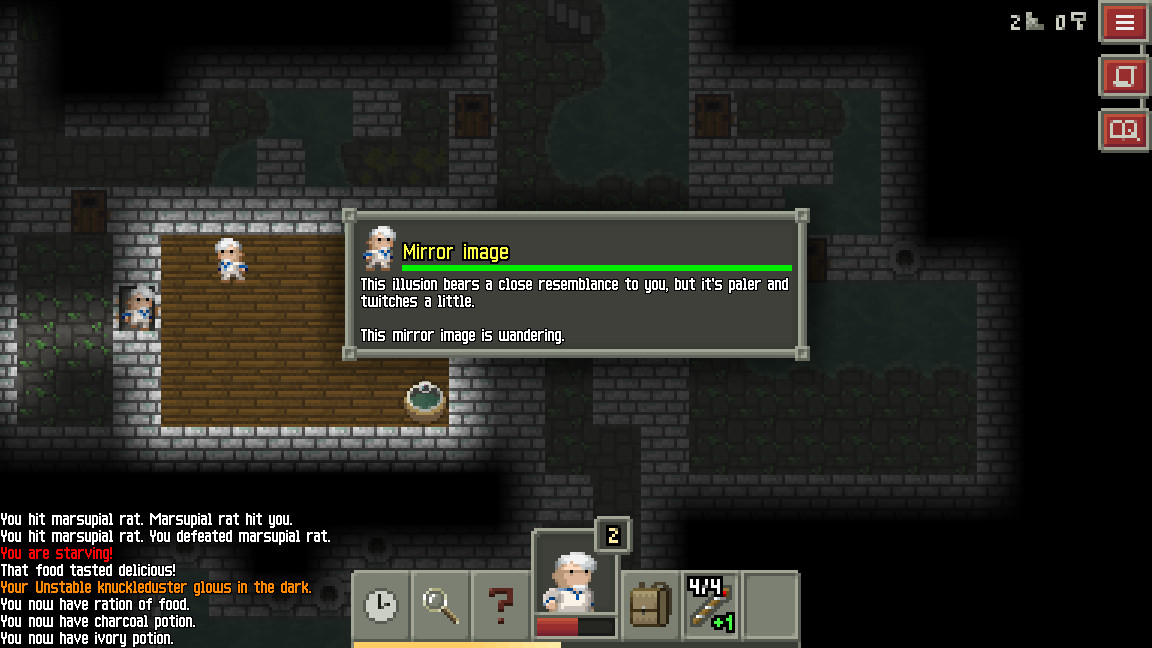

Pixel Dungeon is structured as a series of quick-hit layers. Sewers give way to prisons, then caves, then worse. Every level adds a small twist—a trap, a new enemy, a bad surprise behind a door you probably should not have opened. Built as a free passion project with no monetization hooks, it leans on tight design and fast pacing. Runs are short. The urge to start another one is not.
⚔️ Fun fact: Pixel Dungeon went open source in 2014 and was declared “complete” a year later. The community took that as a starting point, not an ending… spinning up dozens of forks and variants that are still being updated today.
7 Shattered Pixel Dungeon
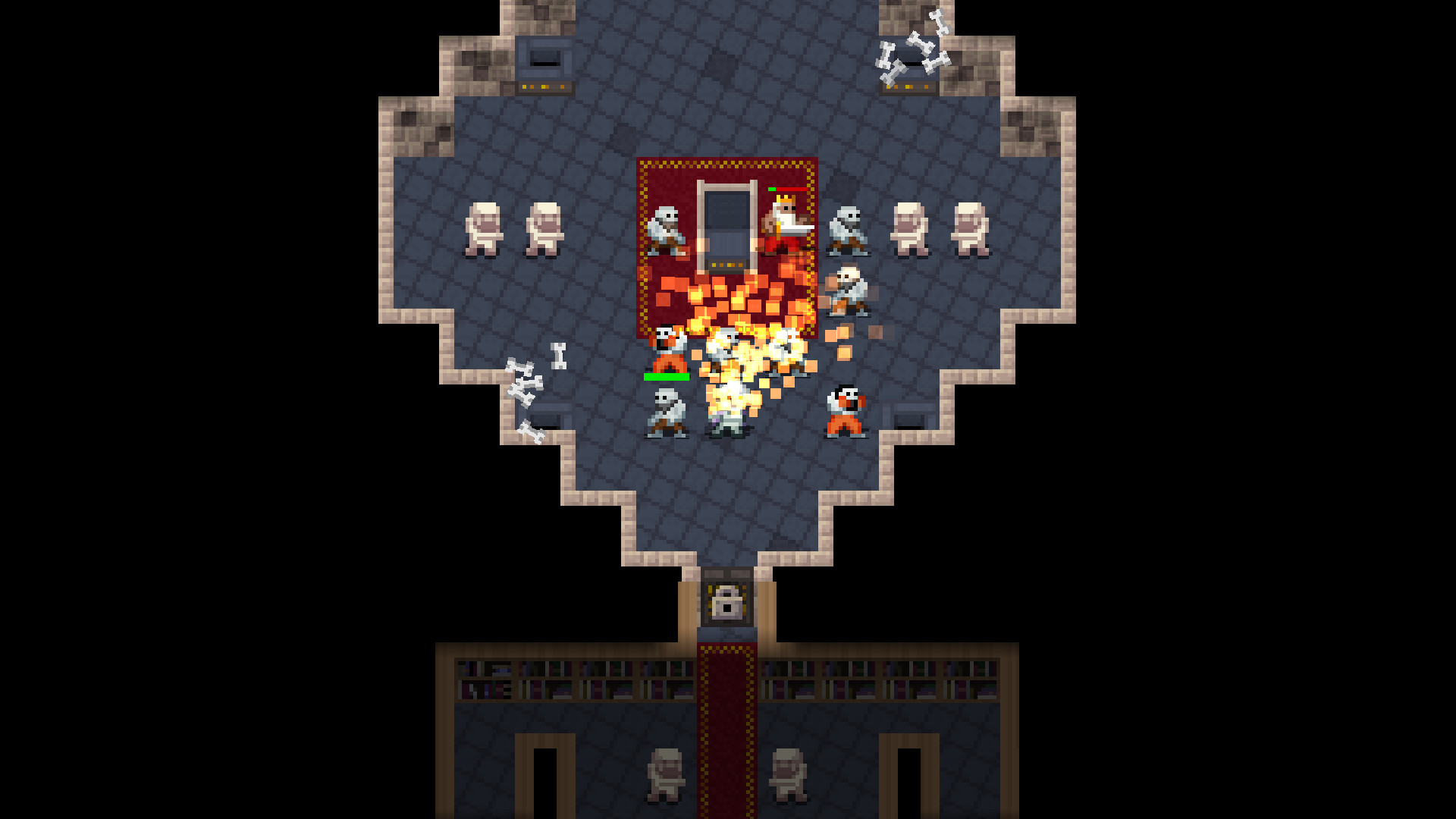

Shattered Pixel Dungeon takes that structure and pushes it further. Regions feel more distinct, enemies and items open up viable paths, and regular updates keep reshaping the experience. The dungeon keeps growing without losing its pace. Community feedback feeds directly into development, so the world keeps shifting under players who thought they had it figured out.
🛡️ Fun fact: Shattered Pixel Dungeon started as a small balance mod and quietly turned into a full game over years of continuous updates. A decade later, it’s seen dozens of releases, millions of downloads, and is widely considered one of the best open source games out there—all while sticking to pure roguelike principles with no permanent upgrades, just better decisions each run.
8 DRL
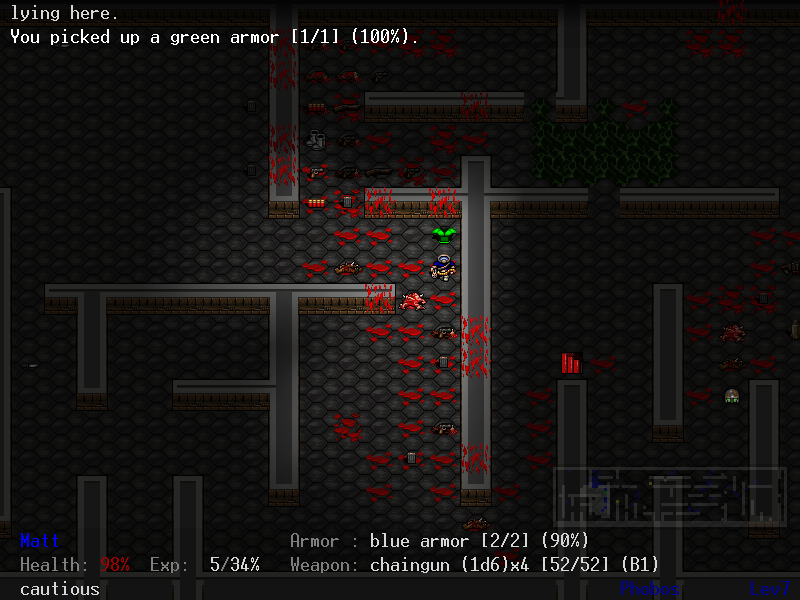

DRL runs through military bases and hell-infested corridors filled with familiar threats and very loud intentions. Tight levels, heavy weapons, and encounters that escalate fast. The structure stays turn-based, but the pressure feels immediate. Built in Free Pascal and fueled by 90s shooter DNA, it delivers short runs that hit hard and end fast if you hesitate.
DRL is a fast and furious, coffee-break length roguelike game that is heavily inspired by a certain popular 90s FPS game.
⚔️ Fun fact: DRL started life as “Doom, the Roguelike,” before a trademark notice forced a rename—ironically speeding up its transition to open source. It’s been evolving since the early 2000s and still gets updates today, all while turning one of the fastest FPS games ever made into a turn-based roguelike that somehow keeps the same intensity.
9 KeeperRL
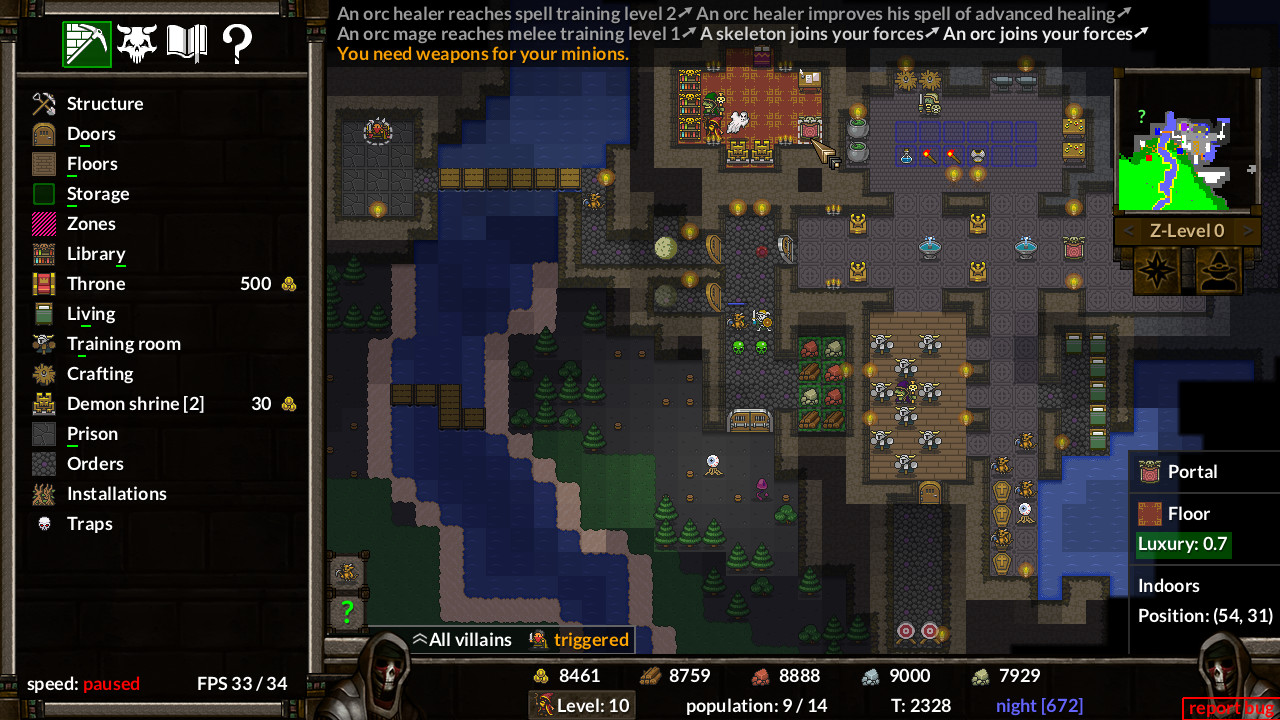

KeeperRL begins underground, where you carve out rooms, lay traps, and build a dungeon designed to break incoming heroes. The surface world pushes back with raids, while your minions train, craft, and occasionally cause problems of their own. You can step in directly for tactical combat or let the systems play out. Fire spreads, creatures react, and the dungeon develops a personality that reflects your decisions.
🛡️ Fun fact: KeeperRL leans hard into its open source roots. You can buy the full version by donating to wildlife charities, grab a completely free ASCII build if you prefer a terminal experience, and even get help from the developer compiling it yourself.
10 HyperRogue
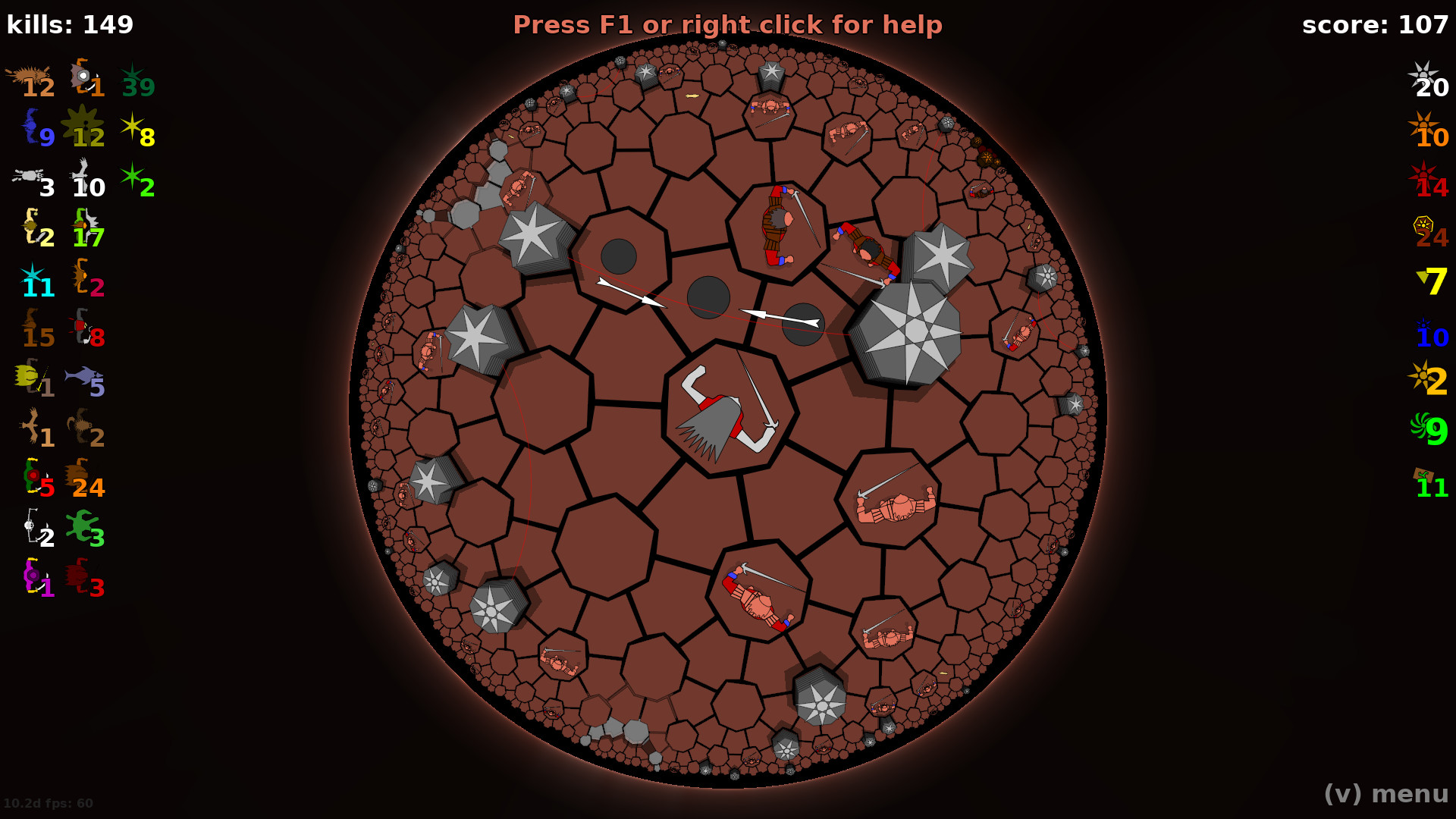

HyperRogue spreads across dozens of strange lands where geometry refuses to cooperate. Paths diverge in unexpected ways, space expands faster than expected, and returning to a familiar spot takes more precision than it should. Each region introduces its own rules, enemies, and hazards, all layered on top of that shifting foundation. Movement alone becomes a skill you have to learn under pressure.
HyperRogue takes the familiar loop of a roguelike—moving, surviving, collecting, and adapting—and places it in a world where the rules of space no longer behave as expected. Built on hyperbolic geometry, its world expands faster than intuition can track, making navigation as challenging as combat. Paths that seem parallel drift apart, returning to a previous location requires deliberate precision, and positioning against enemies forces you to learn a new spatial logic under pressure. Each of its many distinct regions adds unique mechanics, hazards, and creatures on top of this unstable foundation, constantly reshaping how you approach the game. Despite its abstract design, the core remains direct: gather treasure, avoid being overwhelmed, and push deeper as the difficulty scales. The result is a roguelike that feels less like exploring a dungeon and more like learning the rules of an unfamiliar universe one mistake at a time.
⚔️ Fun fact: HyperRogue doubles as a long-running research project. Its developer, @ZenoRogue, continuously experiments with hyperbolic geometry, adding new lands, mechanics, and systems that explore how games behave when the rules of space itself change.
Maintained by community
What stands out across all of these projects is how active they still are. People are adding systems, revisiting old decisions, and pushing mechanics into weird corners just to see what holds up. Some have evolved with updated graphical interfaces, others stay true to their terminal roots, and a few let you switch between both. You see the same thing happening around them too, in tools like Ghostty, Charm’s suite, and Ratatui, where the terminal keeps getting stretched in new directions.
Tight loops, visible systems, communities that don’t drift away. That’s what keeps roguelikes here—and the CLI is built on the same foundation.
These projects don’t die. They just get forked.
Thanks for reading, adventurer. May your next run end slightly better than the last! ⚔️
11 Special bonus roguelike-like game
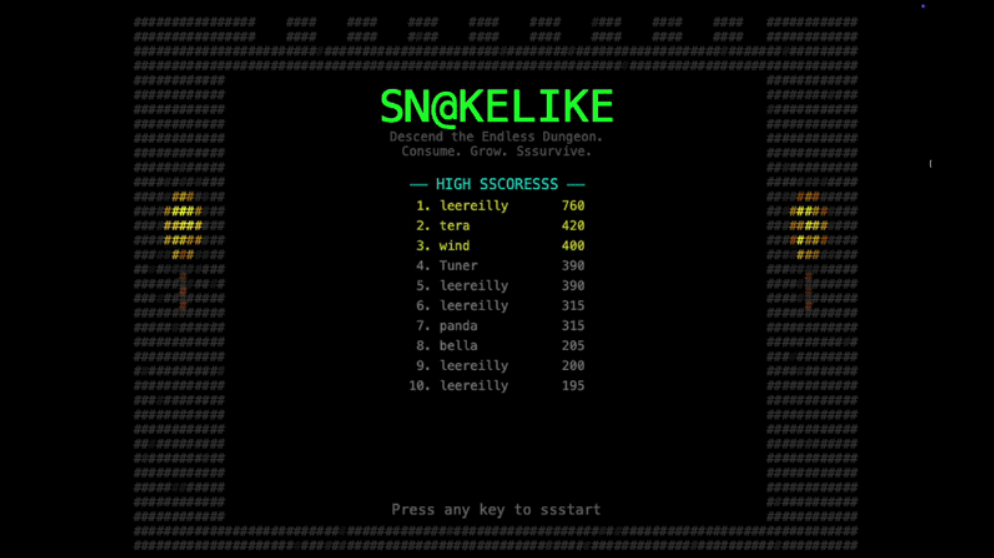
YARLM (Yet Another Roguelike Lee Made) called Snakelike, a daring mix of Rogue and Snake that I conjured using GitHub Copilot for the umpteenth annual 7DRL Challenge. Ssseee if you can beat my high ssscore. 🐍
Tags:
Written by

Related posts
Hack the World: Why hackathons are still the best place to learn to build
The barriers to building software have collapsed. Today, anyone can build. Hackathons are a great place to start learning.
AI is changing developer work. Here are three skills to strengthen.
Learn to direct AI agents, critically review their output, and keep technical judgment at the center of your workflow.
Highlights from Git 2.56
The open source Git project just released Git 2.56. Here is GitHub’s look at some of the most interesting features and changes introduced since last time.