Want to showcase your project at GitHub Universe next year? Apply now! You’ll get two free tickets and a space on the show floor.
This year’s most influential open source projects
From Appwrite to Zulip, Universe 2025’s Open Source Zone was stacked with standout projects showing just how far open source can go. Meet the maintainers—and if you want to join them in 2026, you can now apply for next year’s cohort.
|
|
9 minutes
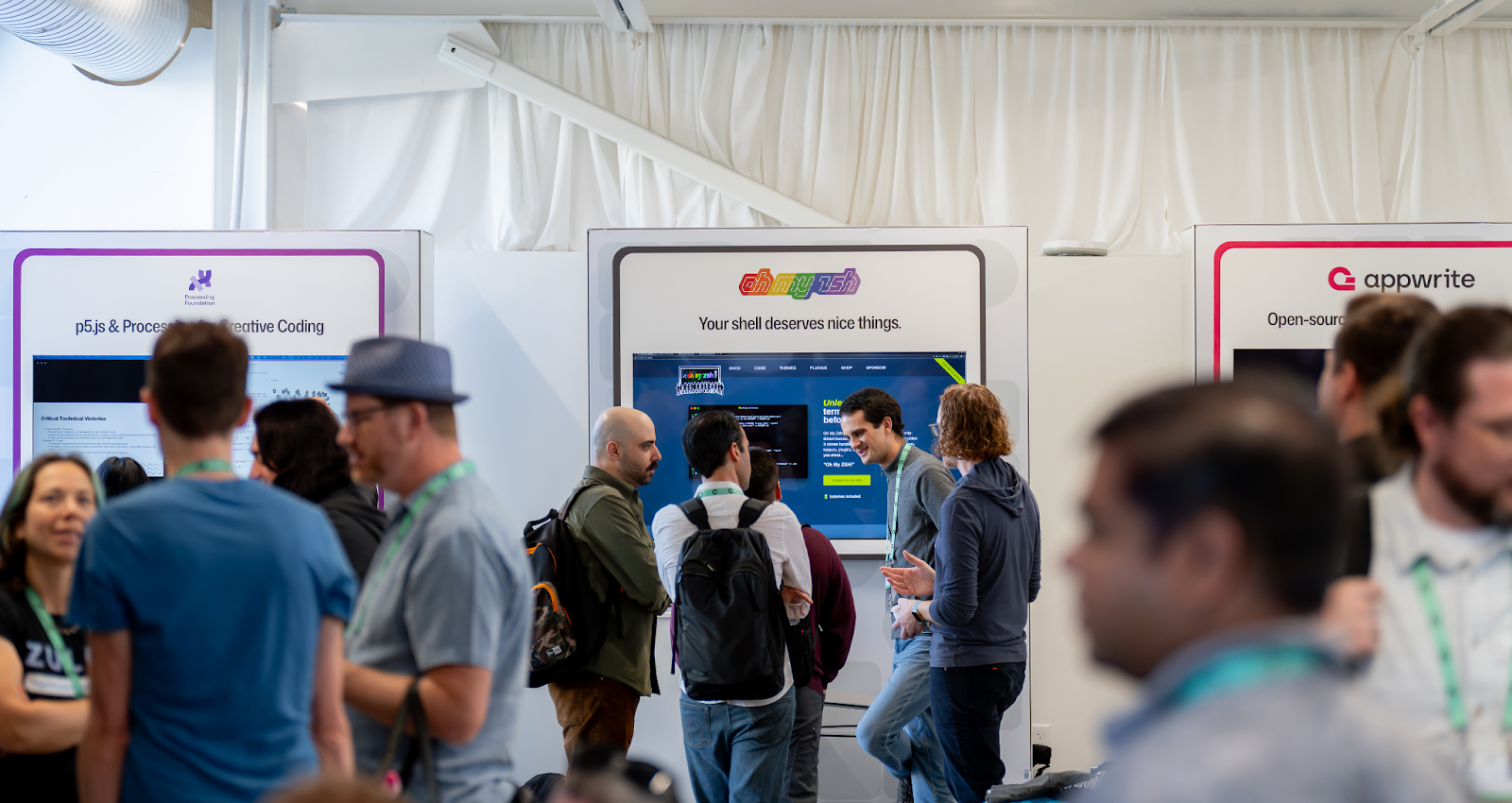
From Appwrite to Zulip, the Open Source Zone at Universe 2025 was stacked with projects that pushed boundaries and turned heads. These twelve open source teams brought the creativity, the engineering craft, and the “I need to try that” demos that make Universe special. Here’s a closer look at what they showcased this year.
If you want to join them in 2026, applications for next year’s Open Source Zone are open now!
Appwrite: Backend made simple
Appwrite is an open source backend platform that helps developers build secure and scalable apps without boilerplate. With APIs for databases, authentication, storage, and more, it’s become a go-to foundation for web and mobile developers who want to ship faster.
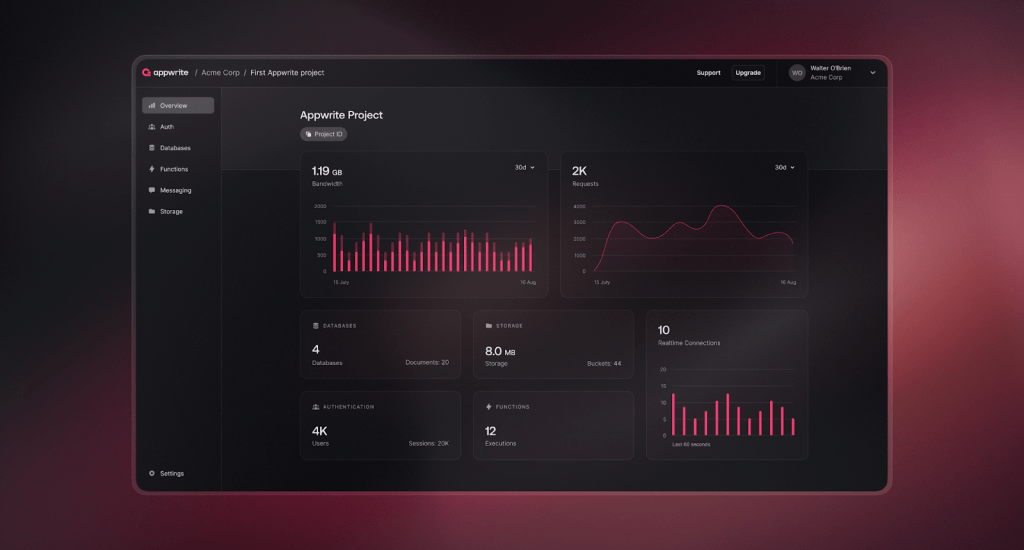
Origin story: Appwrite Appwrite was created in 2019 by Eldad Fux as a side project, and it quickly grew from a weekend project to one of the fastest-growing developer platforms on GitHub, with over 50,000 stars and hundreds of contributors worldwide.
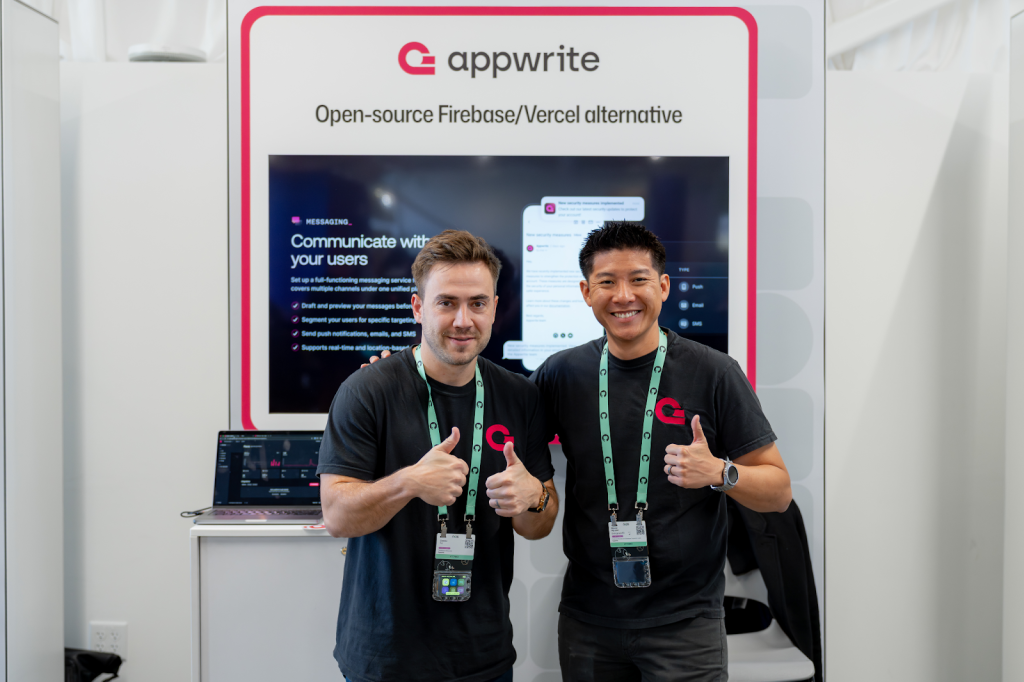
GoReleaser: Effortless release automation for Go
GoReleaser automates packaging, publishing, and distributing Go projects so developers can ship faster with less stress. With strong support from its contributor base, it has become the go-to release engineering tool for Go maintainers who want to focus on building rather than busywork.
🚦 Go go go, GoReleaser: GoReleaser started life in 2015 as a simple release.sh script. Within a year, @caarlos0, rewrote it in Go with YAML configs, during his holiday break—instead of, you know, actually taking a holiday. That rewrite became the foundation of what’s now a tool with over 15,000 stars and paying customers worldwide. GitHub included! E.g. for GitHub CLI.
And can we all just take a minute to applaud the GoReleaser logo?!

💡 Fun fact: one of my colleagues, @ashleymcnamara, has created a secession (that’s the word for a bunch of Gophers—I checked!) of iconic Gopher designs that have become part of Go’s visual culture. If you’ve seen a Gopher sticker at a conference, odds are it came from her repo. Watch out, Ashley. Looks like you have some competition.
Homebrew: The missing package manager for macOS
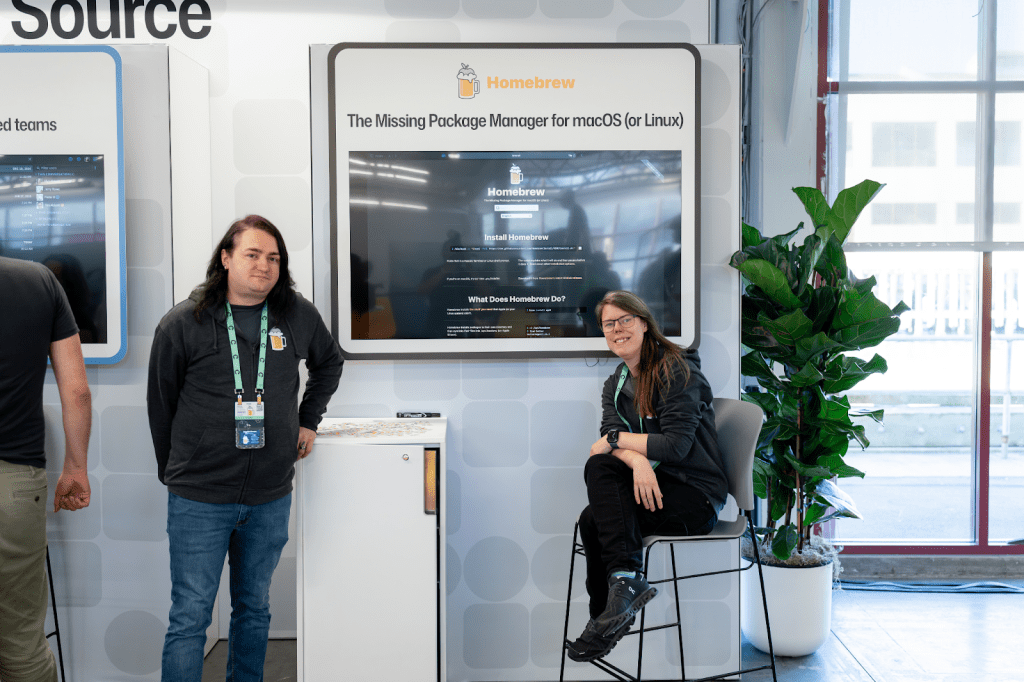
Speaking of great logos. Homebrew is the de facto package manager for macOS, beloved by developers for making it simple to install, manage, and update software from the command line. From data scientists to DevOps engineers, millions rely on Homebrew every day to bootstrap their environments, automate workflows, and keep projects running smoothly.
Thanks for having us! GitHub Universe was a great opportunity to re-energize by meeting users and fellow maintainers.
Issy Long, Senior Software Engineer & Homebrew Lead Maintainer
Ladybird: A browser for the bold
Ladybird is an ambitious and independent open source browser being built from scratch with performance, security, and privacy in mind. What began as a humble HTML viewer is now evolving into one of the most exciting projects in the browser space, supported by a rapidly growing global community.
💡 Did you know: Ladybird started life in 2018 as a tiny HTML viewer tucked inside the SerenityOS operating system. Fast-forward a few years and it’s grown up into a full-fledged, from-scratch browser with a buzzing open source community—1200 contributors and counting!
Moondream: Tiny AI, big vision
Moondream is an open source visual language model that brings visual intelligence for everyone. With a tiny 1 GB footprint and blazing performance, it runs anywhere from laptops to edge devices without the need for GPUs or complex infrastructure. Developers can caption images, detect objects, follow gaze, read documents, and more using natural language prompts. With more than 6 million downloads and thousands of GitHub stars, Moondream is trusted across industries from healthcare to robotics, making state-of-the-art vision AI as simple as writing a line of code.
Oh My Zsh: Supercharge your shell
Oh My Zsh is a community-driven framework that makes the Zsh shell stylish, powerful, and endlessly customizable. With hundreds of plugins and themes and millions of users, it is one of the most beloved ways to supercharge the command line.
People get really into customizing their prompts—myself included—but GitHub’s @casidoo raised the bar with her blog post. Safe to say her prompt looks way cooler than mine. For now… 😈
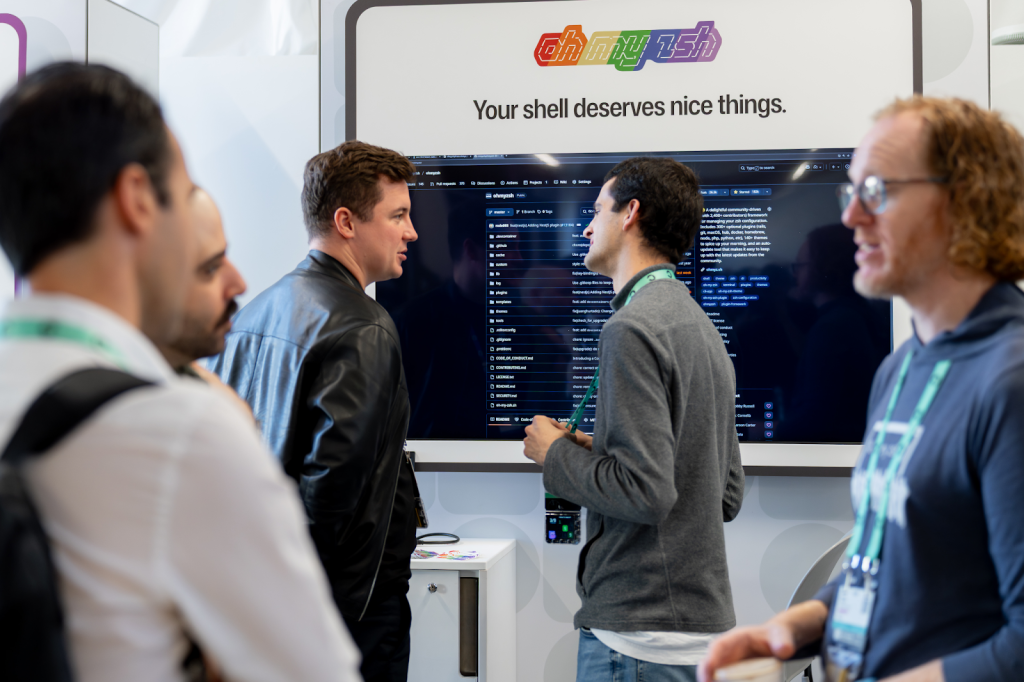
💡 Fun fact: Oh My Zsh started in 2009 as a weekend project by Robby Russell, and it’s now one of the most popular open-source frameworks for managing Zsh configs, with thousands of plugins and themes contributed by the community. <3
OpenCV: The computer vision powerhouse
OpenCV is the most widely used open source computer vision library in the world, powering robotics, medical imaging, and cutting-edge AI research. With a vast community of contributors, it remains the essential toolkit for developers working with images and video.
🧐 Did you know: OpenCV started in 1999 at Intel as a research project and today it powers everything from self-driving cars to Instagram filters, with over 40,000 stars on GitHub and millions of users worldwide!
Open Source Project Security Baseline (OSPSB): Raising the bar
Security isn’t glamorous, but maintaining a healthy open source ecosystem depends on it—and that’s where the Open Source Project Security Baseline (OSPSB) comes in. OSPSB, an initiative from the OpenSSF community, gives maintainers a practical, no-nonsense checklist of what “good security” actually looks like. Instead of vague best practices, it focuses on realistic, minimum requirements that any project can meet, no matter the size of the team.
At Universe 2025, OSPSB resonated with maintainers looking for clarity in a world of shifting threats. The maturity levels and self-assessment tools make it simple to understand where your project is strong, where it needs improvement, and how users can contribute back to security work — a win for the entire ecosystem.
💡 Fun fact: OSPSB is used by hundreds of projects as a self-assessment tool, and it’s supported by the GitHub Secure Open Source Fund to help maintainers keep their software resilient.
The resilience and sustainability of open source is a shared responsibility between maintainers and users. Beyond telling consumers why they should trust your project, Baseline will also tell them where they can contribute to security improvements.
Xavier René-Corail, Senior Director, GitHub Security Research
p5.js and Processing for Creative Coding
p5.js is a beginner-friendly JavaScript library that makes coding accessible for artists, educators, and developers alike. From interactive art to generative visuals, it empowers millions to express ideas through code and brings creative coding into classrooms and communities worldwide.
Processing is an open-source programming environment designed to teach code through visual art and interactive media. Used by artists, educators, and students worldwide, it bridges technology and creativity, making programming accessible, playful, and expressive.
PixiJS: Powering graphics on the web
PixiJS is a powerful HTML5 engine for creating stunning 2D graphics on the web. Built on top of WebGL and WebGPU, it delivers one of the fastest and most flexible rendering experiences available. With an intuitive API, support for custom shaders, advanced text rendering, multi-touch interactivity, and accessibility features, PixiJS empowers developers to craft beautiful, interactive experiences that run smoothly across desktop, mobile, and beyond. With over 46,000 stars on GitHub and adoption by hundreds of global brands, PixiJS has become the go-to toolkit for building games, applications, and large-scale visualizations in the browser.
💡 Fun fact: PixiJS has been around for more than 12 years and has powered everything from hit games like Happy Wheels and Subway Surfers to immersive art installations projected onto city buildings. Developer Simone Seagle used PixiJS to bring The Met’s Open Access artworks to life—animating Kandinsky’s Violett with spring physics and transforming Monet’s water lilies into a swirling, interactive experience.
SparkJS: Splat the limits of 3D
Spark (no, not that one!) is an advanced 3D Gaussian Splatting renderer for THREE.js, letting developers blend cutting-edge research with the most popular JavaScript 3D engine on the web. Portable, fast, and surprisingly lightweight, SparkJS brings real-time splat rendering to almost any device with correct sorting, animation support, and compatibility for major splat formats like .PLY, .SPZ, and .KSPLAT.
What is Gaussian Splatting? Gaussian Splatting is a graphics technique that represents 3D objects as millions of tiny, semi-transparent ellipsoids (“splats”) instead of heavy polygon meshes. It delivers photorealistic detail, smooth surfaces, and fast real-time performance, making it a rising star in computer vision, neural rendering, and now, thanks to Spark, everyday web development.
Zulip: Conversations that scale
Zulip is the open source team chat platform built for thoughtful communication at scale. Unlike traditional chat apps where conversations quickly become noise, Zulip’s unique topic-based threading keeps discussions organized and discoverable, even days later. With integrations, bots, and clients for every platform, Zulip helps distributed teams collaborate without the chaos.
💡 Fun fact: Zulip began as a small startup in 2012, was acquired by Dropbox in 2014, and open sourced in 2015. Today it has over 1500 contributors worldwide, powering communities, classrooms, nonprofits, and companies that need conversations to stay useful.
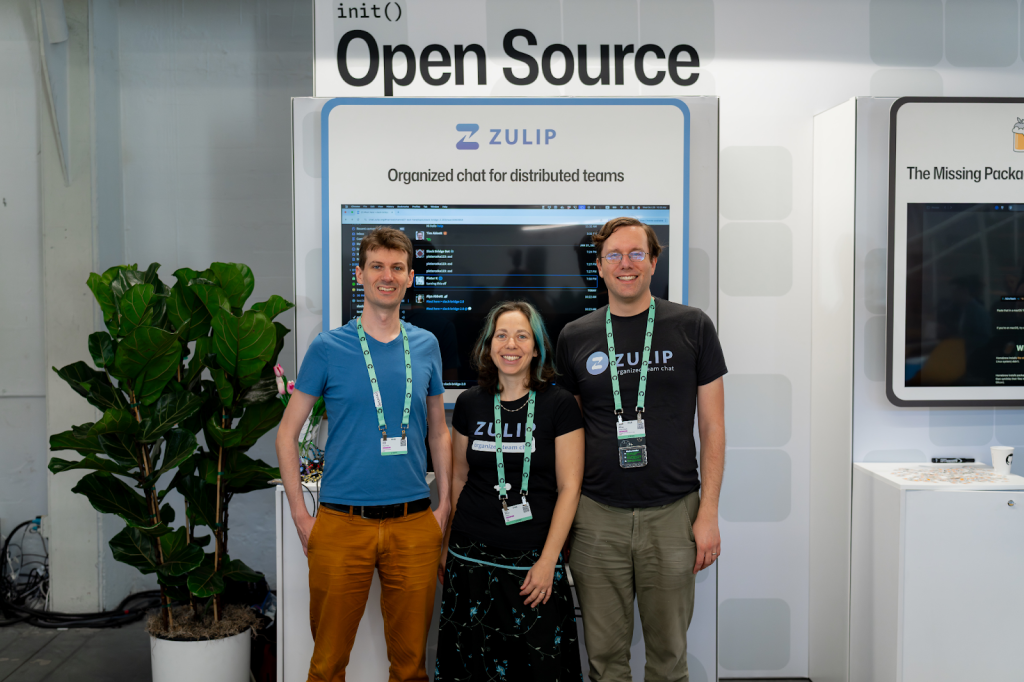
We want to thank the maintainers for participating at GitHub Universe in the Open Source Zone, and for your projects that are making our world turn. You all are what open source is about! <3
Even if you didn’t get to meet these folks at Universe, it’s never too late to check out their work. Or, you can keep powering open source by contributing to or sponsoring a project.
Tags:
Written by

Related posts
Investing in the people shaping open source and securing the future together
See how GitHub is investing in open source security funding maintainers, partnering with Alpha-Omega, and expanding access to help reduce burden and strengthen software supply chains.

How to scan for vulnerabilities with GitHub Security Lab’s open source AI-powered framework
GitHub Security Lab Taskflow Agent is very effective at finding Auth Bypasses, IDORs, Token Leaks, and other high-impact vulnerabilities.

What to expect for open source in 2026
Let’s dig into the 2025’s open source data on GitHub to see what we can learn about the future.