Easily filter review requests by team
Review requests are a great way to ask for review on software, and with the addition of team requests you can get the feedback you need faster. To make it…

Review requests are a great way to ask for review on software, and with the addition of team requests you can get the feedback you need faster.
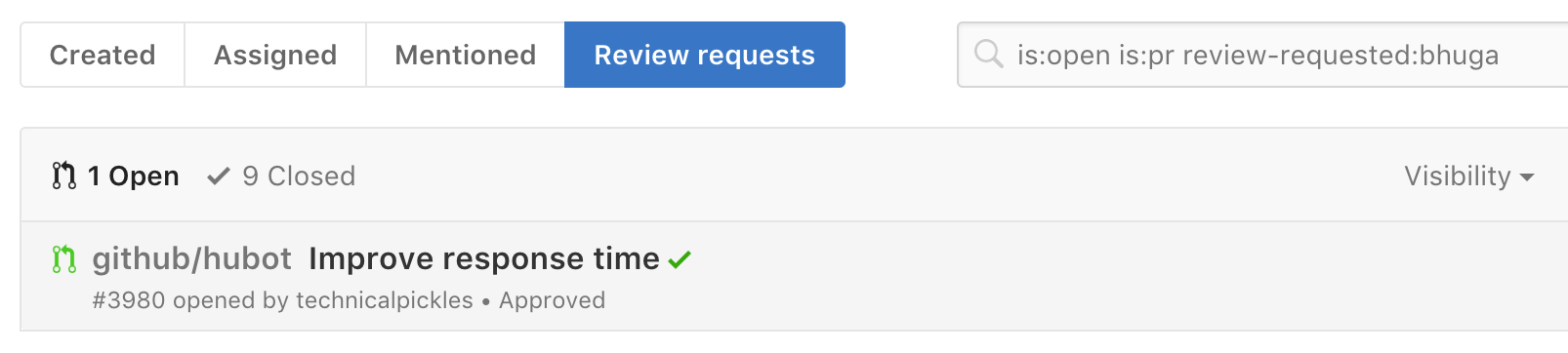
To make it easier to find pull requests that need your review, you can now see them all alongside any team you’re a member of just by using the review-requested:nplasterer filter. If that’s not enough, and you’d like to search for team requests directly you can also use a team search: team-review-requested:github/octocats. This change will also be updating what displays in your global Review Request tab.
| Qualifier | Notes |
|---|---|
review:none |
Returns pull requests that have not been reviewed |
review:required |
Returns pull requests that have not been reviewed but have a protected branch |
review:approved |
Returns approved pull requests |
review:changes_requested |
Returns pull requests that have requested changes |
reviewed-by:USERNAME |
Returns pull requests that have been reviewed by the specified user |
review-requested:USERNAME |
Now returns pull requests that have direct requests and team requests |
team-review-requested:TEAMNAME |
Returns pull requests with requests for the specified team |
We hope this new search filter helps you organize your work and review code more efficiently! Check out the documentation to learn more, or drop any questions, comments, or feedback into our help form.
Tags:
Written by

Related posts

GitHub Universe 2026: Evolving every layer of the stack
Today, we laid out our vision for GitHub as the most comprehensive, end-to-end software delivery system in the world.

Octoverse: Commits, pushes, reach new highs in 2026 as developers build with agents
See how a record year of growth reached every industry, every field, and every kind of builder in the 2026 Octoverse report.

The next developer interface is ambient intelligence
AI, agents, voice, and physical controls are shifting software development from operating tools to expressing intent—and helping developers stay focused on building.