GitHub Universe is back: We want you to take the stage
Get inspired by five of the most memorable, magical, and quirky Universe sessions to date.

Everyone’s favorite global developer event is back for another year of learning, connection, building, and donuts. We hope you’re excited to join us at Fort Mason Center in San Francisco on October 28–29. Of course, you don’t just have to be in attendance this year: Our Call for Sessions is open now through Friday, May 1 at 11:59 p.m. PT. If you’ve been thinking about taking the stage, this is your moment. Submit a proposal that shares what you’ve been building over the past year, what you’ve learned, and what other builders can take away from it. And if you know someone who deserves a mic, you can also nominate a speaker.
Need some inspiration? Below, we have five past Universe sessions that have captured our imaginations (so much so that we’re still talking about them). These sessions perfectly encapsulate what Universe is all about: learning, fun, and just a little magic. We can’t wait to see what they spark for you.
Git’s nine lives: Taming frontend chaos with Git’s hidden features (2025)
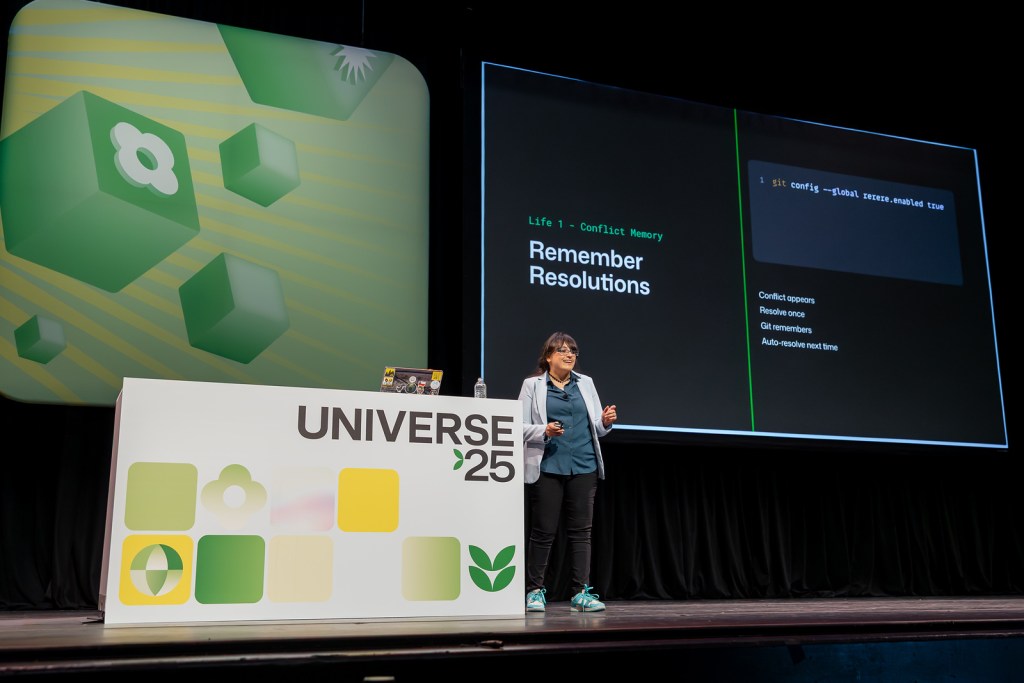
Pillippa Pérez Pons took a problem every frontend team recognized: messy rebases, ever-growing monorepos, mysteriously vanishing commits, and general Git chaos, and made it delightfully weird by framing the whole thing as a cat’s nine lives. Each “life” unlocked a lesser-known Git feature or optimization—sparse checkouts, partial clones, reflog rescues, and performance boosts—delivered with storytelling, visuals, and just enough humor to make the tricky parts stick.
Breath of Copilot: Level up your DevEx with GitHub Actions and GitHub Advanced Security (2025)
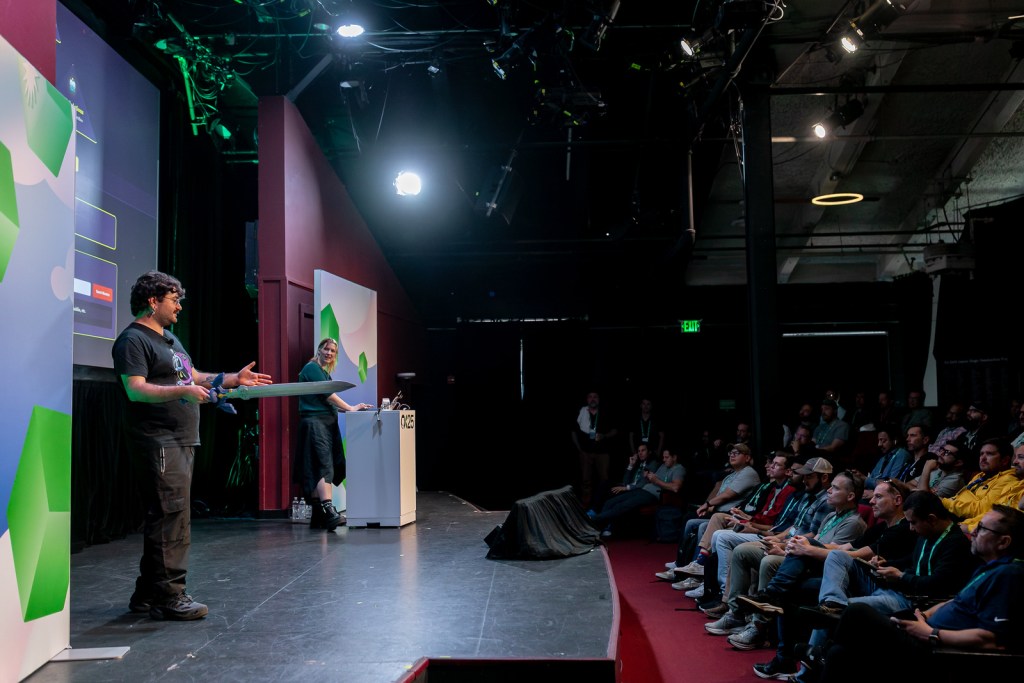
This full-on fantasy adventure, presented by Matteo Bianchi (GitHub) and Alexandra Aldershaab (Eficode), cast CI/CD as a castle, reframed ancient scripts as lurking monsters, and sent the audience on a quest to modernize automation without inviting supply chain dragons into the build. Under the playful storytelling, the session delivered a genuinely practical payoff: secure GitHub Actions patterns (with Copilot as a trusty sidekick) that helped teams speed up workflows while keeping security front and center.
Dream it in the morning, build it in the afternoon: Collapsing the distance from idea to impact (2025)
In Martin Woodward’s (GitHub) hands, “speed” became less of a productivity metric and more of a creative superpower (and yes, occasionally a little Furby-powered). The session zoomed out to the big shift underway in software: ideas moving from sketch to prototype to shipped experience faster than ever, and the new questions that came with that acceleration. Instead of obsessing over velocity, Martin challenged the audience with the idea that the best developers never stop experimenting. They stay curious. “If you can dream it,” he said. “You can build it.”
Dungeons and deployments: The clusters of chaos (2024)
If you’ve ever wished Kubernetes security training came with a party of adventurers and a ridiculous quest narrative, this one absolutely delivered. Noah Abrahams, Ian Coldwater, Kat Cosgrove, Seth McCombs, and Natali Vlatko walked the audience through a serious cluster of security concepts while roleplaying their way through a chaotic fantasy world, complete with memorable villains and dramatic stakes.
Mission Copilot Autofix: Securing the world’s software (2024)
With true cinematic excitement, Nick Liffen (GitHub) and Niroshan Rajadurai turned application security into a near-future mission briefing. During their session, they pulled back the curtain on how GitHub applies AI to streamline remediation and make alerts easier to interpret—then pushed the story forward into what comes next: AI that can fortify defenses and even spot emerging threats before they turn into incidents. They even saved a special surprise for the finale, giving the whole session that “stay until the credits” energy. This blog post will self-destruct in 3…2…1…just kidding.
Universe ’26 sessions and submissions TL;DR
If you need help polishing your proposal or making your idea stand out, check out our submission guide, which covers this year’s content tracks, provides an in-depth look at session types, and outlines the anatomy of a great submission.
This year’s sessions fall into three categories:
- Demo-style sessions: Product demos and Ship & Tell are for speakers who want to show what’s possible and share learnings.
- Thought leadership: Breakout Sessions, Panels, and Fireside chats are built for longer narratives, perspectives, and big ideas, with room for Q&A.
- Interactive learning: Workshops and Sandbox sessions focus on guided, participatory learning where attendees can practice new skills in real time.
💡 Pro tip: Ship & Tell is a new format this year that’s ideal for startup founders and builders to tell their story. What did you ship? How did you scale it? What broke? What worked? Your takeaways will provide inspiration for the next generation of builders.
See you on stage
Ready to pitch your own Universe-worthy idea? If these sessions have one thing in common, it’s this: they’re grounded in real engineering lessons, then delivered with personality, creativity, and a clear point of view. That’s exactly the kind of proposal we’re excited to see for Universe.
Before you submit, review the submission guide for what makes a strong proposal, plus tips to match your idea to the right format.
And don’t wait: the deadline to submit a session proposal or nominate a speaker is Friday, May 1 at 11:59 pm PT.
Tags:
Written by

Related posts

GitHub availability report: June 2026
In June, we experienced six incidents that resulted in degraded performance across GitHub services.
Q1 2026 Innovation Graph update: Open source collaboration is accelerating worldwide
New Innovation Graph data shows global developer communities growing faster than ever, with collaboration reaching new highs across many economies.

GitHub joins coalition advocating for fixes to California AI Transparency Act to protect open source
We’re calling for targeted amendments to resolve conflicts with open source licensing and align with international transparency frameworks while preserving regulatory intent.