Create and push tags in the latest GitHub Desktop 2.5 release
The latest GitHub Desktop release includes the most requested feature of the past six months: tags! Create, push, and view tags directly from GitHub Desktop.
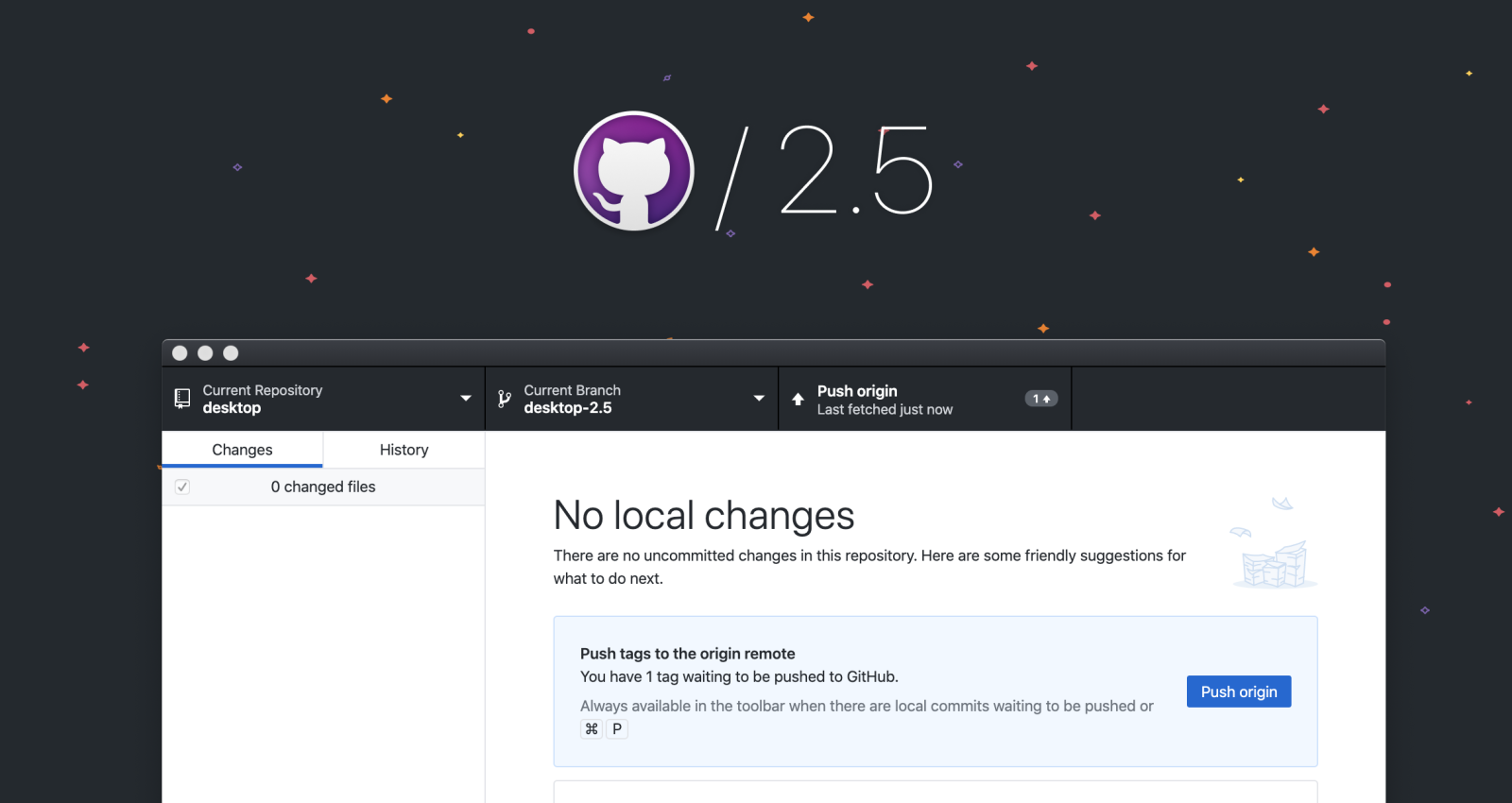
As promised at GitHub Satellite, Git tags are coming to GitHub Desktop! Tags are helpful references that allow you to mark a particular point in your project’s history. They’re most frequently used to specify the commit for a given release or for any significant milestone. As one of the most requested features in the past six months, we’re excited to deliver it.
Tag your commits in GitHub Desktop
With today’s 2.5 release, you can create and view your tags directly from GitHub Desktop. Now when you push to GitHub.com, any tags created in Desktop are automatically included. GitHub Desktop also notifies you when you’ve created tags but haven’t yet pushed them, so you don’t forget to share your latest tag with the rest of the team.

Your feedback helped make this happen
We’ve heard feedback that tagging is one of the few features remaining in your regular workflow that you have to do via the command line. Hopefully this reduces that context-switching so you can complete your full local workflow from GitHub Desktop.
More ways to extend your workflows
If you’re interested in hearing more ways to extend your workflow with GitHub Desktop and other GitHub apps like CLI and Mobile check out Neha Batra’s session “Putting GitHub at your fingertips” at GitHub Satellite.
Learn more about GitHub Desktop
Tags:
Written by

Related posts
Your guide to GitHub Universe 2026 is here: The schedule just launched!
The GitHub Universe session catalog is live. Explore interactive workshops, community talks, demos, and panels. Plus, register before August 19 to save $300.

GitHub availability report: July 2026
In July, we experienced eight incidents that resulted in degraded performance across GitHub services.

GitHub availability report: June 2026
In June, we experienced six incidents that resulted in degraded performance across GitHub services.