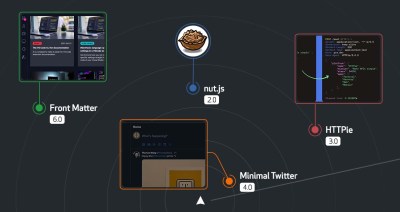
Release Radar · January 2022 Edition
Here’s January’s top staff picks on projects that shipped major version releases.
Here’s January’s top staff picks on projects that shipped major version releases.

The Update branch button on the pull request page lets you update your pull request’s branch with the latest changes from the base branch. This is useful for verifying your…
Implementation of the Primer NavigationList component and design upgrade to our user, organization, repository and teams settings pages has shipped to all github.com users. The new NavigationList component groups similar…
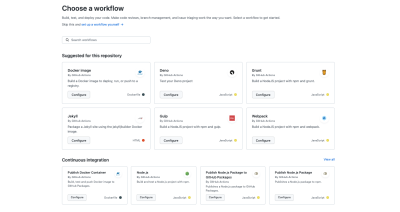
A quick guide on the advantages of using GitHub Actions as your preferred CI/CD tool—and how to build a CI/CD pipeline with it.
You can now offer private repository access linked to a sponsor tier. GitHub will keep the list of collaborators in sync with your sponsors. You could use this for early…

Along with the release of sponsors-only repositories, here’s a look at what’s new and what’s next for Sponsors.
Since our last update, we have a number of exciting updates to share with you for the new projects experience. Including improvements which shorten the gap between the original projects…

Starting today, we are rolling out mandatory 2FA to all maintainers of top-100 npm packages by dependents.
The dependency graph now supports detecting GitHub Actions workflow YAML files. These will be displayed within the dependency graph section in the Insights tab. Repositories that publish actions will also…

The dependency graph helps developers and maintainers understand the code they depend on, and now includes GitHub Actions!

In GitHub’s latest transparency report, we’re giving you a by-the-numbers look at how we responded to requests for user info and content removal.
You can now reference local reusable workflows more easily. With this release, reusable workflows that are in the same repository as the calling repository can be referenced with just the…

The open source Git project just released Git 2.35. Here’s GitHub’s look at some of the most interesting features and changes introduced since last time.

Our community has been hard at work through December shipping updates. Here’s our staff picks for open source projects with major version releases.
If your GitHub organization is owned by an enterprise account, you can now innersource automation by sharing Actions only within your enterprise without publishing them publicly. You can store the…

We’re excited to announce the V4 release of the OpenSSF’s Scorecard project in partnership with Google.
GitHub Advanced Security customers can now retrieve private repository secret scanning results at the enterprise level via the GitHub REST API. This new endpoint supplements the existing repository-level and organization-level…

From answering questions about a new release to fielding feature requests, here’s how five open source communities use GitHub Discussions.

Learn how the GitHub Mobile Team automates their release process with GitHub Actions.
Windows Server 2022 became generally available on GitHub-hosted runners in November 2021. Over the next 8 weeks, jobs using the windows-latest runner label will migrate from Windows Server 2019 to…
Previously, when running a job that requires a self-hosted runner, GitHub Actions would look for self-hosted runners in the repository, organization, and enterprise, in that order. We are changing that…

Build what’s next on GitHub, the place for anyone from anywhere to build anything.

Join us October 28-29 in San Francisco or online for GitHub Universe, our flagship developer event uniting people, agents, and the world’s code.

