Code scanning can filter alerts by language and file path
You can now easily find all alerts associated with a specific language with the new language filter on the code scanning alerts page. To show all the code scanning alerts…
You can now easily find all alerts associated with a specific language with the new language filter on the code scanning alerts page. To show all the code scanning alerts…

Learn the basics of CodeQL and how to use it for security research! In this blog, we will teach you how to leverage GitHub’s static analysis tool CodeQL to write custom CodeQL queries.
Repositories in the user namespace of enterprise-managed users (EMU) can now be seen and accessed by enterprise administrators. All repositories in the user namespace (e.g. https://github.com/mona_tenantName/scratch) can now be navigated…
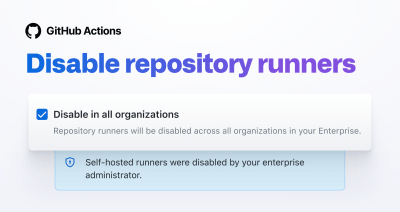
Enterprise administrators can now disable repository level self-hosted runners across organizations and enterprise user namespaces. Once this new setting has been enabled users will no longer be able to register…
If you manage your node.js dependencies with the pnpm package manager, you can now use Dependabot to keep those dependencies updated with automatic pull requests. You can easily configure this…

The accessibility-alt-text-bot leaves automated reminders in a comment when a user shares an image without providing meaningful alt text.

With GitHub Enterprise Importer, you can seamlessly move to GitHub Enterprise Cloud, bringing your code and collaboration history with you so your team doesn’t miss a beat.
GitHub Codespaces plans to begin rolling out improved access controls for organizations on June 27th, 2023. These changes will provide organizations additional control over which of their organization’s members or…
The “Remove a repository from an app installation” API has been updated to fail early if attempting to remove a repository from an application that is installed on all repositories.…
Take part in All in for Maintainers’ new pilot program that helps open source project maintainers highlight ongoing efforts in advancing diversity, equity, and inclusion within their communities.
Searching code globally across GitHub.com already requires users to login, but starting today, we are extending that to include repository-scoped search as well. To access the full capabilities of GitHub’s…
Announcing important changes to what it means for a pull request to be ‘approved’. If you use pull requests with protected branches, there are some important security improvements rolling out…
A tool to help you keep your open source catalog organized and up to date.
You can now create single-use self-hosted runners without time-limited registration tokens using the REST API. When a runner registers using this API it will only be allowed to run a…

Could we use our Git repository as the source of truth for operational tasks, and somehow reconcile changes with our real-world view?

Experts explain how to recruit and onboard co-maintainers.

The open-source Git project just released Git 2.41. Take a look at our highlights on what’s new in Git 2.41.
GitHub secret scanning protects users by searching repositories for known types of tokens. By identifying and flagging these tokens, our scans help prevent data leaks and fraud. We have partnered…
Low-code enables developers and non-developers to build custom applications and solutions with less effort. In this blog, we show you how to automate your low-code deployments using GitHub Actions.
GitHub secret scanning protects users by searching repositories for known types of secrets. By identifying and flagging these secrets, our scans help prevent data leaks and fraud. We have partnered…

With a new Fill-in-the-Middle paradigm, GitHub engineers improved the way GitHub Copilot contextualizes your code. By continuing to develop and test advanced retrieval algorithms, they’re working on making our AI tool even more advanced.

Build what’s next on GitHub, the place for anyone from anywhere to build anything.

Join us October 28-29 in San Francisco or online for GitHub Universe, our flagship developer event uniting people, agents, and the world’s code.

