Dependency scanning with GitHub MCP Server is in public preview
The GitHub MCP Server can now scan your code changes for vulnerable dependencies before you commit or open a pull request. You’ll catch known vulnerabilities while you write code with…
The GitHub MCP Server can now scan your code changes for vulnerable dependencies before you commit or open a pull request. You’ll catch known vulnerabilities while you write code with…
What maintainers are telling us, what we’ve shipped, and how to celebrate the people behind open source.
This integration is now generally available. Since entering public preview, we’ve heard valuable feedback from customers, and we’ve shipped follow-up improvements that bring artifact and runtime context closer to the…

Discover how to format and edit your comments and posts using Markdown.

How we validated, fixed, and investigated a critical vulnerability in under two hours, and confirmed no exploitation.
Starting April 27th 2026 and over the coming weeks, we will begin a staged rollout that updates the format of newly minted GitHub App installation tokens, making them more performant…
This update introduces inline agent mode in preview, enhancements to Next Edit Suggestions, global auto approve, and more flexible controls for terminal commands and file edits. It also includes several…
Editor’s note (June 10, 2026): We’ve updated this post to reflect a change in the subject claim format. The delimiter between the name and immutable ID is now the @…
Python projects will now see more complete and accurate transitive dependency trees in their dependency graphs and Software Bills of Materials (SBOMs). This feature is based on a new type…
We are migrating the download URLs for Copilot usage metrics reports from Azure Front Door domains to a stable, GitHub-owned custom domain. This change will improve URL stability and make…
CodeQL is the static analysis engine behind GitHub code scanning, which finds and remediates security issues in your code. You can now define custom sanitizers and validators using data extensions…
Agent skills are reshaping how developers work with AI coding agents. Today we’re launching gh skill, a new command in the GitHub CLI that makes it easy to discover, install,…
CodeQL is the static analysis engine behind GitHub code scanning, which finds and remediates security issues in your code. We’ve recently released CodeQL 2.25.2, which brings a new Kotlin version…

We’re sharing recent policy updates that developers should know about, updating our Transparency Center with the full year of 2025 data, and looking to what’s ahead.
Dependabot and code scanning now support OpenID Connect (OIDC) authentication for private registries configured at the organization level, eliminating the need to store long-lived credentials as repository secrets. What’s new…
Artifact and deployment context now appears in two new places: repository properties and security alert pages. Repository properties: deployable and deployed Two new built-in repository properties—deployable and deployed—are now available.…
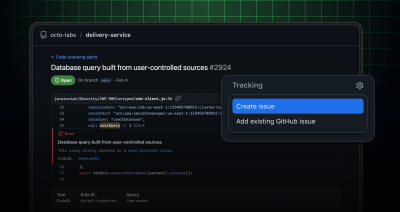
You can now link code scanning alerts to GitHub Issues, bringing security remediation into your existing planning and tracking workflows. This functionality is in public preview. With this update, you…
It’s now easier to configure Dependabot and code scanning for organizations that rely on multiple internal package feeds. Previously, organization-level settings only allowed a single private registry configuration per ecosystem…
This week, we’re rolling out several improvements to our detection coverage, APIs, and workflows. These improvements strengthen our continued investment in the developer experience of our secret scanning features. Built…

The new Code Security Risk Assessment gives you a one-click view of vulnerabilities across your organization, at no cost.
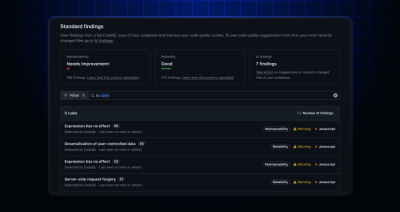
We’ve updated the GitHub Code Quality experience to make it easier to navigate and triage findings across your repository. GitHub Code Quality standard findings help you detect potential reliability and…

Build what’s next on GitHub, the place for anyone from anywhere to build anything.

Join us October 28-29 in San Francisco or online for GitHub Universe, our flagship developer event uniting people, agents, and the world’s code.

