Welcome to a New Gist
At GitHub we love using Gist to share code. Whether it’s a simple snippet or a full app, Gist is a great way to get your point across. And the…
At GitHub we love using Gist to share code. Whether it’s a simple snippet or a full app, Gist is a great way to get your point across. And the fact that every Gist is a fully forkable git repository makes it even better.
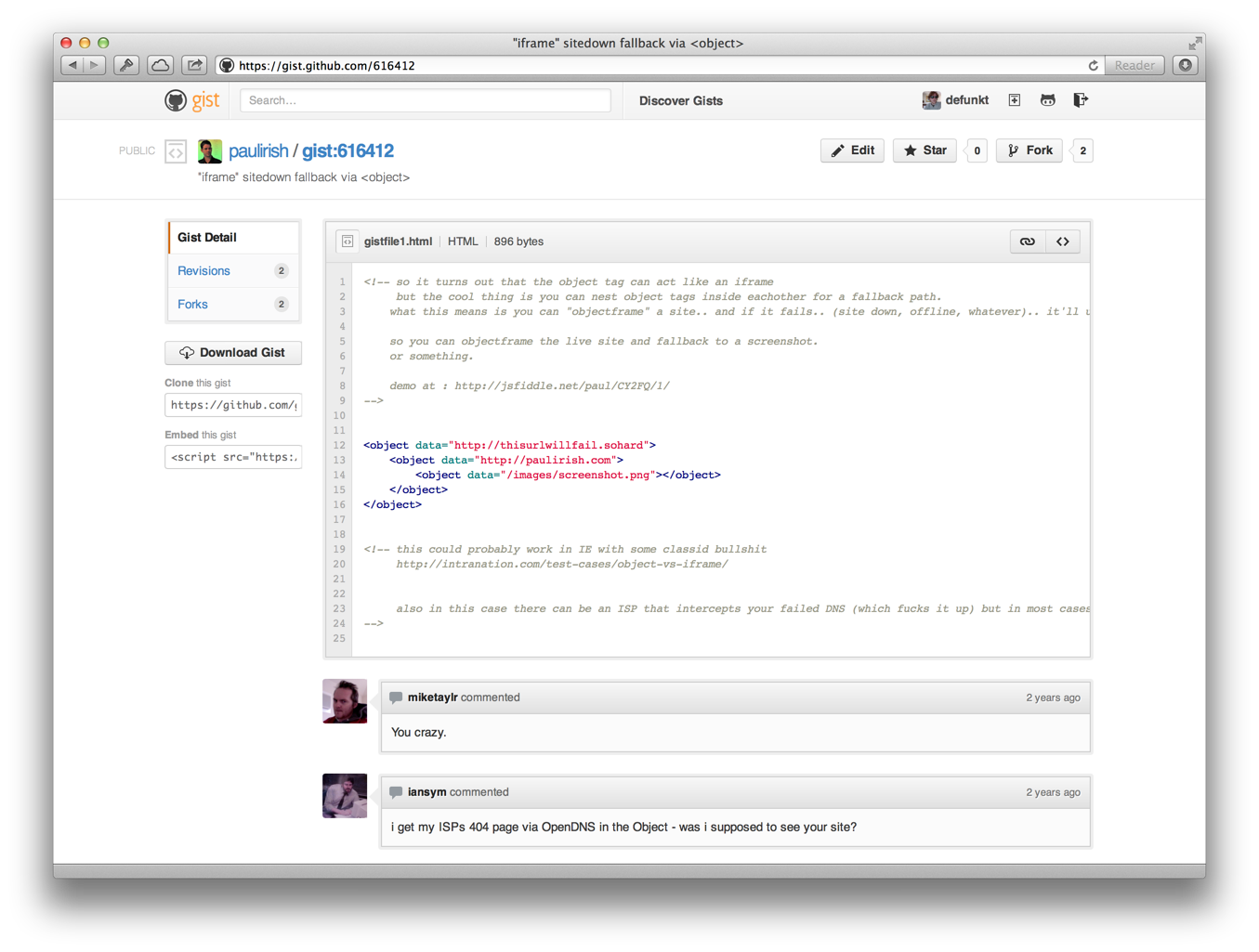
Today we’re excited to share the next generation of Gist. Rewritten from scratch using better libraries and our styleguide, the new Gist is part of our plan to make sharing code easier than ever.
What’s new?
Everything, because we rewrote it. But here are some of our favorite new features.
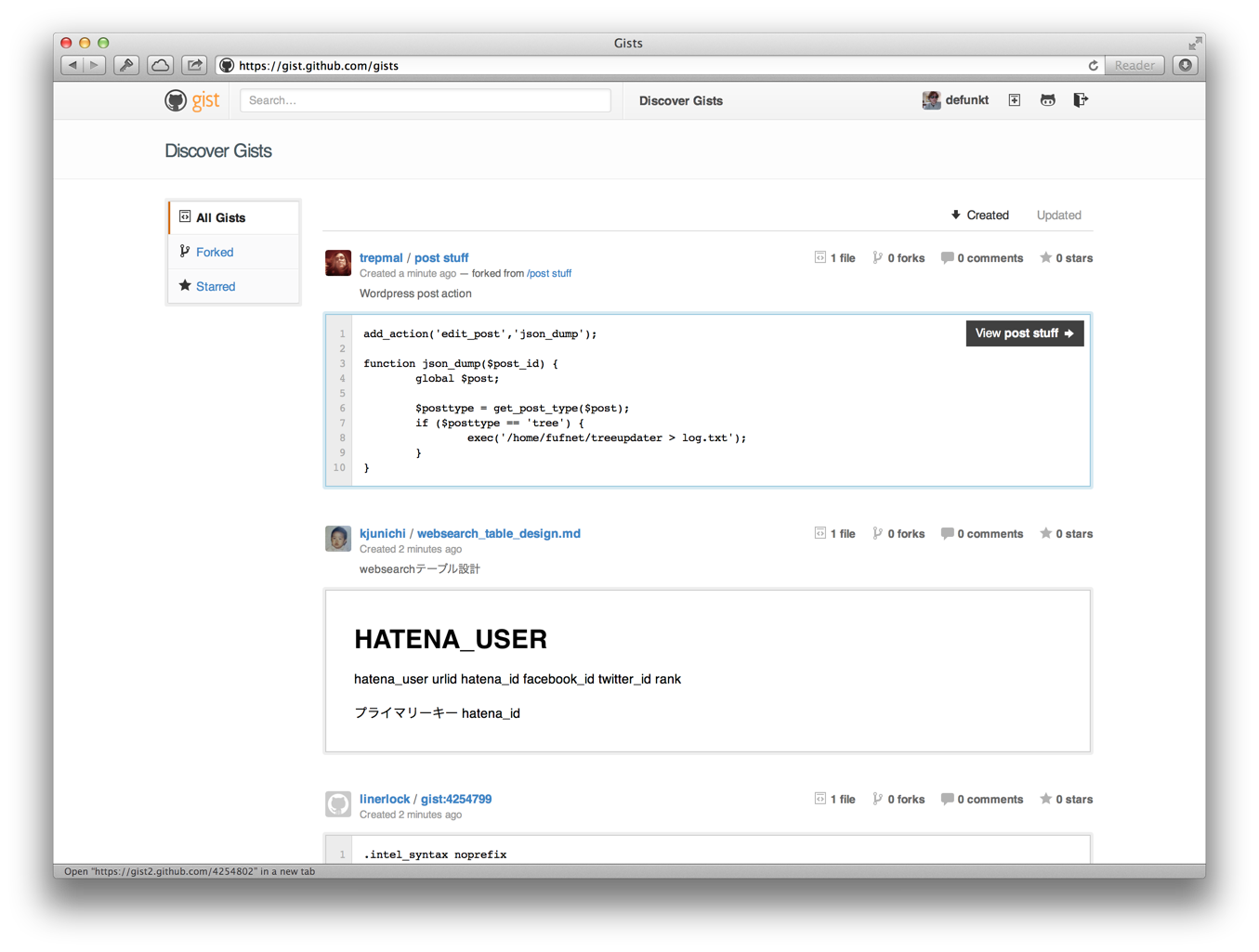
Discover Gists
The new Gist makes it easier to find what you’re looking for, whether you’re browsing new code on Discover or searching by language with our new Gist Search.
Edit like an Ace
Gist, like GitHub, is now powered by the Ace editor. Syntax highlighted, indentation aware editing is now at your fingertips.

(Try dragging a file of code from your desktop to the editor for even more fun.)
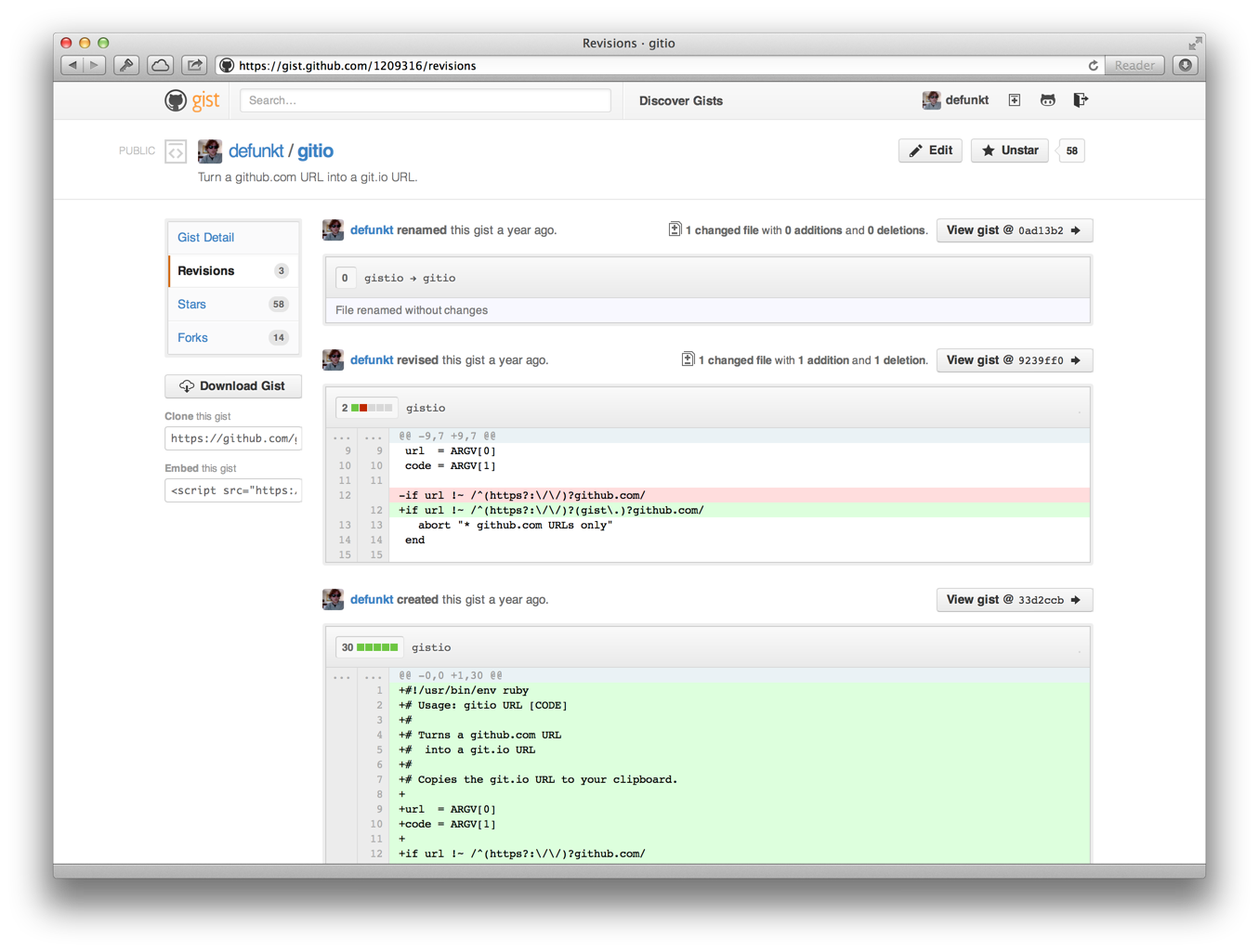
History is written by the Gisters
You can now view the full history of every Gist, complete with diffs. Never be blamed for sloppy coding again.
Forking
The new Gist tells you which forks have activity, making it easier to find interesting changes from coworkers or complete strangers.

And more…
There’s more new stuff but you’ll have to poke around to find it.
We hope you enjoy the new Gist as much as we do!
Written by

Related posts

GitHub availability report: August 2026
In August, we experienced five incidents that resulted in degraded performance across GitHub services.

The August 17 outage, and the work ahead
An update on the August 17 outage and the steps we’re taking to improve reliability.

Your guide to GitHub Universe 2026 is here: The schedule just launched!
The GitHub Universe session catalog is live. Explore interactive workshops, community talks, demos, and panels. Plus, register before August 19 to save $300.