Webcast recap: What data science can learn from open source development
Last week, Solutions Engineering Manager Aziz Shamim sat down with Datascope Analytics’ Jess Freaner to talk about how data scientists are uniquely positioned to adopt best practices from both science…
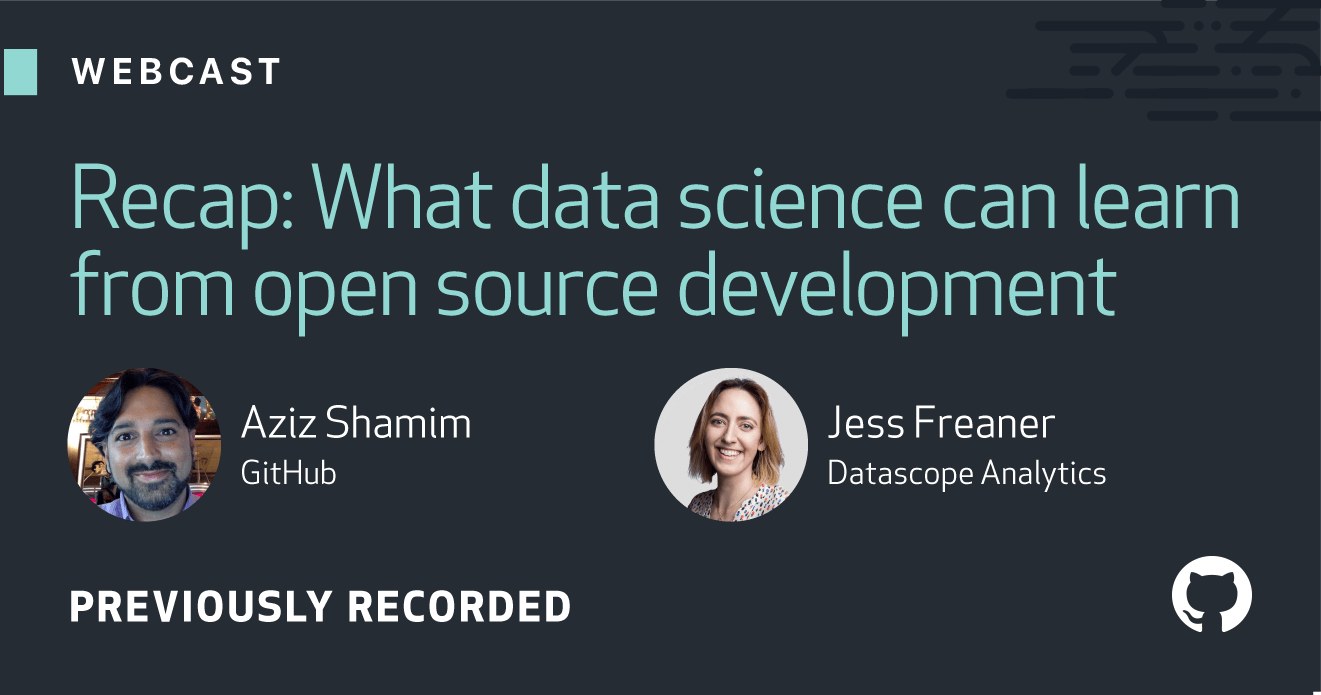
Last week, Solutions Engineering Manager Aziz Shamim sat down with Datascope Analytics’ Jess Freaner to talk about how data scientists are uniquely positioned to adopt best practices from both science and software—and how her team is using open source practices to enhance collaboration and results. In case you missed it, here’s a recording of the webcast, along with a few of our takeaways.
Highlights
Transparency and openness are essential to Datascope’s success.
Feedback and collaborative knowledge-sharing are hallmarks of successful open source projects. Similarly, transparency and constant communication with clients is key to the success in data science according to Jess. Other practices that cross over from open source include frequent check-ins and reviews, shared documentation, and “reference code” that keeps the Datascope Team and clients on the same page.
Data scientists can benefit directly from open source.
At Datascope, teams contribute regularly to open source projects. They also maintain and develop projects of the own, including Textract, a library that extracts text from difficult documents to work with, such as PDFs, and traces, “a library for dealing with unevenly spaced time series that’s quite handy when efficiently working with sensor data.” Building on the knowledge shared by industry peers, Datascope can move their open projects beyond what could they could have accomplished in a vacuum.
Data scientists can start using open source practices today.
Jess and Aziz also shared four key areas of focus for teams wanting to get started with open source. In short, open source can help teams be more iterative, modular, hypothesis-driven, and human-centered. Integrating these concepts into your data science practice can help your team solve problems in a more holistic, collaborative, and agile way.
Hear more from Jess and Aziz in the recording or browse other GitHub resources.
Written by

Related posts

The next developer interface is ambient intelligence
AI, agents, voice, and physical controls are shifting software development from operating tools to expressing intent—and helping developers stay focused on building.
GitHub availability report: September 2026
In September, we experienced two incidents that resulted in degraded performance across GitHub services.
10 technical talks I’m excited about at GitHub Universe 2026
From verifying AI-written code to securing npm dependencies, these are the sessions I’m building my Universe agenda around.