Multiple issue and pull request templates
Issue and pull request templates help teams gather the right information from the beginning of a thread, but sometimes one template just isn’t enough. Now project maintainers can have and…
Issue and pull request templates help teams gather the right information from the beginning of a thread, but sometimes one template just isn’t enough. Now project maintainers can have and use multiple templates in their repositories.
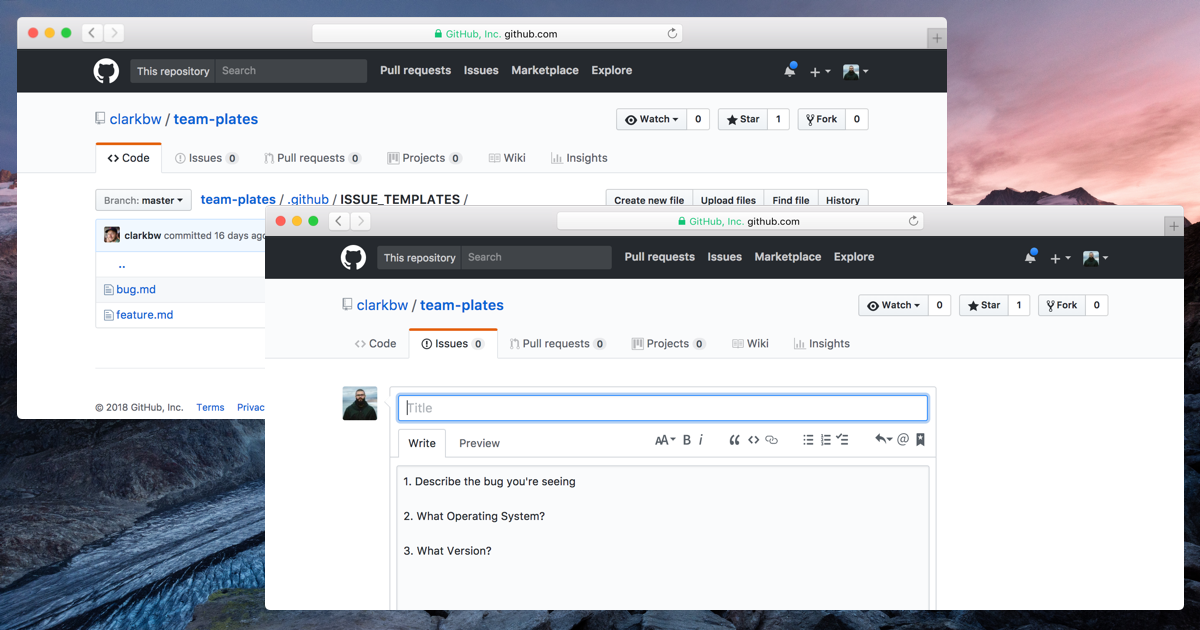
To add multiple issue templates to a repository create an ISSUE_TEMPLATE/ directory in your project root. Within that ISSUE_TEMPLATE/ directory you can create as many issue templates as you need, for example ISSUE_TEMPLATE/bugs.md. To use those issue templates add ?template= and your template name to the new issue URL. Continuing the example, if you create the template bugs.md you add ?template=bugs.md to the new issue URL, so it becomes /issues/new?template=bugs.md.
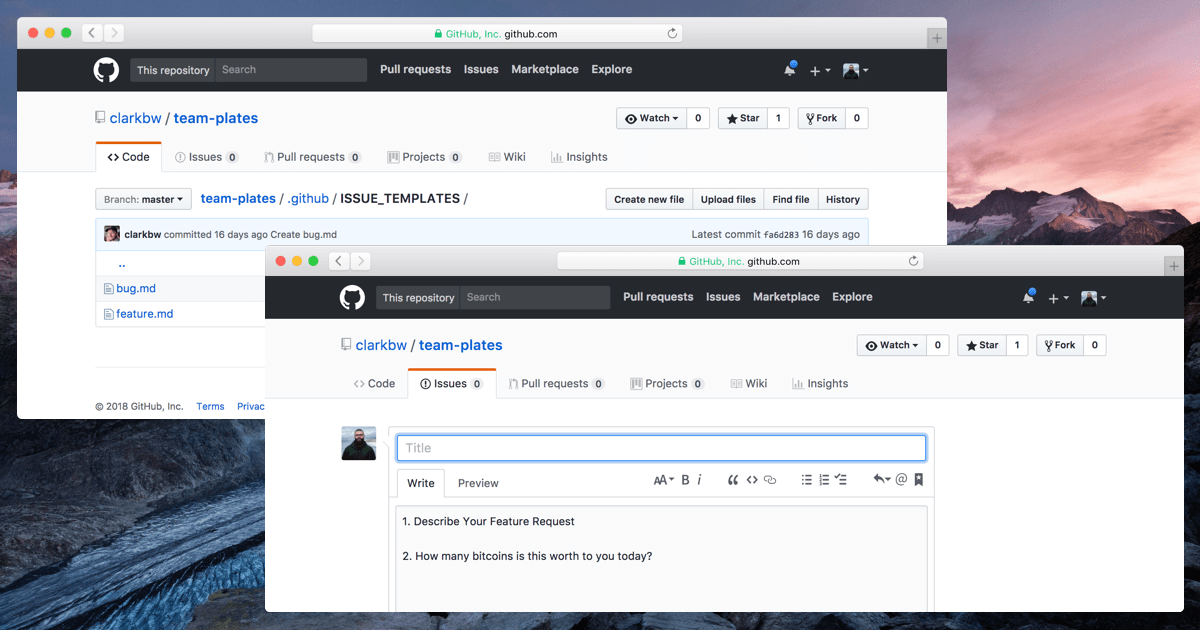
Your default ISSUE_TEMPLATE.md files will continue to work as the default when a template isn’t specified in the new issue URL. Pull request templates follow the same pattern: add a directory called PULL_REQUEST_TEMPLATE to the root directory of your repository, and add the ?template= to your pull request URLs. And if you’re worried about extra clutter in the root directory of your project, all of these directories work within the .github folder as well
To read more or learn about additional options, check out the documentation.
Written by

Related posts

GitHub availability report: September 2026
In September, we experienced two incidents that resulted in degraded performance across GitHub services.

10 technical talks I’m excited about at GitHub Universe 2026
From verifying AI-written code to securing npm dependencies, these are the sessions I’m building my Universe agenda around.
Developer policy update: Transparency, state policy, and what’s ahead
Explore GitHub’s latest transparency data and learn more about policy updates affecting developers and open source.