Introducing Teletype for Atom: Code collaboratively in real time
Writing code with other developers can be a great way to onboard teammates, get to know how your peers think, and learn new skills. Unfortunately, writing code together can be…

Writing code with other developers can be a great way to onboard teammates, get to know how your peers think, and learn new skills. Unfortunately, writing code together can be difficult to coordinate.
Now social coding is easier than ever with Teletype for Atom—a new way to dive right into code with remote collaborators. Work together in real time with your own configurations in your own programming environment on any file you can open in Atom.
Today we’re releasing the Teletype package in beta, but there’s so much more to come. Visit teletype.atom.io to start coding together in Atom today.
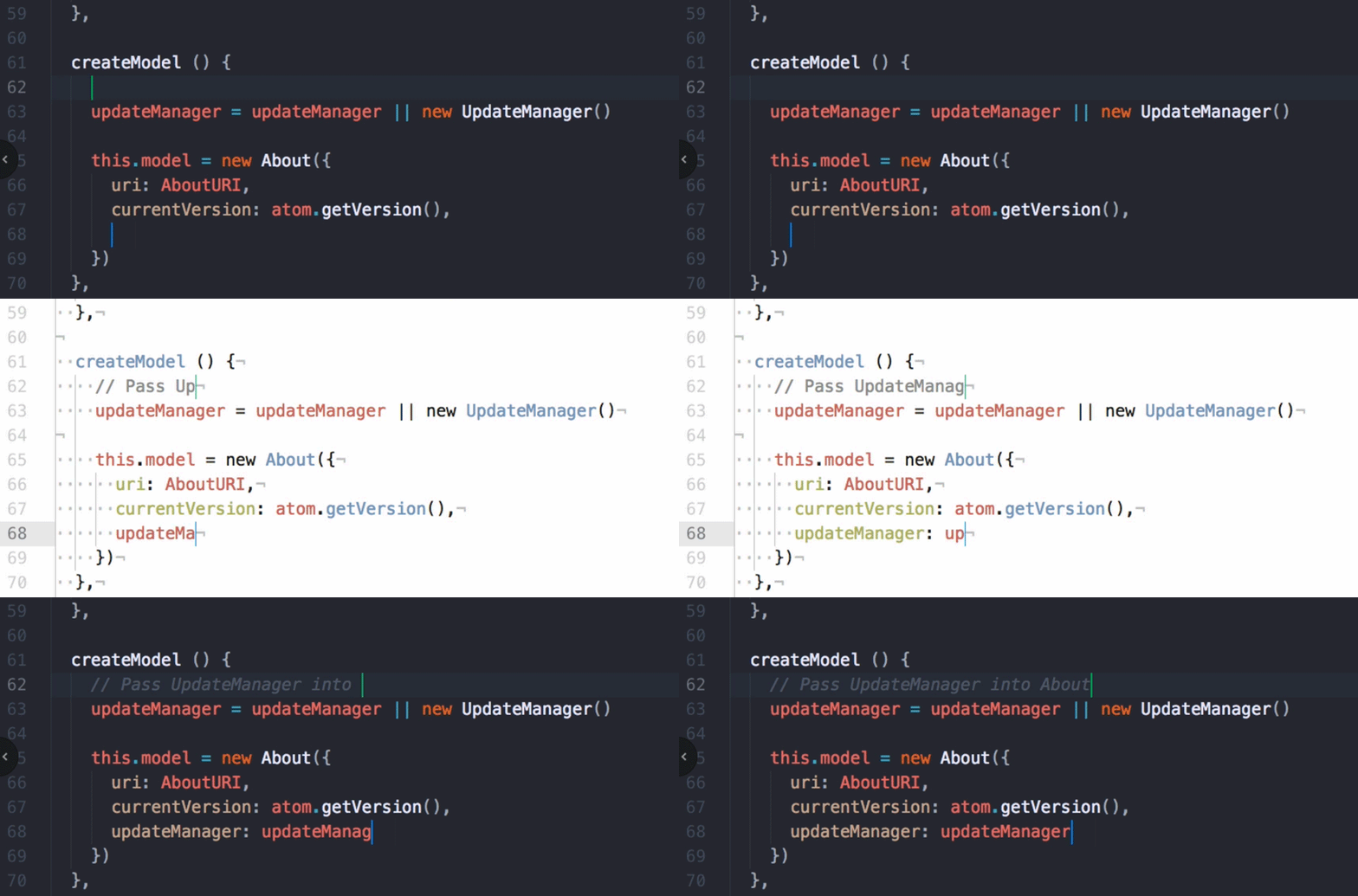
Collaborate seamlessly
Talk through a review without latency. With Teletype, you can invite one or more of your teammates to jump right into the code. Everyone gets a cursor, and everyone can type at the same time.
Bring your own configurations
Share your code without giving up your configurations. Sharing is at the keystroke-level rather than at the pixel-level, so you can collaborate with your own key bindings, packages, and themes.
Connect peer-to-peer
All data flows over encrypted peer-to-peer connections. Our servers never see your files or edits, which maximizes your privacy and minimizes latency between you and your collaborators, regardless of your proximity to our data centers.
Build on Teletype
Best of all, Teletype is free and open source. As we continue along our roadmap and take Teletype beyond beta, we hope to see community contributors build on and extend it to other editors.
Today’s beta release is just the beginning of social coding with Atom. Our list of improvements includes support for voice communication and editor-agnostic collaboration. To learn more about Teletype and find out where it’s headed next, check out our post on the Atom Blog.
Tags:
Written by

Related posts

Developers want more efficient software. Here’s what over 1,000 GitHub users told us they need.
New research from GitHub and Yale Program on Climate Change Communication finds strong demand for tools, measurement, and practical guidance that can help developers reduce wasted compute.

GitHub availability report: August 2026
In August, we experienced five incidents that resulted in degraded performance across GitHub services.

The August 17 outage, and the work ahead
An update on the August 17 outage and the steps we’re taking to improve reliability.