html-pipeline: Chainable Content Filters
Ever wondered how to get emoji, syntax highlighting, custom linking, and markdown to play nice together? HTML::Pipeline is the answer.
Ever wondered how to get emoji, syntax highlighting, custom linking, and markdown to play nice together? HTML::Pipeline is the answer.
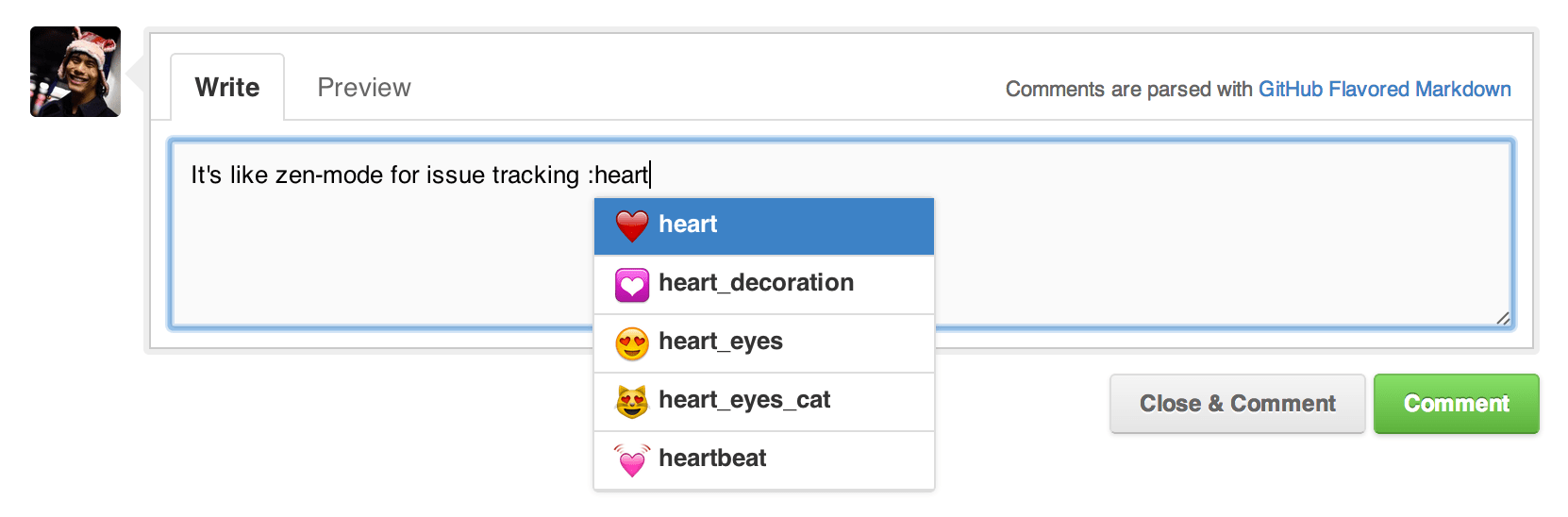
We’ve extracted several HTML utilities that we use internally in GitHub and packaged them into a gem called html-pipeline. Here’s a short list of things you can do with it:
- Syntax highlighting
- Markdown and Textile compilation
- Emojis!
- Input sanitization
- Autolinking urls
Filters
The basic unit for building a pipeline is a filter. A filter lets you take user input, do something with it, and spit out transformed markup. For example, if you wanted to translate Markdown into HTML, you can use the MarkdownFilter:
require "html/pipeline"
filter = HTML::Pipeline::MarkdownFilter.new("Hi **world**!")
filter.call
Pipelines, for HTML, not oil
Translating Markdown is useful, but what if you also wanted to syntax highlight the output HTML? A pipeline object lets you can chain different filters together so that the output of one filter flows in as the input of the next filter. So after we convert our Markdown text to HTML, we can pipe that HTML into another filter to handle the syntax highlighting:
pipeline = HTML::Pipeline.new [
  HTML::Pipeline::MarkdownFilter,
  HTML::Pipeline::SyntaxHighlightFilter
]
result = pipeline.call <<CODE
This is *great*:

    some_code(:first)

CODE
result[:output].to_s
There are pre-defined filters for autolinking urls, adding emoji, markdown and textile compilation, syntax highlighting, and more. It’s also easy to build your own filters to add into your pipelines for more customization. Check out the project page for a full reference.
Written by

Related posts
10 technical talks I’m excited about at GitHub Universe 2026
From verifying AI-written code to securing npm dependencies, these are the sessions I’m building my Universe agenda around.

Developer policy update: Transparency, state policy, and what’s ahead
Explore GitHub’s latest transparency data and learn more about policy updates affecting developers and open source.

Developers want more efficient software. Here’s what over 1,000 GitHub users told us they need.
New research from GitHub and Yale Program on Climate Change Communication finds strong demand for tools, measurement, and practical guidance that can help developers reduce wasted compute.