A year of GitHub Desktop on Electron
Developers everywhere are improving their workflows with the Electron-based GitHub Desktop app since we launched it a year ago. If you’re using an older version of Desktop or have never used it, now is a great time to try it out.
We announced the public beta of the open source, Electron-built version of GitHub Desktop a year ago, giving the GitHub community a unified GitHub experience for macOS and Windows. With every release, including the version 1.0 in September 2017, we’ve seen more people using GitHub Desktop to improve their workflows. Less than six months after 1.0 was released, more Desktop users were using the Electron-based version than both the classic versions for Mac and Windows combined.
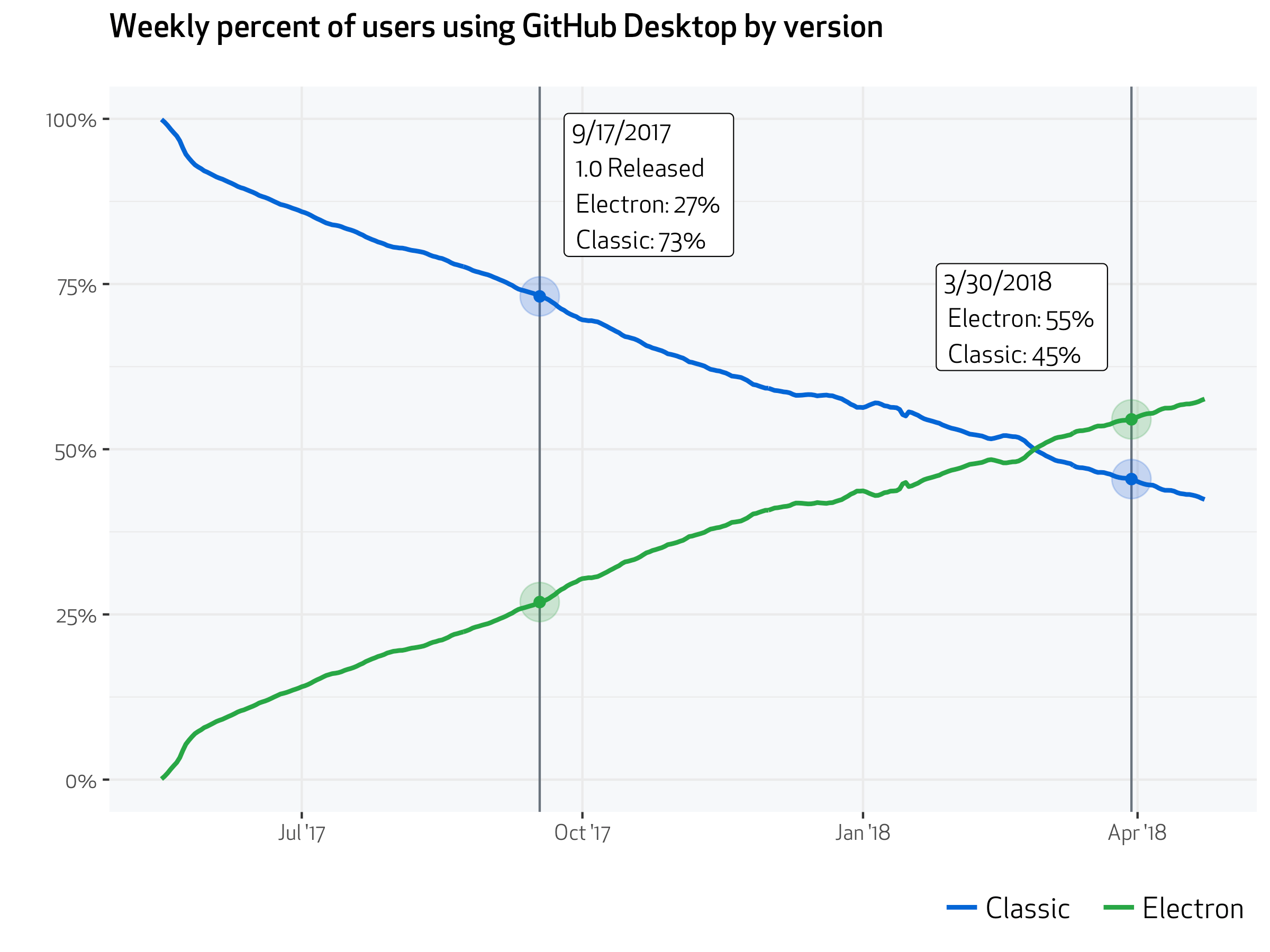
Since its initial release, we’ve added more features to GitHub Desktop, including support for additional external editors, syntax highlighting support for additional languages, support for adding co-authors to commits, and the ability to view and checkout pull requests from collaborators or forks. Many of these new features were contributions from the open source community.
Starting today, if you’re still using the classic app, you’ll see in-app notifications suggesting an upgrade to the new GitHub Desktop with information on what’s changed. If you are still using GitHub for Mac or GitHub for Windows, or if you’ve never used our desktop apps, try out the new GitHub Desktop.
Tags:
Written by

Related posts

The August 17 outage, and the work ahead
An update on the August 17 outage and the steps we’re taking to improve reliability.
Your guide to GitHub Universe 2026 is here: The schedule just launched!
The GitHub Universe session catalog is live. Explore interactive workshops, community talks, demos, and panels. Plus, register before August 19 to save $300.

GitHub availability report: July 2026
In July, we experienced eight incidents that resulted in degraded performance across GitHub services.