Explore what is Trending on GitHub
GitHub is a great place to find interesting projects. From the White House open data policy to Chicago bike routes, GitHub has become a place for collaboration on more than…
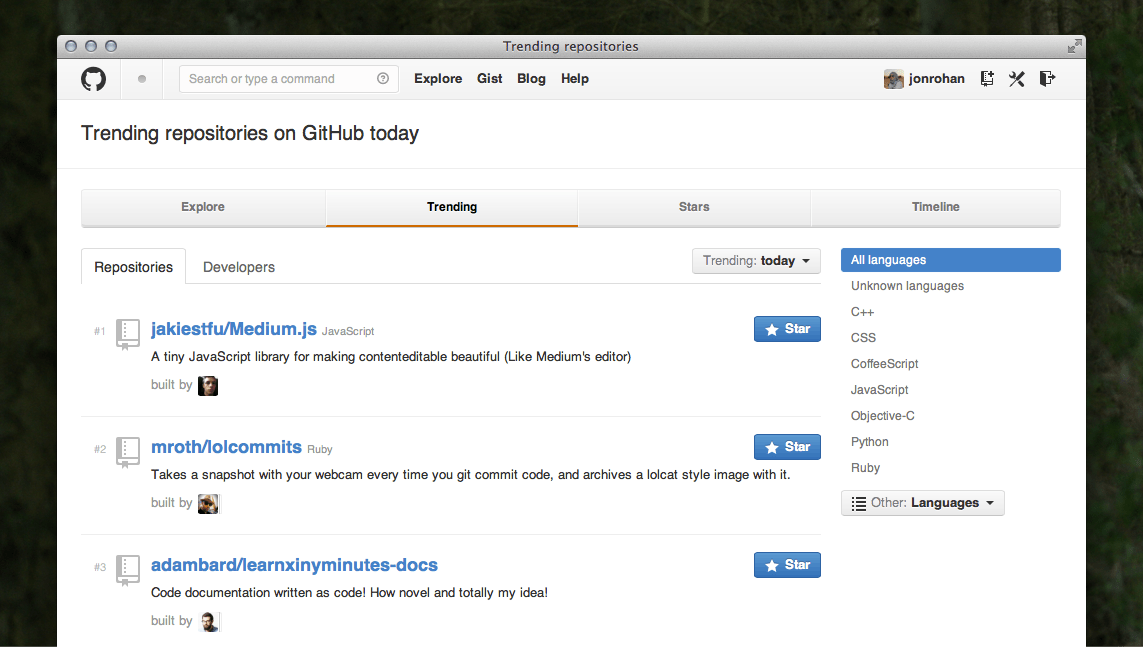
GitHub is a great place to find interesting projects. From the White House open data policy to Chicago bike routes, GitHub has become a place for collaboration on more than just code. Today we’re making these interesting projects easier to find through the new trending page.
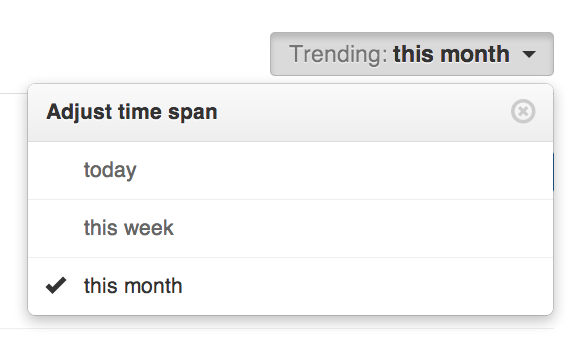
Time boxed by day, week, month
Eight times a day we calculate trending data into three time buckets: daily, weekly, and monthly. You can change the time periods by selecting one from the drop-down.
Filter by languages
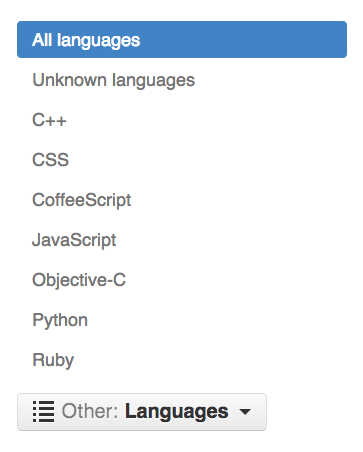
You can also filter the trends by language. By default you will see trending items in any language.
You’ll also see “unknown languages” as a filter. Our language library can’t always determine the language for the repository, but that won’t keep the repository from trending.
Next up, you will see languages that you find interesting based on your top starred repositories. If you haven’t starred any repositories, you’ll see trends based on the top languages on GitHub. Of course, we also provide a drop-down for all the rest of the languages.
Languages are always computed based on repositories. When on the repositories tab, you will see repositories with the primary language of the language filter you selected. When looking at the developers tab, you will see developers that have a trending repository in the selected language.
Trending Repositories

For each trending repository, you’ll see the owner/repository name, primary language name, repository description, a star button, and a list of the top five contributors for the project.
Trending Developers
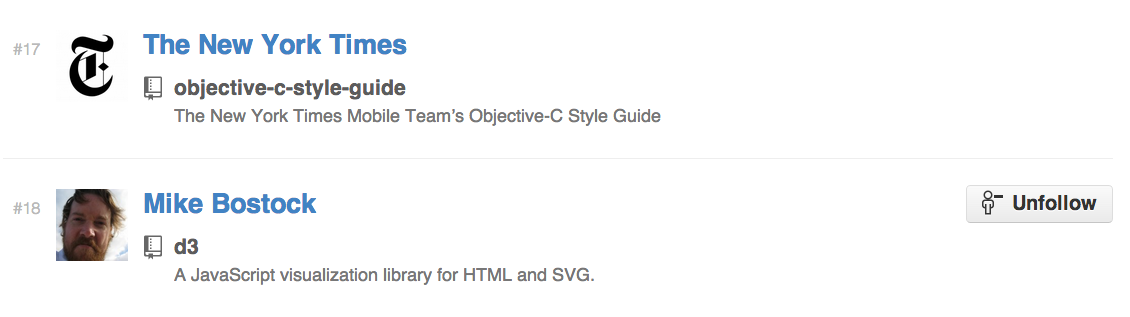
In all parts of these new pages, we showcase the smart people creating these great projects. On the developers tab, you’ll find both developers and the organizations of developers that have trending repositories on GitHub.
Alongside each trending developer, we highlight their most popular repository.
Questions
What makes repositories or developers trend? We look at a variety of data points including stars, forks, commits, follows, and pageviews, weighting them appropriately. It’s not just about total numbers, but also how recently the events happened.
Why isn’t there more than one page? We want to surface just the top 25. Any more than that dilutes the effectiveness of trending and takes a lot to compute.
How can I see more? Try our search. You can do more interesting things than you think.
With 7.8 million projects, there’s even more to explore on GitHub!
Written by

Related posts

The next developer interface is ambient intelligence
AI, agents, voice, and physical controls are shifting software development from operating tools to expressing intent—and helping developers stay focused on building.

GitHub availability report: September 2026
In September, we experienced two incidents that resulted in degraded performance across GitHub services.

10 technical talks I’m excited about at GitHub Universe 2026
From verifying AI-written code to securing npm dependencies, these are the sessions I’m building my Universe agenda around.