Better password security in GitHub for Windows
We’re always looking at ways to improve security. Today’s release of GitHub for Windows (version 1.0.54) improves password handling security through the use of OAuth tokens. Prior to this release…
We’re always looking at ways to improve security. Today’s release of
GitHub for Windows (version 1.0.54) improves password handling security
through the use of OAuth tokens.
Prior to this release the application would encrypt and store your password.
Since the application also registers itself as your Git credential provider,
the app would provide your credentials in clear text to Git.exe whenever it
asked for them.
With this release, when you log in with your username and password, the
application registers itself on GitHub.com as an Authorized application and
receives an OAuth token that it stores instead of your password. This is
similar to how other applications that integrate with GitHub work such as
Travis-CI.
Go to your account settings and click the Applications tab
to see a list of authorized applications.

For a while now, GitHub has supported using Git over HTTPS with an OAuth token.
Now, when Git requires your credentials, GitHub for Windows passes your OAuth
token to Git.
One benefit of this approach is if someone steals your laptop, you can just
go to the Applications tab and click the Revoke button to invalidate the
current OAuth token. The thief can’t retrieve your password from the contents
of your hard-drive. The next time you log in, GitHub for Windows registers
itself again and receives a newly generated OAuth token. Of course in this
situation, it’s still a good idea to change your password.
Enjoy more secure access to your GitHub account!
Written by

Related posts

GitHub Universe 2026: Evolving every layer of the stack
Today, we laid out our vision for GitHub as the most comprehensive, end-to-end software delivery system in the world.

Octoverse: Commits, pushes, reach new highs in 2026 as developers build with agents
See how a record year of growth reached every industry, every field, and every kind of builder in the 2026 Octoverse report.
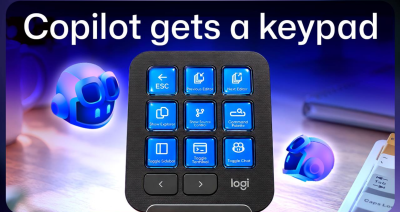
The next developer interface is ambient intelligence
AI, agents, voice, and physical controls are shifting software development from operating tools to expressing intent—and helping developers stay focused on building.