Prevent the introduction of known vulnerabilities into your code
The new dependency review action and API prevents the introduction of known supply chain vulnerabilities into your code.

Understanding your supply chain is critical to maintaining the security of your software. Dependabot already alerts you when vulnerabilities are found in your existing dependencies, but what if you add a new dependency with a vulnerability? With the dependency review action, you can proactively block pull requests that introduce dependencies with known vulnerabilities.
How it works
The GitHub Action automates finding and blocking vulnerabilities that are currently only displayed in the rich diff of a pull request. When you add the dependency review action to your repository, it will scan your pull requests for dependency changes. Then, it will check the GitHub Advisory Database to see if any of the new dependencies have existing vulnerabilities. If they do, the action will raise an error so that you can see which dependency has a vulnerability and implement the fix with the contextual intelligence provided. The action is supported by a new API endpoint that diffs the dependencies between any two revisions.
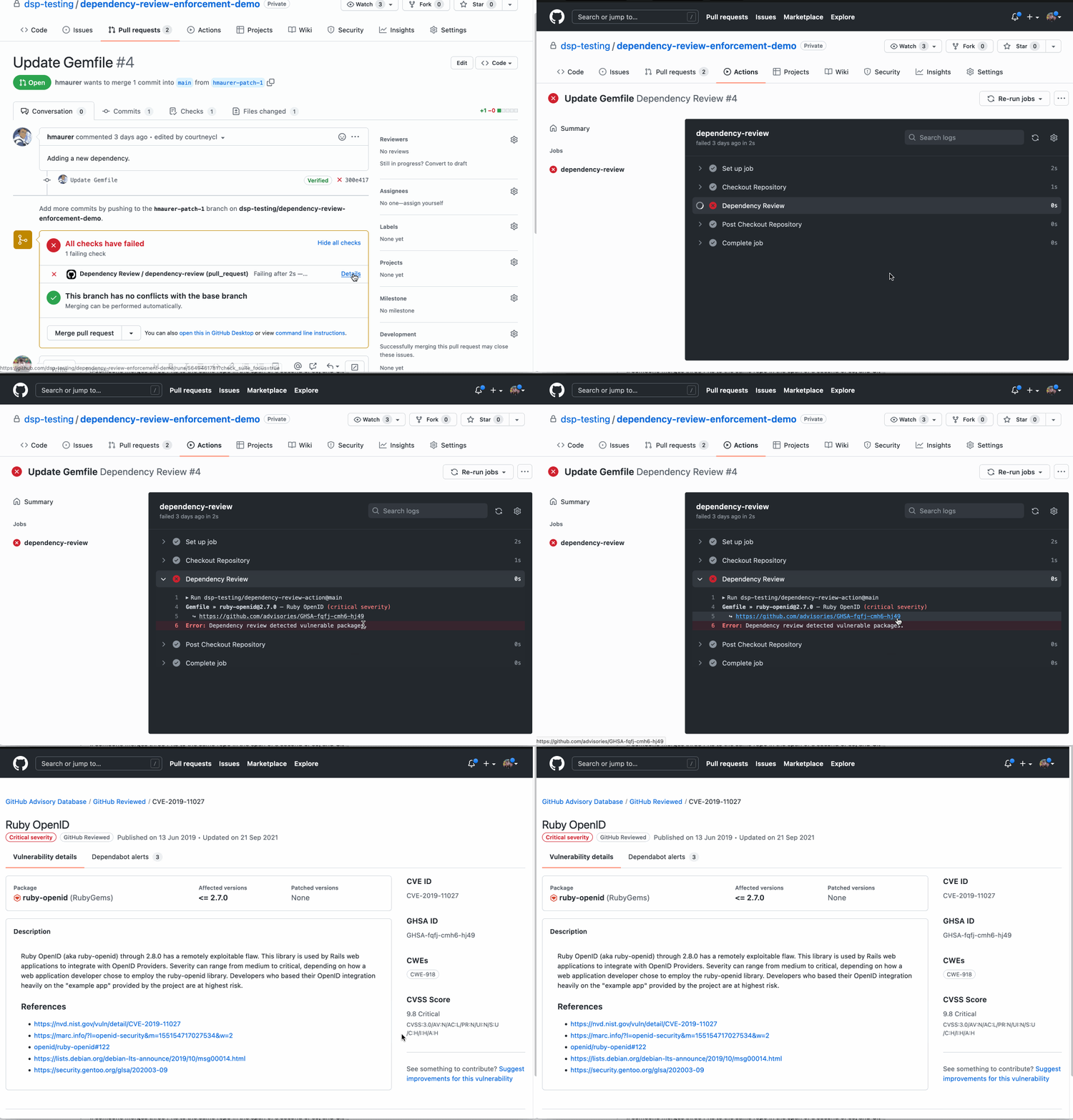
The action can be found on GitHub Marketplace and in your repository’s Actions tab under the Security heading. It is available for all public repositories, as well as private repositories that have Github Advanced Security licensed.
We’re continuously improving the experience
While we’re currently in public beta, we’ll be adding functionality for you to have more control over what causes the action to fail and can set criteria on the vulnerability severity, license type, or other factors We’re also improving how failed action runs are surfaced in the UI and increasing flexibility around when it’s executed.
If you have feedback or questions
We’re very keen to hear any and all feedback! Pop into the feedback discussion, and let us know how the new action is working for you, and how you’d like to see it grow.
For more information, visit the action and the documentation.
Tags:
Written by

Related posts

How bug bounty sharpens one researcher’s security skills
As Cybersecurity Awareness Month continues, the GitHub Bug Bounty team spotlights @r31n, diving into their research approach, favorite bug classes, and advice for aspiring hackers.

GitHub’s model for secret detection: Finding more secrets with less noise
GitHub’s context-aware secret classifier improves detection quality, raises weighted acceptance by 11.5%, and reduces median scan execution time by 86%.
How one bug bounty researcher chooses the features they investigate
As we kick off Cybersecurity Awareness Month, the GitHub Bug Bounty team spotlights @vaib25vicky, exploring their methodology, techniques, and experiences hacking on GitHub.