Nested teams add depth to your team structure
Now you can use multiple levels of nested teams to reflect your group or company’s hierarchy within your GitHub organization, making your organization’s permissions structure clearer and easier to manage.…
Now you can use multiple levels of nested teams to reflect your group or company’s hierarchy within your GitHub organization, making your organization’s permissions structure clearer and easier to manage.
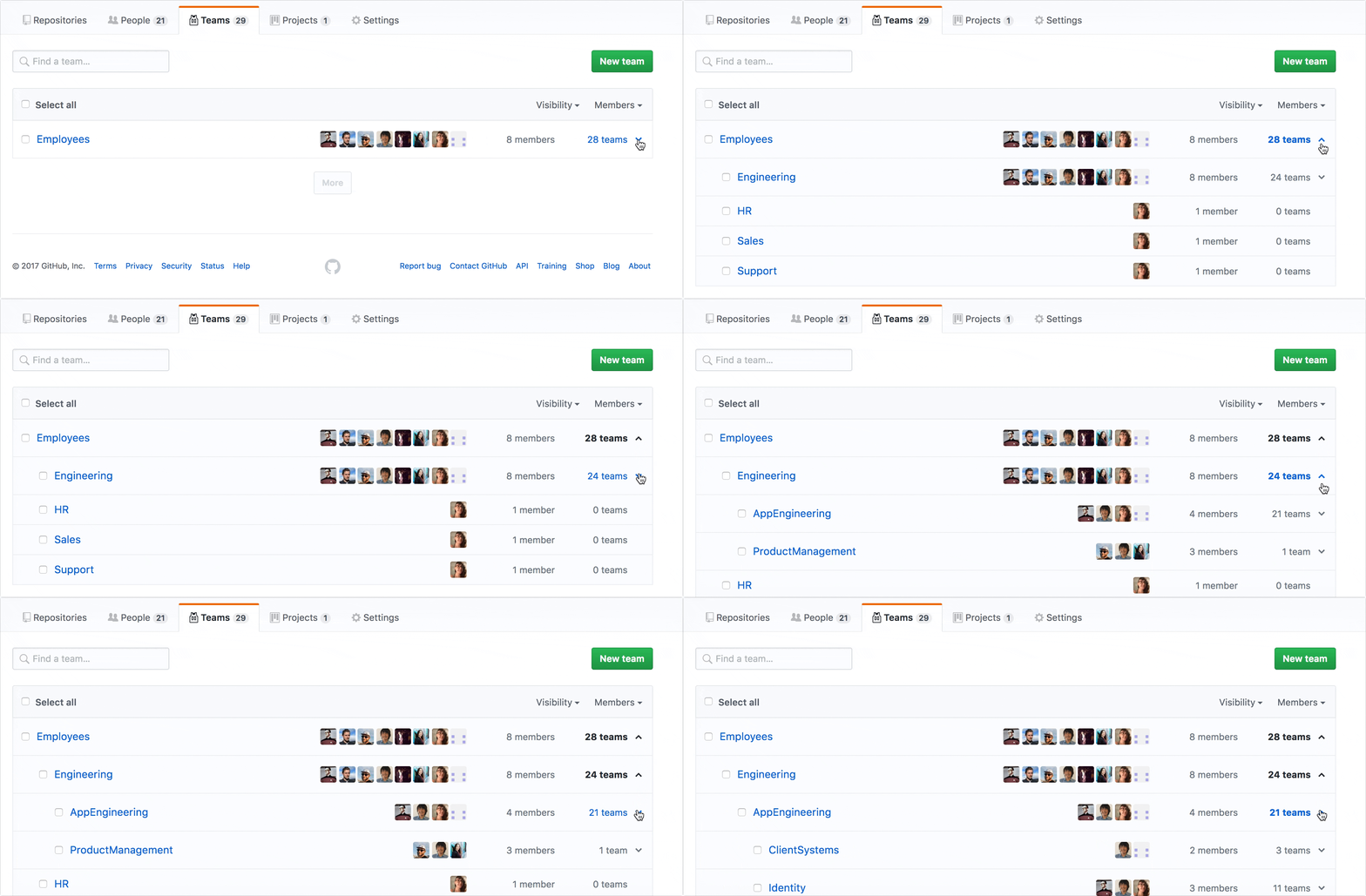
Child teams inherit their parent’s access permissions, so repository permissions and @mentioning among nested teams work from top to bottom. If your team structure is Employees > Engineering > Application Engineering > Identity, granting Engineering write access to a repository means Application Engineering and Identity also get that access. And if you @mention the Identity Team or any other team at the bottom of the organization hierarchy, they’re they only ones who will receive a notification.
Membership inheritance from parent to child teams isn’t automatic. If you’re a member of Engineering and someone creates a child team called Security, team members of Engineering aren’t automatically direct team members of Security. Security and all other teams nested under the Engineering will inherit repository permissions and @mentions but nothing else.
Check out the documentation to learn more and start structuring your existing teams!
Written by

Related posts

The August 17 outage, and the work ahead
An update on the August 17 outage and the steps we’re taking to improve reliability.
Your guide to GitHub Universe 2026 is here: The schedule just launched!
The GitHub Universe session catalog is live. Explore interactive workshops, community talks, demos, and panels. Plus, register before August 19 to save $300.

GitHub availability report: July 2026
In July, we experienced eight incidents that resulted in degraded performance across GitHub services.