Dismissing reviews on Pull Requests
Pull request reviews are a great way to share the weight of building software. Using protected branches to block merging when pull requests have reviews that request changes helps your…
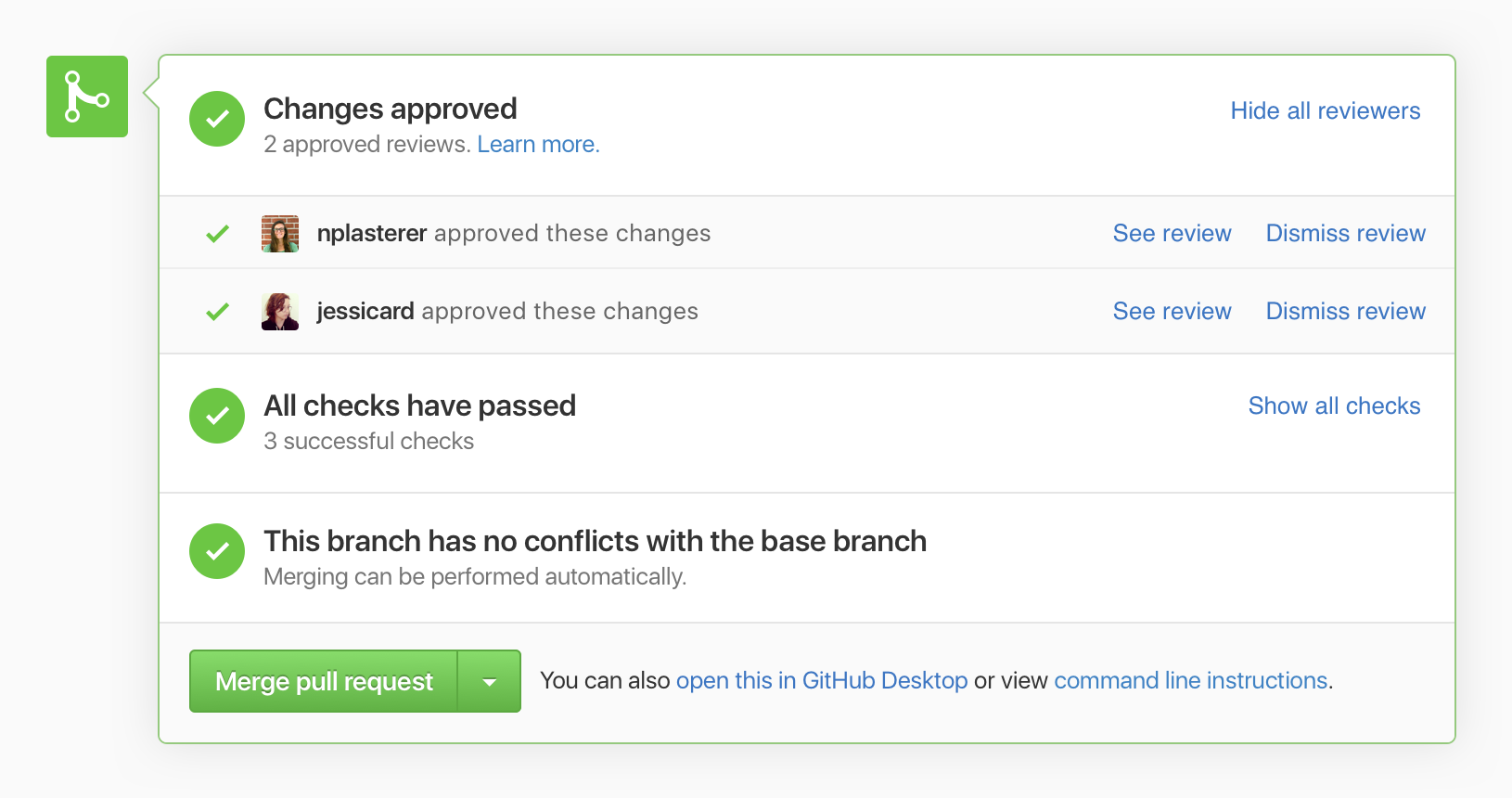
Pull request reviews are a great way to share the weight of building software. Using protected branches to block merging when pull requests have reviews that request changes helps your team maintain quality, bug-free code. However, this requirement can sometimes block your team’s progress without good reason. If someone leaves a review that requests changes and then goes on vacation or runs into computer problems, your pull request could be blocked for days, even after you’ve addressed the reviewer’s concerns.
To improve this workflow, we’re adding the ability for pull request collaborators to dismiss reviews. When someone leaves a review that requests changes, dismissing the review changes it from a review that requests changes to a review comment. This will unblock your pull request, freeing you up to merge it!
You can also dismiss an approving review. This is useful when your pull request has changed significantly since the approval, and you think it’s important to get another review.
When one of your team members dismisses a review, they’ll have to leave a reason why. This keeps people from simply bypassing the protected branch review requirement out of convenience.
Written by

Related posts

The August 17 outage, and the work ahead
An update on the August 17 outage and the steps we’re taking to improve reliability.

Your guide to GitHub Universe 2026 is here: The schedule just launched!
The GitHub Universe session catalog is live. Explore interactive workshops, community talks, demos, and panels. Plus, register before August 19 to save $300.

GitHub availability report: July 2026
In July, we experienced eight incidents that resulted in degraded performance across GitHub services.