New Status Site
We just launched a new status.github.com. Downtime is important Even if you’re shooting for five nines — 99.999% uptime — you’re still going to have to account for five minutes…
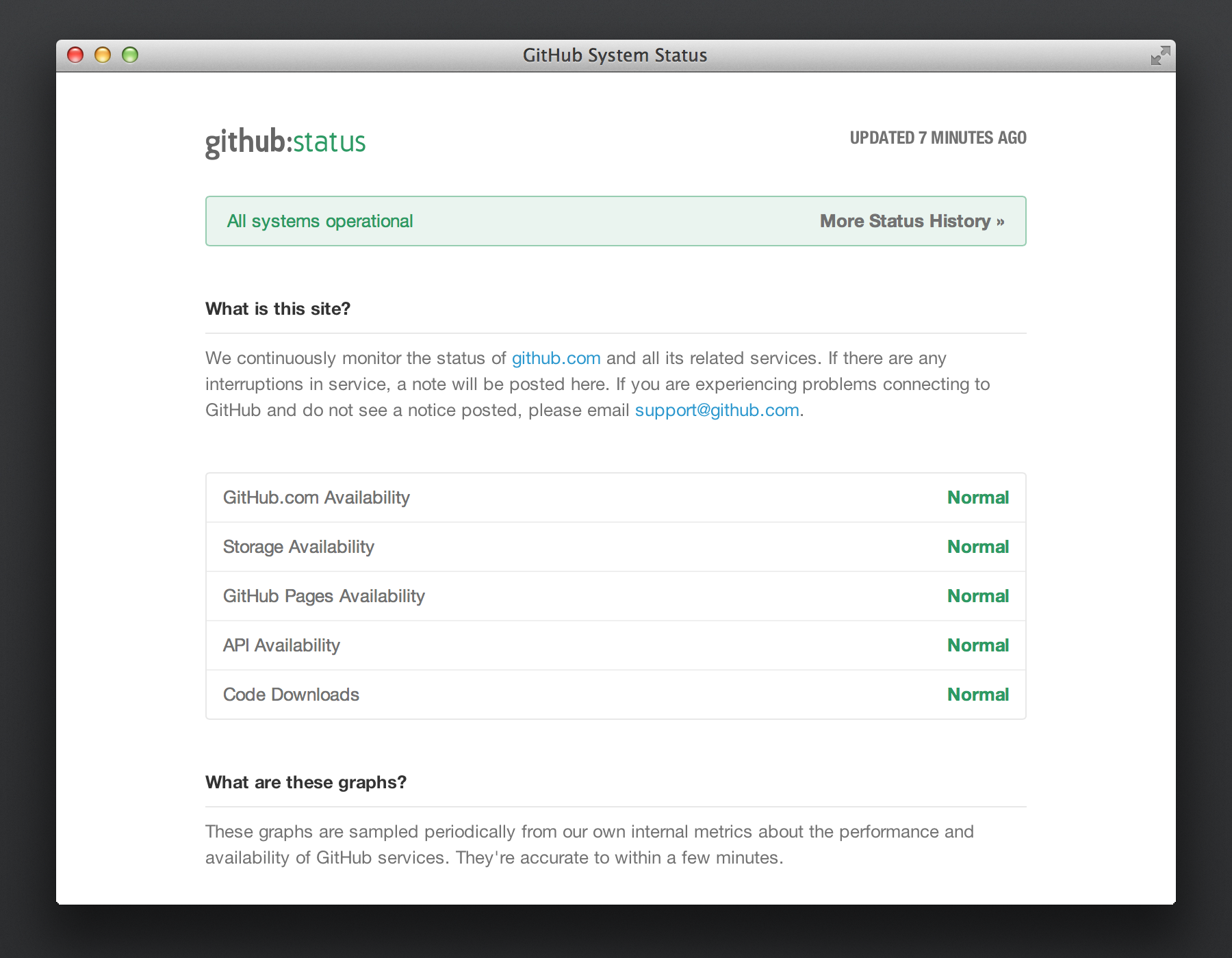
We just launched a new status.github.com.
Downtime is important
Even if you’re shooting for five nines — 99.999% uptime — you’re still going to have to account for five minutes of downtime a year. As a service, what happens during those five minutes can make all the difference.
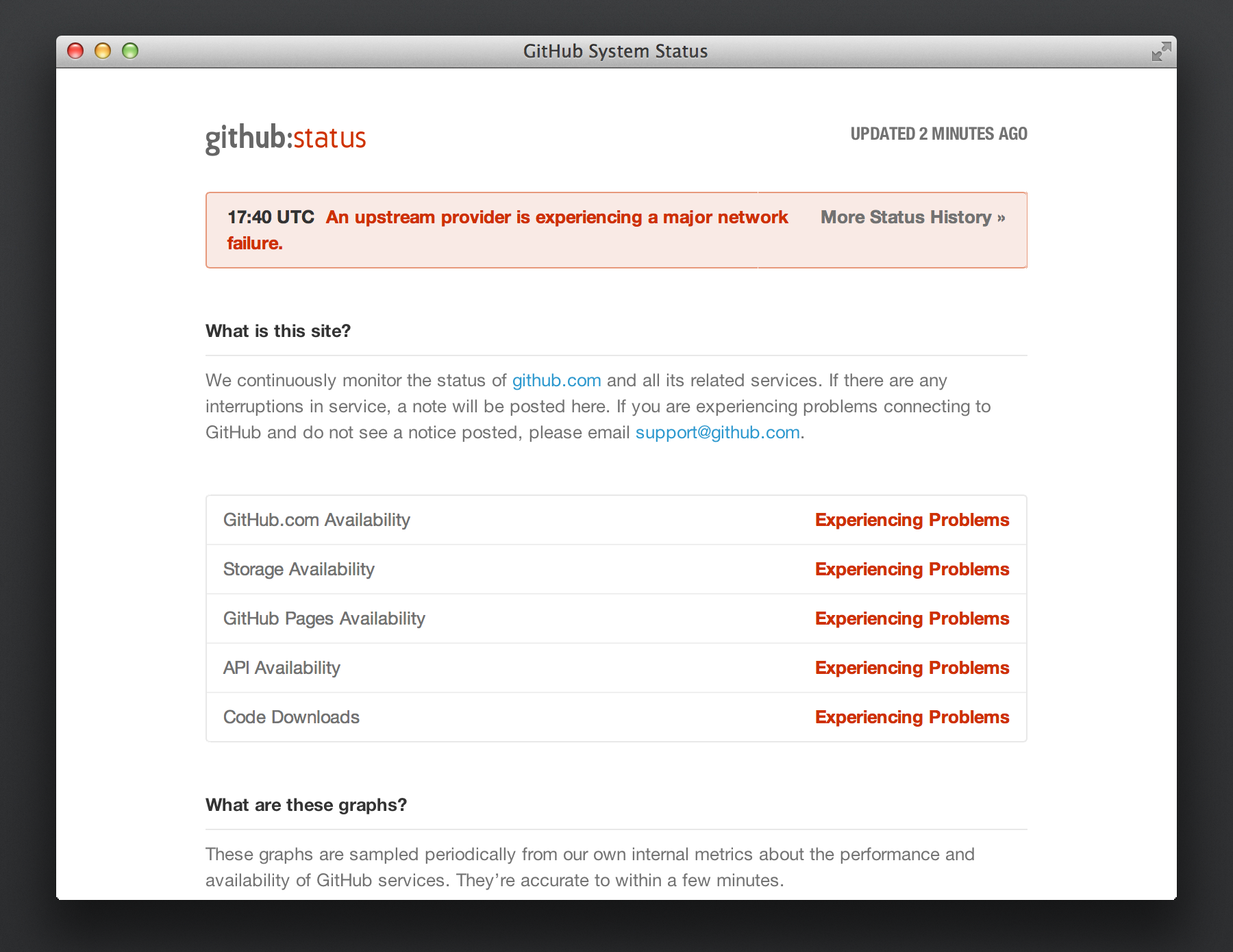
Sharing our tools
We track a huge amount of data internally surrounding our reliability and performance, and we wanted to make that accessible to you, too.
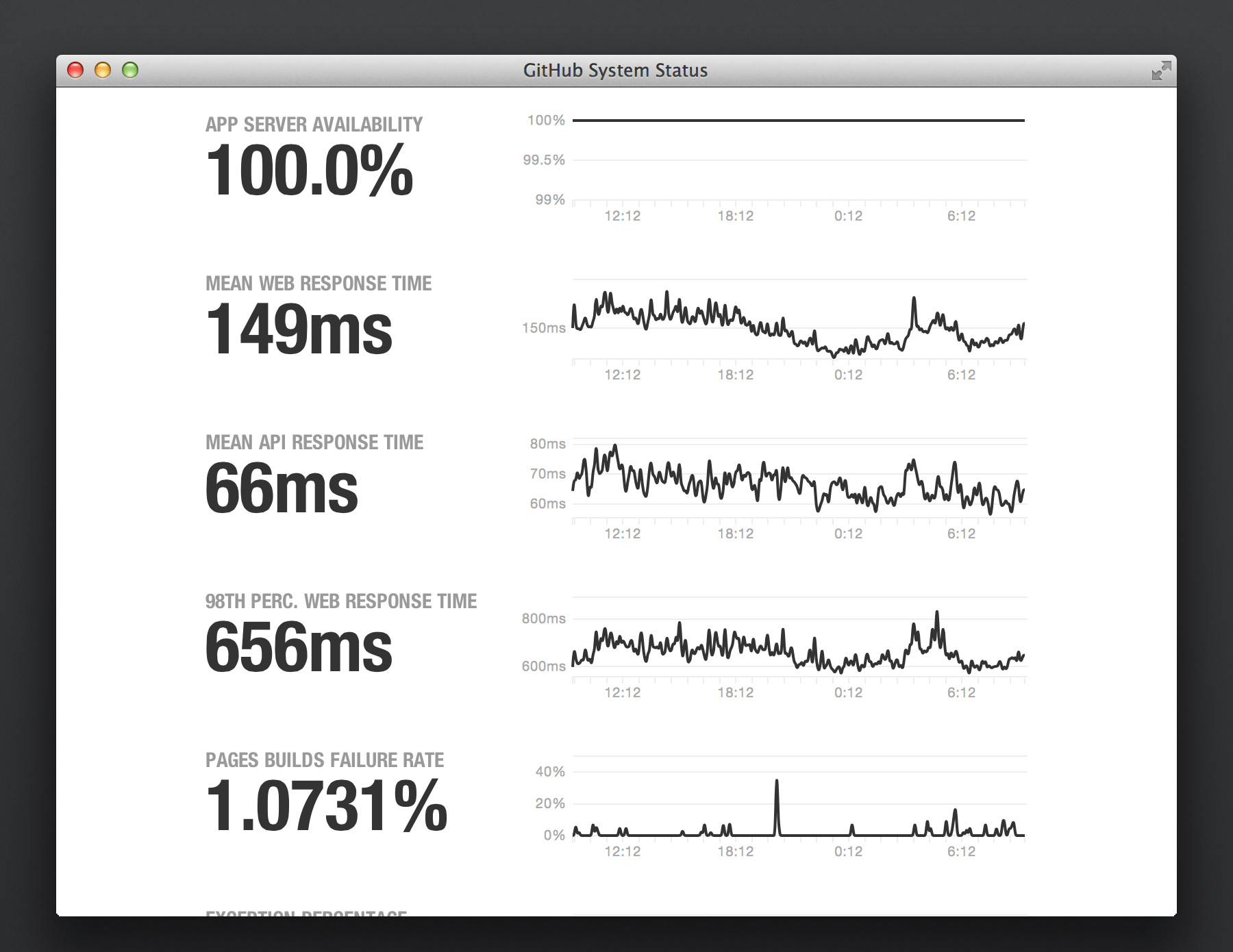
All of the graphs on our status page are generated from our own internal Graphite service. Data is pulled from Graphite and rendered using the excellent D3 JavaScript library.
Adaptive UI
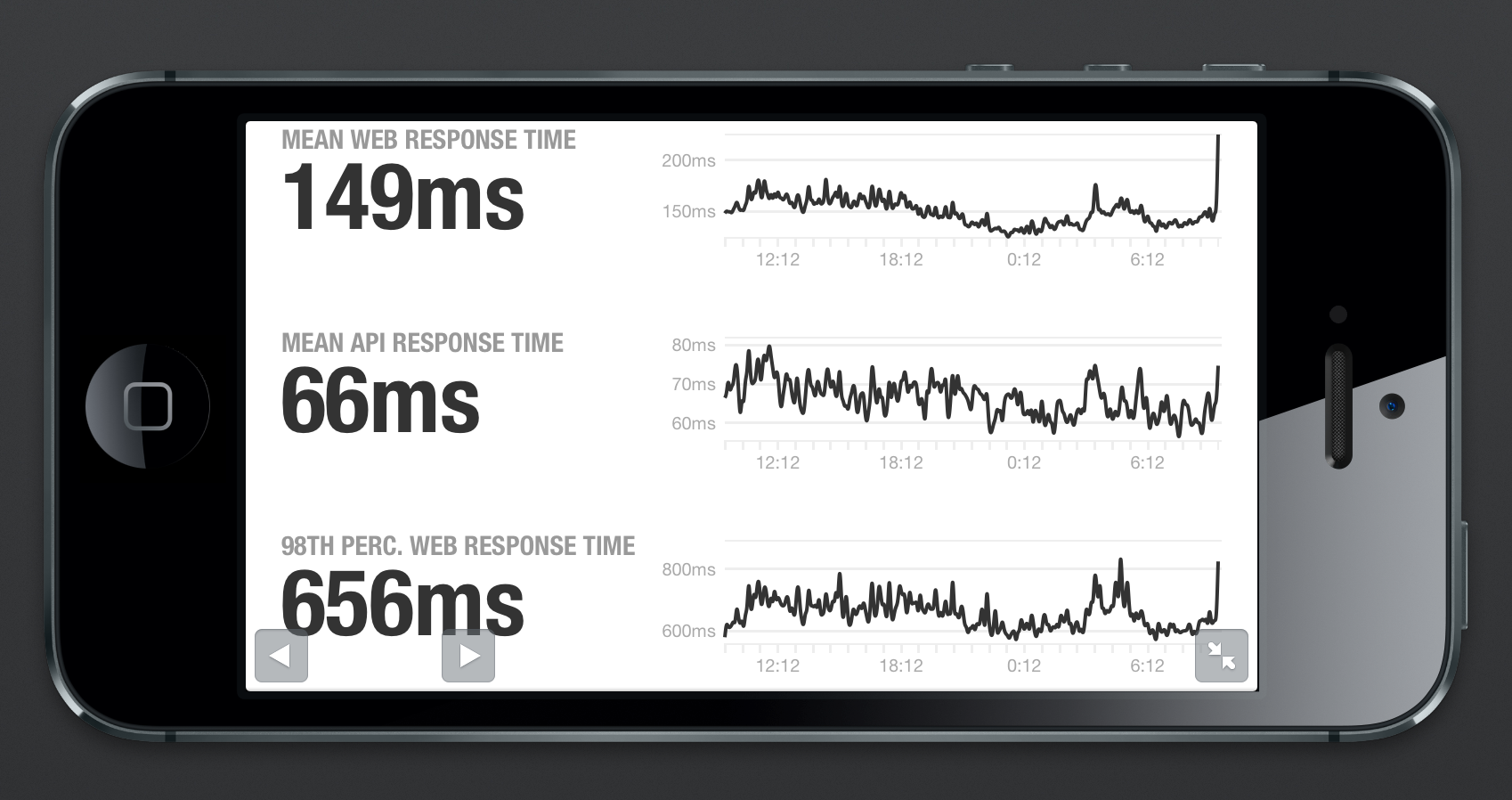
We rely heavily on our mobile devices these days and we want everything we make to be beautiful and usable on as many devices as we can. We made sure the new status website would be no exception by giving it an adaptive user interface with CSS media queries to ensure that even on-the-go you’ll be able to see at a glance what’s going on with GitHub.
In a perfect world you’ll never have to use the status site, but if you do, we hope this will give you more visibility. We’ll also be automatically posting all updates to @githubstatus if you’d like notices to appear in your Twitter feed.
Written by

Related posts

What’s coming to our GitHub Actions 2026 security roadmap
A look at GitHub Actions’ 2026 roadmap, outlining how secure defaults, policy controls, and CI/CD observability harden the software supply chain end to end.

Updates to GitHub Copilot interaction data usage policy
From April 24 onward, interaction data—specifically inputs, outputs, code snippets, and associated context—from Copilot Free, Pro, and Pro+ users will be used to train and improve our AI models unless they opt out.

GitHub availability report: February 2026
In February, we experienced six incidents that resulted in degraded performance across GitHub services.